

“Objectivity is the essence of intelligence.” — Nick Murray
“The most important thing in communication is hearing what isn’t said.” — Peter Drucker (emphasizing the need for objective listening)
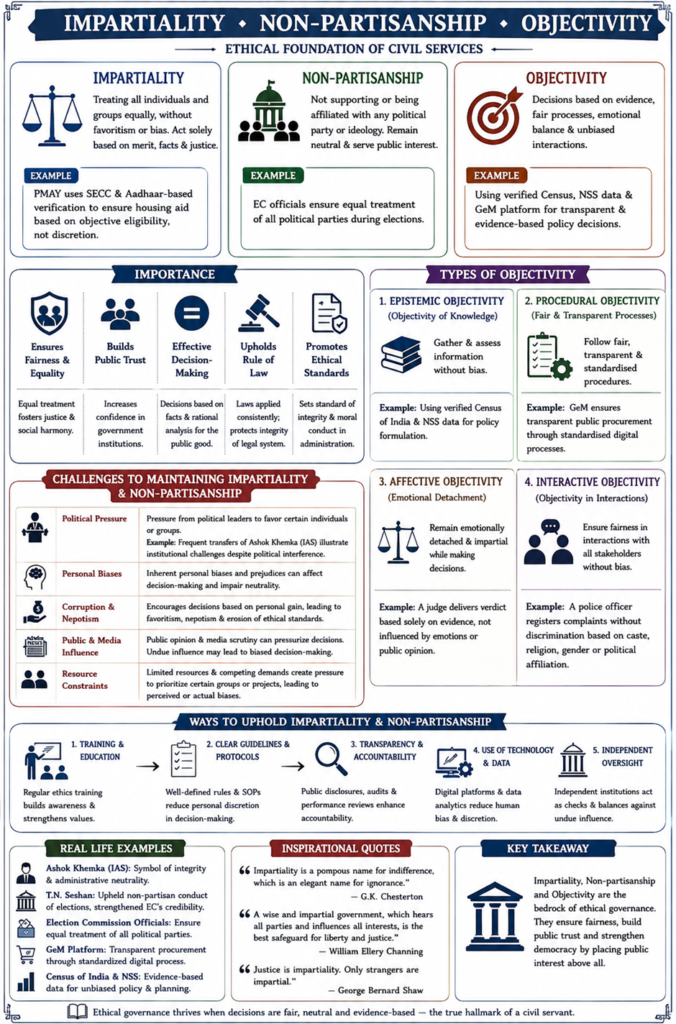
Objectivity refers to the ability to make decisions and take actions based on factual evidence, logic, and impartiality, free from personal biases, emotions, and external pressures. It is the practice of maintaining a neutral standpoint, ensuring that one’s judgments are not influenced by personal preferences, prejudices, or interests.
Importance of Objectivity in Civil Services
· Ensuring Fairness: Objectivity ensures that all individuals are treated equally and fairly, without favoritism or discrimination. For Example, UPSC’s merit-based recruitment process, based on standardized examinations and interviews, promotes fairness and equal opportunity for all candidates.
· Building Public Trust: Objectivity helps in building and maintaining public trust in governmental institutions by demonstrating that decisions are made based on merit and evidence. For Example, The Aspirational Districts Programme uses objective indicators across health, education, agriculture, and infrastructure to monitor district performance and allocate resources.
· Effective Decision-Making: Objective decision-making is based on factual information and rational analysis, leading to more effective and sustainable outcomes. For Example, NITI Aayog’s SDG India Index uses measurable indicators to assess states’ progress and support evidence-based policymaking
· Upholding the Rule of Law: Objectivity ensures that laws and regulations are applied consistently, maintaining the integrity of the legal system. For Example, A civil servant enforcing regulations without succumbing to external pressures or personal interests exemplifies objectivity.
· Minimizes Conflict of Interest: Objectivity discourages decisions influenced by personal gain or self-serving motives, fostering trust and ethical conduct. For Example, A public official recuses himself from voting on a project if he has a financial stake in a related company



Types of Objectivity
1. Epistemic Objectivity: Refers to the objectivity of knowledge, ensuring that information is gathered and assessed without bias. For Example, Using verified Census of India and National Sample Survey (NSS) data for policy formulation and long-term development planning.
2. Procedural Objectivity: Involves the implementation of fair and transparent processes and procedures to ensure that all procedures are followed systematically and transparently. For Example, Government e-Marketplace (GeM) follows standardized digital procurement procedures, reducing discretion and ensuring transparent public procurement.
3. Affective Objectivity: The ability to remain emotionally detached and impartial while making decisions. It helps in making unbiased decisions even in emotionally charged situations. For Example, A judge delivering a verdict based solely on the evidence presented, without being swayed by personal emotions or public opinion.
4. Interactive Objectivity: Ensuring objectivity in interactions and communications with stakeholders. For Example, A police officer registering complaints without discrimination based on caste, religion, gender, or political affiliation
Ways to Uphold Objectivity in Civil Services
1. Training and Education: Organizing Workshops and seminars that focus on unbiased data analysis and evidence-based policymaking.
2. Transparency and Accountability: Promoting transparency in decision-making processes and holding individuals accountable for their actions. For Example, Public disclosure of criteria used for policy decisions and accountability mechanisms like audits and reviews.
3. Use of Technology: Leveraging technology to reduce human biases in administrative processes. For Example, GSTN’s AI-based risk assessment and data analytics identify potential tax evasion using objective parameters, reducing subjective discretion in tax administration.
4. Peer Review and Oversight: Establishing mechanisms for peer review and oversight to ensure decisions are scrutinized for objectivity.
Practice Question
Q. “Evaluate the role of evidence-based policy-making in ensuring objectivity in public service. Provide examples where this approach has led to successful outcomes.” (10 marks, 150 words)
Q. Reflect on the impact of social media and public opinion on the impartiality of public servants. How can civil servants manage their public presence to avoid perceptions of bias? (10 marks, 150 words)
Q. While procedural objectivity guarantees compliance with the literal text of statutory rules, it is the civil servant’s internal commitment to political impartiality and public non-partisanship that safeguards constitutional democracy from creeping polarization. Critically evaluate this statement with contemporary administrative examples. (10 Marks, 150 Words)
UPSC Mentorship CTA
Prepare Smarter with UPSC Mentorship
Strengthen your Ethics preparation with personalized UPSC mentorship, expert guidance, answer-writing practice, case-study discussions, and structured feedback.
Join our UPSC Mentorship Program and take your UPSC Mains preparation to the next level.
👉 Enroll Now & Start Your UPSC Journey




 Ravi Raaz
 Hassan Khan
 Shadab Ali