
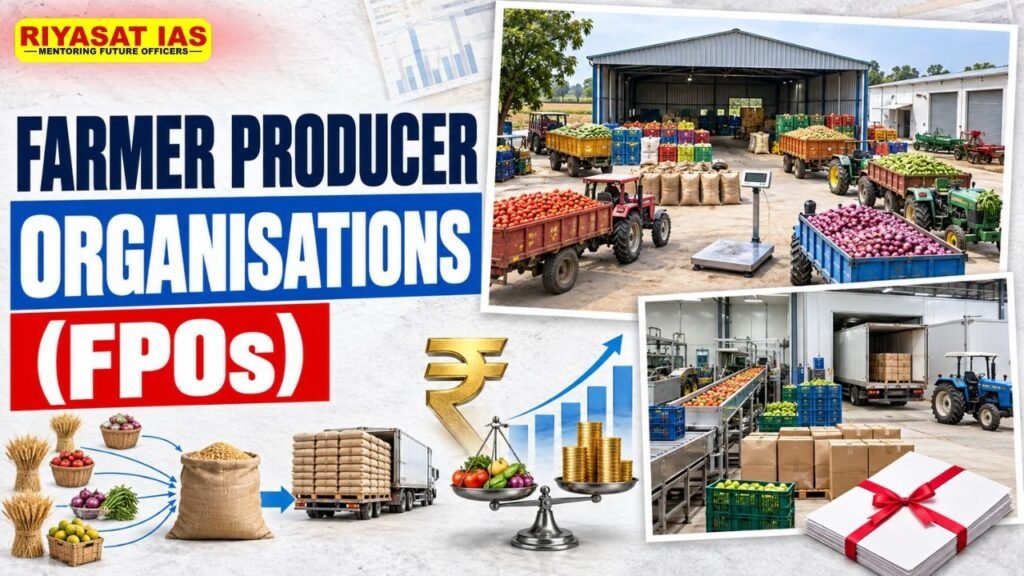
When a farmer cultivates a one or two-acre plot, every buyer-seller interaction feels like a uphill task. To buy two bags of fertilizer, he pays a heavy retail markup, to sell twenty sacks of grain, he receives whatever a local trader agrees, and to invest in a cold storage or a tractor, it’s simply out of his means.
Farmer Producer Organizations (FPOs) enable a level-playing field where small and marginal farmers who constitute the 86% of the Indian farmers by workforce, can come together as a formal collective to procure agricultural produce and machinery at wholesale rates, consolidate their grains into commercial-grade volumes, and negotiate prices as one business entity.
It became the Government of India’s idea of a ‘core policy’ in 2020, which allocated the ₹6,865 crore to launch the Central Sector Scheme for Formation and Promotion of 10,000 FPOs. And now with the 10,000-fold entity launched in Khagaria of Bihar’s Kandhamal district, the Atmanirbhar Krishi focussed FPO is set to deal in maize, banana, and paddy produce.
What Exactly is an FPO?
An FPO is a farmer-owned entity that combines both cooperative as well as corporate elements.
They can be incorporated under the Companies Act (Producer Companies) or specific state Co-operative Societies Acts.
Instead of relying only on the village-level middlemen, member farmers can leverage the FPO to:
- Bulk procurement of farm inputs like seeds, fertilizers, farm equipment rentals,
- Local-level value-addition of crops and bagging and grading,
- And forge institutional partnerships by signing supply agreements with commercial food-processing entities, organized retailers, and exporters.
Key Operational Features
- Realizing Economies of Scale: By aggregating the demand of member farmers, FPOs can reduce the input costs in double digits and create truckloads of standardized grains that are in demand by big buyers.
- Adequate State Support: To tide over the initial years of any FPO, every eligible producer company can receive up to ₹18 lakh in management assistance over three years, and a ₹2 crore credit guarantee cover to raise bank loans.
- Digital Market Presence: The FPOs tap into digital marketplaces like e-NAM FPO module or the Open Network for Digital Commerce (ONDC), or APEDA channels for exports.
- Moving Up the Value Chain: Most collectives are now looking to sort, mill, bag, dry, or cold-store their produce so that they can monetize downstream players.
- Significant Women’s Inclusion: With women accounting for 40% of the FPO members, these collectives create substantial gender-inclusion opportunities as women wield significant financial power in managing the FPOs.



Ground Realities: Why FPOs Find It Tough to Scale?
Setting up 10,000 FPOs may be a humongous administrative task, but it is relatively easy to keep them alive and commercially viable in the long run. On-ground realities are that these collectives face numerous headwinds such as:
- The Market Disconnect: Industry estimates suggest that almost 80% of all FPOs still find it incredibly challenging to secure any off-take agreements with institutional buyers. Without any guaranteed buyers, many FPOs are forced to return to the local APMC mandi to sell their grains.
- Regulatory Compliance Burden: A rural collective must always be wary of too many regulatory compliances for food safety (FSSAI), product certification (BIS), and exports (APEDA) which adds up to a mammoth task for a local FPO board.
- Management and Skill Gaps: An FPO is essentially a corporate business entity, but young aggregators don’t have the financial runway to hire a CEO, supply-chain head, or a chartered accountant.
- The Discoverability Gap: There is no single easily accessible national-level directory of FPOs where a corporate food buyer can search for a particular crop, its volumes, and grades.
- Traceability and Quality Demands: Some of the higher-value domestic and international buyers are asking for chemical residue testing, traceability of every consignment, and documentation which many young collectives are not in a position to provide.
Way Forward
- In order to transition FPOs from being dependent on government grants to self-sustaining commercial entities requires a policy and industry-level push in the following areas:
- Live National Directory of FPOs: Create a marketplace directory where all FPOs can list their harvest-ready calendars, grades, logistics partners, and other relevant certifications to facilitate easy buyer discovery.
- Single-window Compliance Desk: Create a unified portal for FSSAI, GST, and other regulatory requirements for easier compliance by rural collectives.
- Scale Local Speciality Clusters: Learn from the Odisha government’s Kandhamal Organic Turmeric FPO model, as well as international examples like Thailand’s One Village, One Product (OVOP) to build geo-specific product clusters.
- Operational Grants for Professional Management: Create targeted operational grants for FPOs to hire professional managers while also training farmer-directors on electronic trading, inventory hedging, and credit-linked note mechanisms.
- Farm-gate Testing and Logistics: Prioritize capital expenditure for rural FPOs on mobile testing labs, processing units, and cold-chain logistics so that the collective can process high-value consignments without distress sales.
Frequently-Asked Questions (FAQs)
What is the biggest difference between an FPO and a traditional cooperative?
While both FPOs and cooperatives are democratic farmer-owned entities, the FPO, particularly in the Producer Company structure, has more flexibility to hire professional management, raise funds as a corporate entity, and function as a commercial enterprise.
What kind of central sector support is available for FPOs?
The central sector scheme offers hand-holding support to these collectives for five years with up to ₹18 lakh in management assistance over three years, equity grants of up to ₹2,000 per member (subject to a maximum of ₹15 lakh per FPO), and loan credit guarantee of up to ₹2 crore.
Do FPOs take away opportunities from the traditional market yards?
Not really. FPOs give farmers an alternative buyer beyond the local middleman. Farmers have the choice to use the FPO’s digital marketplace (e-NAM, ONDC) to reach out to a larger pool of buyers and transact wherever they get a better price without losing out on the traditional mandis.
How was the 10,000th FPO milestone reached?
The 10,000th FPO was registered in the Khagaria district of Bihar’s Kandhamal district, which will focus on aggregating and marketing maize, banana, and paddy produce.
Preparing for UPSC? Get personalised guidance.
Join our UPSC Mentorship Programme for structured preparation, answer-writing guidance, current-affairs support, regular evaluation and personalised feedback.



 Ravi Raaz
 Hassan Khan
 Shadab Ali