
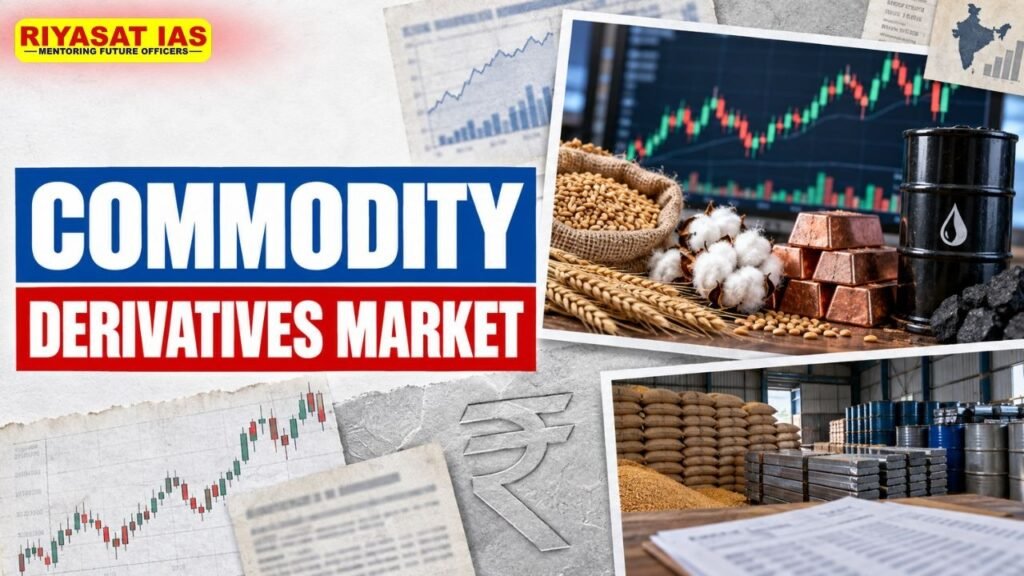
A commodity derivative contract is a financial instrument whose price derivation is based on a physical good. Derivative contracts help players offset the risk of random price changes and identify prices for market fair.
The underlying asset can either be farm produce like wheat, rice, and pulses, or raw material like crude oil, gold, and metal. The four main instruments of commodity derivatives market are forward, future, options, and swap.
What Is a Commodity Derivatives Market?
A commodity derivatives market is a marketplace where financial instruments in the form of contracts are bought and sold. As the price of physical goods influences the price of every financial contract, the market is reflective of a cash market.
Whether goods are sourced from farms or from mines, commodity derivatives provide protection to businesses that can be affected by adverse price changes.
Types of Commodity Derivatives
Commodity derivatives are broadly classified into two categories on the basis of the source of goods:
- Agricultural commodity derivatives
- Non-agricultural commodity derivatives
Agricultural Commodity Derivatives
A commodity derivative contract that has farm produce as its underlying asset is termed as an agricultural commodity derivative. Some of the agricultural commodities that form an underlying asset for derivatives contracts are:
- Cereals: Wheat and rice
- Pulses: Chana and tur
- Spices: Jeera and pepper
- Oilseeds: Soybean and castor
Non-Agricultural Commodity Derivatives
A commodity derivative contract that has non-agricultural raw material as its underlying asset is called a non-agricultural commodity derivative. Some of the non-agricultural commodities that form an underlying asset for derivatives contracts are:
- Crude oil
- Gold
- Silver
- Aluminium
- Iron
Futures and Options in Commodity Market
Despite the common application of both instruments to hedge against similar market risks, future and options contracts are based on different legal stipulations.
Futures Contract
A futures contract is a standardized agreement under which the buyer has a right to claim delivery of underlying asset on a specified date and at a price specified in the contract. The seller on the other side of the contract is obligated to deliver the underlying asset to the buyer upon expiry of the contract term. Either party cannot walk away from the deal regardless of favorable market conditions at the time of settlement.



Options Contract
An options contract is an agreement by which the buyer acquires an option to either buy or sell an underlying asset at a price agreed upon during its signing. An options contract is different from a futures contract because although the former’s holder has the right to purchase or sell the underlying asset, they have no obligation to do so.
Benefits of Commodity Derivatives Market
Hedging and Price Risk Management
The practice of hedging is the most common application of commodity derivatives market. Businesses such as millers, miners, exporters, importers, and manufacturers apply commodity derivatives to hedge against price risk. Opening a commodity derivative position allows these entities to balance their exposure to the cash market.
Hedgers, however, are unable to completely eliminate price risk as they can only limit the extent of damage. The hedge ratio determines the proportion of exposure to price change that a business will be subjected to.
Price Discovery
Commodity derivatives market acts as a confluence point for buyers and sellers to discover a common price for a commodity.
Speculators in the commodity derivatives markets play a crucial role by providing price stability. As speculators are not hedgers they constantly look out for buying opportunities in a derivatives market. The presence of speculators facilitates a stable counterparty environment which prevents market freeze and makes available a true and an agreed-upon price for all market participants.
Which Commodities Are Suitable for Derivative Trading?
For a physical commodity to be suitable for derivative trading certain conditions need to be fulfilled:
- The commodity must have huge demand and supply.
- The commodity must have adequate price volatility to justify its trading on a derivatives market.
- The price of the commodity should be less influenced by government.
- The commodity should have favorable regulatory and legal frameworks to enable smooth trading.
- The commodity should have a reasonable shelf-life to allow for smooth physical settlement of a contract.
Importance of Commodity Derivatives
Commodity derivatives make volatile market prices predictable and enable a fair price discovery mechanism that benefits every market participant. For businesses engaged in processing, trading, and manufacturing that operate on thin margins and are sensitive to price fluctuations, the existence of an active commodity derivatives market can be a lifeline.
FAQs on Commodity Derivatives Market
What Is a Commodity Derivative?
A commodity derivative refers to a financial contract that has a physical good as its underlying asset.
What Are the Major Types of Commodity Derivatives?
The four major types of commodity derivatives are forward, future, options, and swap.
What Are Agricultural Commodity Derivatives?
Agricultural commodity derivatives are commodity derivatives that have farm produce as their underlying assets.
What Are Non-Agricultural Commodity Derivatives?
Non-agricultural commodity derivatives are commodity derivatives that have non-agricultural raw material as their underlying assets.
What Is the Difference Between Future and Option Contract?
A future contract is a binding agreement between a buyer and a seller whereas an option contract gives the holder a right but not an obligation to exercise the contract.
What Is Hedging in Commodity Derivatives Market?
Hedging is a risk management technique that enables market players to offset market risk by taking an opposite position in a commodity derivatives market.
What Is Price Discovery in Commodity Markets?
Price discovery in commodity markets refers to the process of determining a commodity’s fair or true price.
Who Are the Users of Commodity Derivatives for Hedging?
Commercial entities such as millers, miners, manufacturers, exporters, importers, and refiners use commodity derivatives for hedging purposes.
Which Commodities Are Suitable for Derivative Trading?
Commodities that have high commercial value, adequate price volatility, limited government intervention, favorable regulatory environments, and shelf life are suitable for derivative trading.
Preparing for UPSC? Get personalised guidance.
Join our UPSC Mentorship Programme for structured preparation, answer-writing guidance, current-affairs support, regular evaluation and personalised feedback.




 Ravi Raaz
 Hassan Khan
 Shadab Ali