
How do UPSC Mentors Identify Weak Areas in a single session while aspirants struggle for months? Most UPSC aspirants spend 3-6 months identifying their own weak areas — through repeated mistakes, low mock scores, and confused self-evaluation. An experienced mentor can identify the same weak areas in a single 30-minute diagnostic session. The difference is not magic — it is pattern recognition built over hundreds of student diagnostics. This blog reveals the 7-element framework that Riyasat Ali Sir uses for the diagnostic session that begins every Riyasat IAS Mentorship student’s journey.
Why Self-Diagnosis Almost Always Fails
- Aspirants confuse content gaps with strategy gaps with execution gaps
- Self-evaluation is forgiving — patterns get rationalised
- Mock score is a symptom not a diagnosis — does not tell you WHY
- Peer comparison creates wrong priorities
- Without external pattern recognition, the same weak area persists for months
How UPSC Mentors Identify Weak Areas: The 7-Element Diagnostic Framework
Element 1: Answer Writing Sample Analysis
A 250-word answer reveals: structure understanding, opening/conclusion mastery, example integration, multi-dimensional thinking, language clarity, time discipline. Most diagnostics begin here — 2-3 answer samples tell a mentor more than 1 hour of conversation.
Element 2: PYQ Attempt Performance
Asking the aspirant to verbally attempt 2-3 PYQs from different GS papers reveals: subject confidence, decoding ability, content recall, structural thinking. Weaknesses become visible within minutes.
Element 3: Current Affairs Integration Test
“Connect today’s newspaper headline to a static topic.” This single test reveals whether the aspirant is studying in silos or building integration. Silos = a major weakness that takes 60+ days to correct.
Element 4: Daily Schedule Audit
“Walk me through your typical day.” Time allocation across subjects, presence/absence of daily answer writing, current affairs habit, sleep schedule. Schedule problems are usually upstream of every other weak area.
Element 5: Optional Subject Status Check
Specific questions on Optional Paper 1 and Paper 2 status. Most aspirants are weaker than they think — Paper 2 in particular is usually under-prepared. See
the optional subject mentorship framework for the detailed 7-factor evaluation.
Element 6: Mental State Assessment
Without being clinical, an experienced mentor reads: confidence level, anxiety markers, motivation state, family pressure, financial situation. These contextual factors shape what intervention will actually work.
Element 7: Examples Bank Inventory
“Give me 5 unique examples you would use in a GS Paper 1 Society question.” Most aspirants struggle to name 3. This reveals whether the aspirant has personal examples bank — the single biggest answer writing differentiator.
A 30-minute diagnostic with Riyasat Ali Sir reveals what 3 months of self-study cannot. This diagnostic is included in every Riyasat IAS Mentorship onboarding. Apply Now -> iasmentorship.com/admissions
What Happens After the Diagnostic
- Personalised 17-week Mains plan — addressing your specific weak areas first
- Subject sequencing recommendation based on diagnostic findings
- Optional Paper 2 intensity calibration
- Daily answer writing focus areas — your highest-leverage practice topics
- Examples bank building plan — addressing the universal gap
- Schedule restructuring if Daily Schedule Audit revealed issues
Why This Framework Cannot Be Replicated in Test Series or Books
- Test series gives you a score — not a diagnosis of WHY the score is low
- Books cannot read your answer-writing patterns
- YouTube videos give generic content — not your specific gap analysis
- Peer groups validate your existing assumptions — they do not challenge them
- Only experienced personal mentorship combines all 7 elements together
The Compound Cost of Late Diagnosis
| Time of Diagnosis | Wasted Months | Recovery Effort |
| Pre-preparation (best) | 0 months | Standard plan |
| Month 3 of preparation | 3 months | Moderate corrective effort |
| Month 6 of preparation | 6 months | Heavy corrective effort |
| Post-Prelims (this stage) | 12+ months | Restart most components |
| Post-Mains failure | 18+ months | Full re-attempt cycle |
The earlier the diagnosis, the easier the correction. Post-Prelims is still recoverable — but every additional month makes correction harder. See the post-Prelims strategy framework for time-aware planning.
Frequently Asked Questions
Q: Can I do this 7-element diagnostic myself?
Partially — Element 1 (answer sample), Element 4 (schedule audit), Element 7 (examples bank) can be self-attempted with honesty. But pattern recognition across elements requires experienced external perspective.
Q: How long does the Riyasat IAS diagnostic take?
Typically 45-60 minutes for the initial diagnostic. Output is a written personalised 17-week plan delivered within 2-3 days.
Q: What if my weak areas are different from typical patterns?
The framework adapts. Diagnostic is not template-driven — it surfaces your specific issues. Some students have unusual patterns that need custom interventions.
Q: Is the diagnostic in Hindi available?
Yes — full Hindi diagnostic is part of Foundation Mentorship Hindi.
Conclusion
A good mentor identifies your weak areas in 30 minutes through structured pattern recognition. This shortcut saves 3-6 months of self-discovery and prevents months of misdirected effort. The 7-element diagnostic framework is the entry point of every Riyasat IAS Mentorship Program student’s journey. Apply for admission today.
Related Articles & Resources:


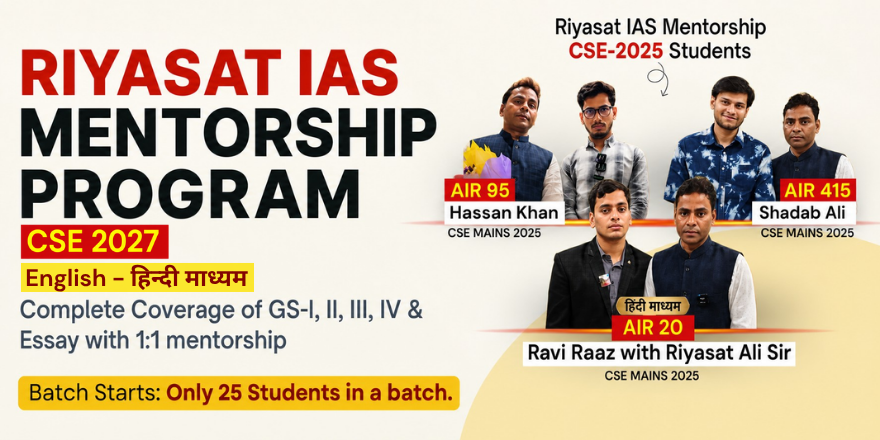

 Ravi Raaz
 Hassan Khan
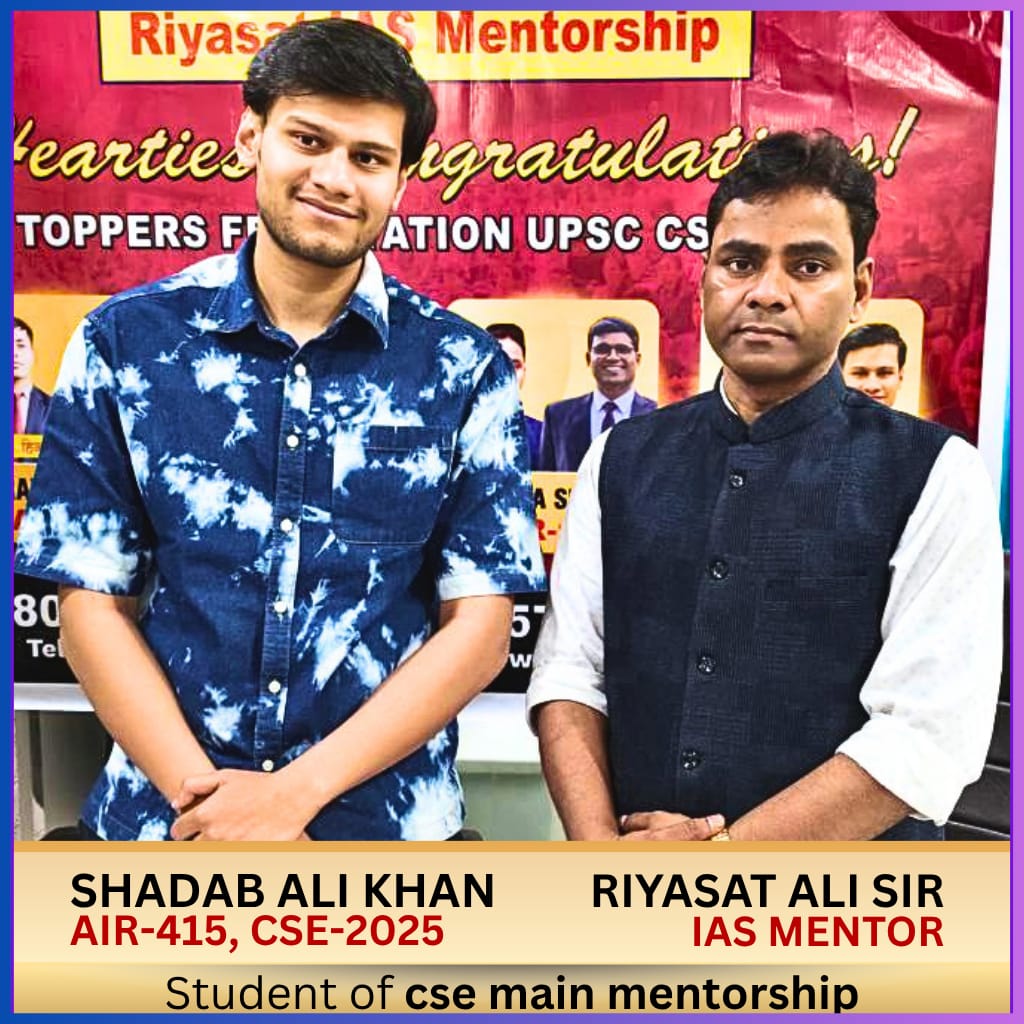 Shadab Ali