
2. Examine the view that financial inclusion is an integral part of social and economic inclusion in a country like India. Also throw light on the usefulness of the R.B.I.’s Financial Inclusion Index. (Answer in 150 words)
Financial inclusion means ensuring that people, especially the poor and vulnerable, have affordable access to banking, credit, insurance and pension services. In India, it is an important means of bringing excluded sections into the formal economy and improving their social security.
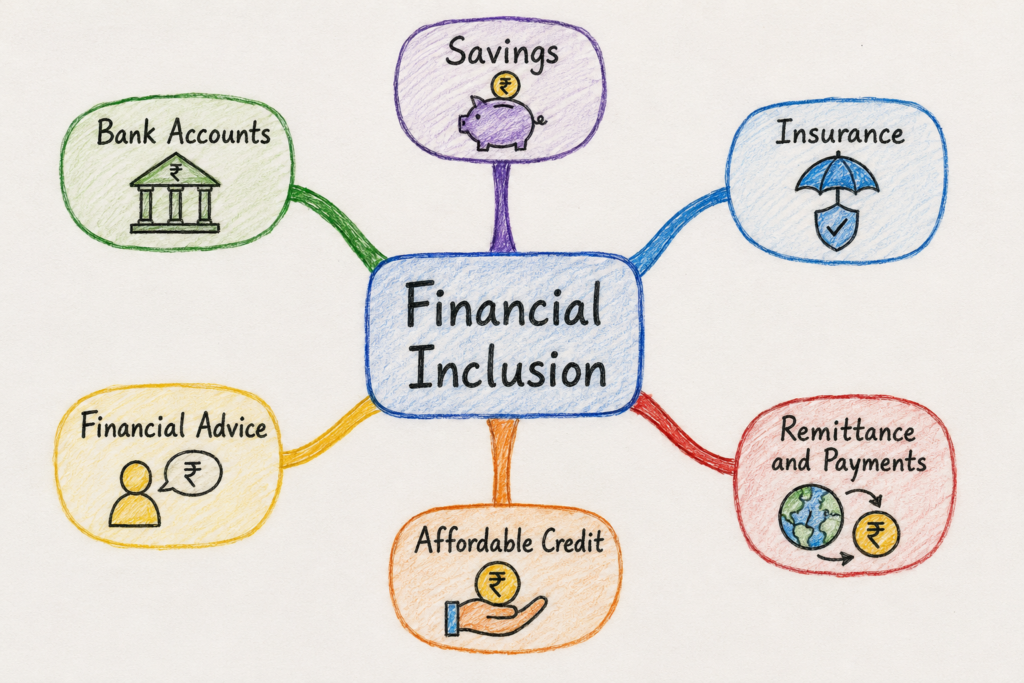
Financial Inclusion as a Driver of Inclusion
- Economic mobility: Credit through PM MUDRA and KCC helps small entrepreneurs and farmers reduce dependence on moneylenders, start businesses and build assets.
- Better welfare delivery: The JAM Trinity enables Direct Benefit Transfers (DBTs), reducing leakages and helping government benefits reach people more directly.
- Women’s empowerment: Over 55% of PMJDY accounts are held by women. Along with SHG–Bank Linkage, this improves women’s financial independence and their role in household decisions.
- Social security: PMJJBY, PMSBY and APY protect vulnerable and informal workers against major risks such as death, accidents and old-age insecurity.



The Financial Inclusion Index (FI-Index), ranging from 0–100, gives a wider picture of financial inclusion.
Usefulness of RBI’s FI-Index
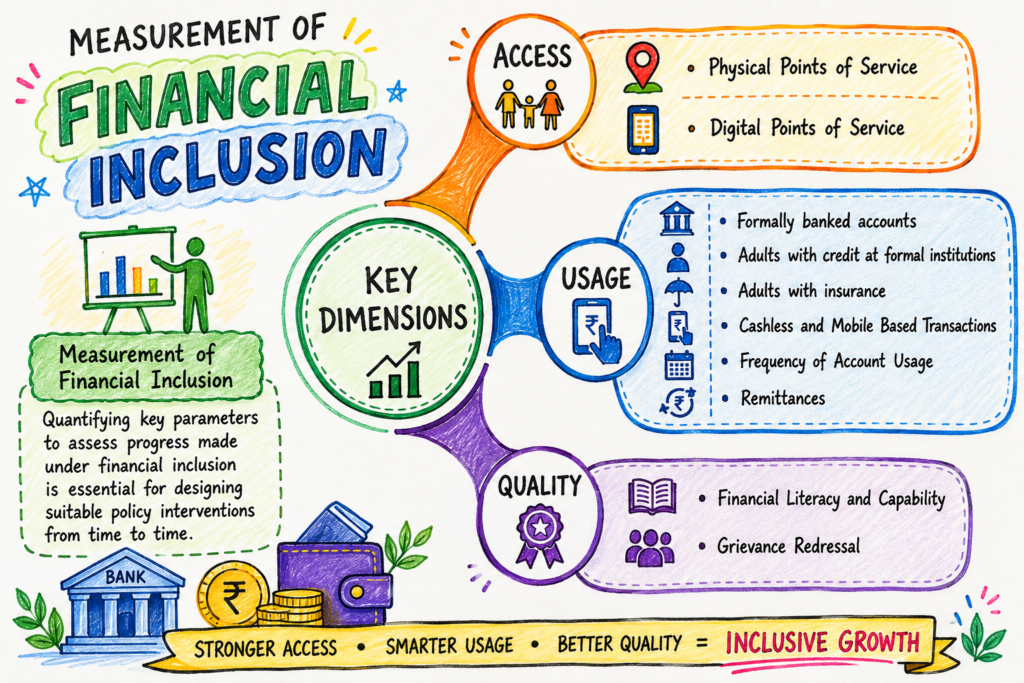
- It uses 97 indicators covering Access (35%), Usage (45%) and Quality (20%), with no base year, thereby capturing cumulative progress.
- Its greater focus on Usage and Quality looks beyond account opening to actual transactions, financial literacy and grievance redressal.
- It helps identify regional disparities and service gaps, supporting targeted interventions under the National Strategy for Financial Inclusion (NSFI).
Conclusion:
Thus, financial inclusion is not merely about opening bank accounts; it is about ensuring that people can actually use financial services to improve their livelihoods, security and participation in the economy.




 Ravi Raaz
 Hassan Khan
 Shadab Ali