
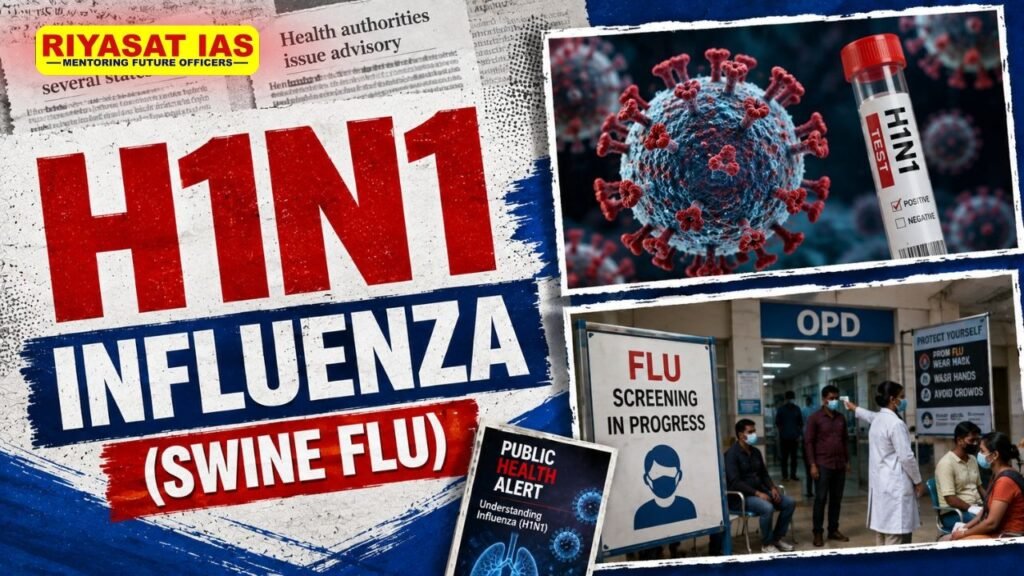
- H1N1 is a subtype of Influenza A virus.
- It is commonly associated with swine flu, though the 2009 pandemic strain was a reassortant virus containing genetic material from swine, avian and human influenza viruses.
- Transmission: Mainly through respiratory droplets and aerosols from infected persons.
- Symptoms: Fever, cough, sore throat, body ache, headache, fatigue and sometimes vomiting/diarrhoea.
- Severe cases: May cause pneumonia, respiratory failure and death, especially in vulnerable groups.
- High-risk groups: Pregnant women, young children, elderly persons and people with certain underlying health conditions.
- Diagnosis: Can be confirmed through laboratory testing, including RT-PCR.
- Treatment: Antiviral medicines such as oseltamivir may be used, particularly for severe disease or high-risk patients.
- Prevention: Vaccination, hand hygiene, respiratory etiquette and avoiding close contact with infected persons.
- Antibiotics: Do not treat influenza viruses; they are useful only when a bacterial infection is also present.
- Important distinction: H1N1 is a viral disease, not a bacterial disease.
Prelims MCQs
Q1. Consider the following statements regarding H1N1 influenza:
- H1N1 is a subtype of Influenza A virus.
- It is caused by a bacterium.
- It can spread through respiratory droplets.
- Antibiotics are the primary treatment for H1N1 infection.



Which of the statements given above are correct?
(a) 1 and 3 only
(b) 1 and 2 only
(c) 2 and 4 only
(d) 1, 3 and 4
Answer: (a) 1 and 3 only
Explanation: H1N1 is a viral infection caused by Influenza A. Therefore, antibiotics do not directly treat it.
Q2. H1N1 influenza is associated with which one of the following?
(a) Influenza A
(b) Influenza B only
(c) Coronavirus
(d) Adenovirus
Answer: (a) Influenza A
Explanation: H1N1 represents a subtype of Influenza A virus.
Q3. With reference to H1N1 influenza, consider the following statements:
- It can cause respiratory illness.
- RT-PCR can be used for laboratory confirmation.
- Vaccination can help prevent influenza infection.
- It is transmitted exclusively through contaminated food.
Which of the statements given above are correct?
(a) 1, 2 and 3 only
(b) 1 and 4 only
(c) 2 and 4 only
(d) 1, 2, 3 and 4
Answer: (a) 1, 2 and 3 only





 Ravi Raaz
 Hassan Khan
 Shadab Ali