

- Section 15 of the Bharatiya Nagarik Suraksha Sanhita (BNSS), 2023 deals with Special Executive Magistrates.
- It corresponds to Section 21 of the Code of Criminal Procedure (CrPC), 1973.
- The BNSS came into force on 1 July 2024.
Appointment
- Appointing authority: State Government.
- Who can be appointed?
- Executive Magistrates.
- Police officers not below the rank of Superintendent of Police (SP) or equivalent.
- Tenure: For such term as the State Government considers appropriate.
- Area/function: For particular areas or specific functions.
- Powers: The State Government may confer powers available to Executive Magistrates under the BNSS.
Important Prelims Facts
- Special Executive Magistrates are not the same as Special Judicial Magistrates.
- Special Executive Magistrates are appointed by the State Government, whereas Special Judicial Magistrates are appointed by the High Court, upon a request from the Central or State Government, under Section 11 of the BNSS.
Prelims MCQs
Q1. With reference to Special Executive Magistrates, consider the following statements:
- They are appointed by the State Government.
- A police officer below the rank of Superintendent of Police can be appointed under Section 15 of the BNSS.
- They may be appointed for particular areas or specific functions.

Which of the statements given above are correct?
(a) 1 and 2 only
(b) 1 and 3 only
(c) 2 and 3 only
(d) 1, 2 and 3
Answer: (b) 1 and 3 only.
Explanation: Section 15 permits the appointment of police officers not below the rank of SP or equivalent, so Statement 2 is incorrect.
Build a strong foundation for UPSC CSE 2027 with our GS Foundation Course. Master essential subjects, strengthen conceptual clarity, and prepare systematically for Prelims and Mains with expert guidance.
Join our GS Foundation Course 2027 today and take the first step towards your IAS dream!



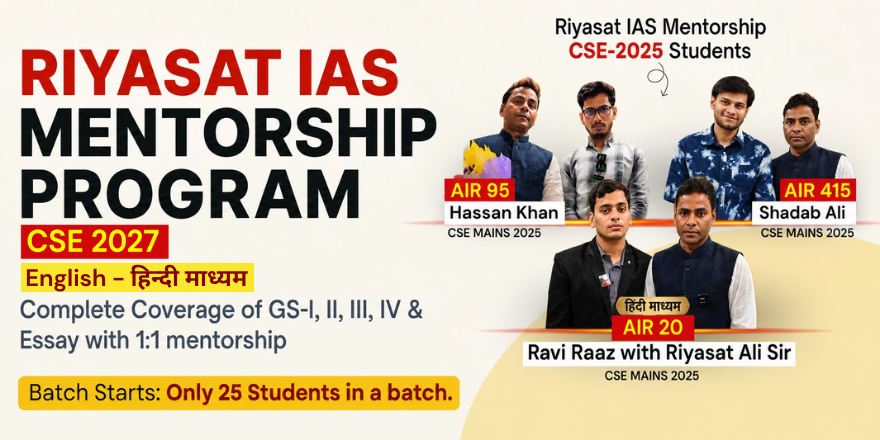

 Ravi Raaz
 Hassan Khan
 Shadab Ali