GS-II | Polity | Fundamental Rights | Governance | Child Rights | Digital Regulation
Why in News?
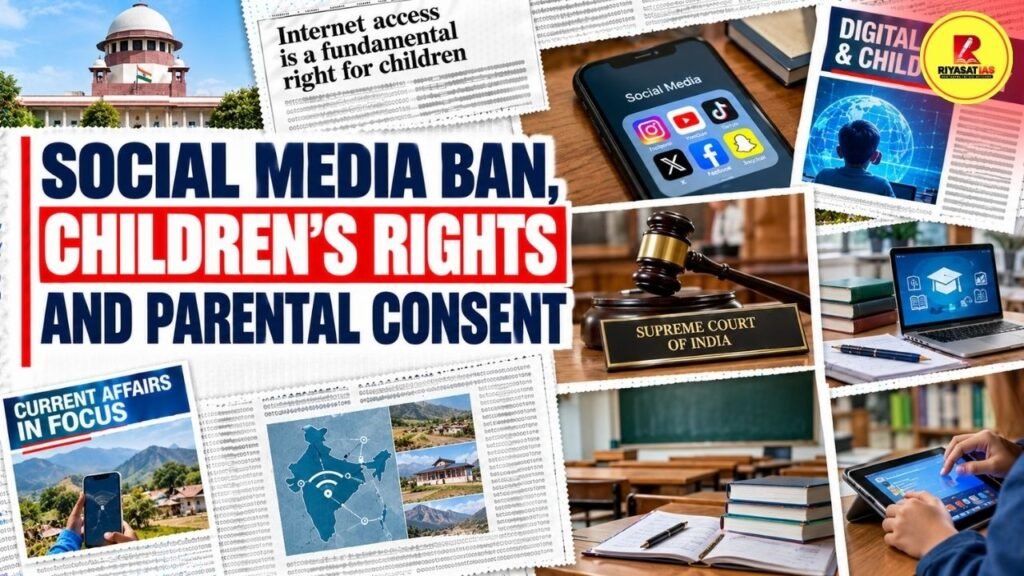
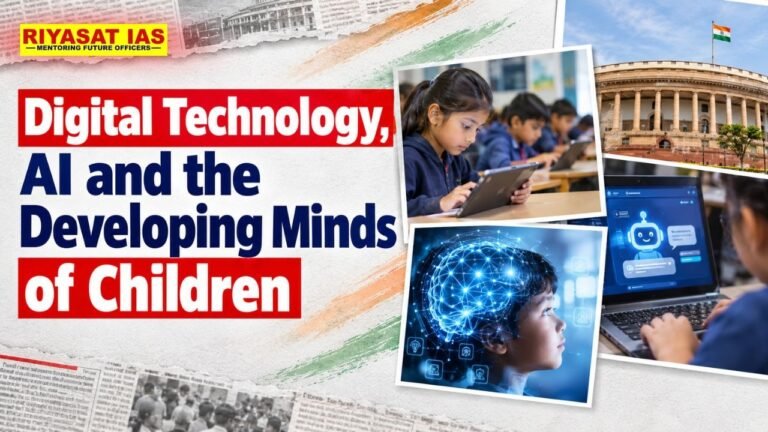
- The Supreme Court’s decision dated October 15th to not allow a total prohibition of children from using the Internet was based on the recognition that all children regardless of age have a fundamental right to use the Internet.
- The court noted that restricting children from accessing these platforms due to failure to remove inappropriate content is essentially “mistakenly blaming the victim” as the problem.
- The focus is now on how parents can provide consent, guidance, and supervision for their children using social media rather than a complete ban on the use of social media by children.
Key Issues and Concerns
1. Internet Access as a Fundamental Right
- Constitutional Protection: The right to access the internet is not specifically identified as a distinct Fundamental Right. However, accessing the internet enables individuals to exercise rights protected by Article 19(1)(a) such as the right to free speech and expression.
- Children’s rights: Children also enjoy constitutional rights, including freedom of expression, access to education and protection of life and personal liberty.
- Against Blanket Bans: Restricting access to education, information and social participation based solely on age can limit children’s access to all these things.
- Platform Accountability: The digital world should not restrict children’s ability to participate on the internet because platforms are unable to control what types of content can be accessed.
2. Parental Consent and Oversight
- Supreme Court’s Approach: The Court recommended parents provide consent, guidance, and supervision for children as well as a “child” setting.
- Government’s Standpoint: The central government has been given an opportunity to decide if the consent of parents is needed for minors (below 18) to create social media profiles.
- Objective: Parents involved in their child’s internet use will help protect their children from exposure to negative material, such as hate speech or sexually explicit content, as well as being victims of cyberbullying or other forms of harassment, and the collection of private information by companies.
- Key Issue: Too much control from parents can make it hard for kids to be independent at their own age, keep secrets and make their own choices.
3. Digital Personal Data Protection Rules
- Parental Consent: The Digital Personal Data Protection framework requires that you have verifiable consent from the parent(s) prior to being able to process a child’s personal data. This requirement is in place unless there are specific exceptions to the requirement.
- Age Verification: Platforms must establish the identity of the person who provides their consent to use the service as an adult by establishing a credible form of identification and age.
- Digital Locker: One method of verifying parental identity and age is through a digital locker that has been approved by the federal government.
- Implementation Challenge: Platforms may need to identify all children on their platform, possibly by implementing age verification processes for every user.
- Privacy Concerns: The potential for increased surveillance risk, data breach, and potential misuse of collected and retained personal identification information is a concern with respect to privacy.
- Digital exclusion: The complexity of providing proof of identity could negatively impact those families and children who have limited access to the digital identity infrastructure.
4. Key Governance Challenges
- Privacy vs Protection: Safety of children must be balanced against the right to privacy, independence from parental control, and freedom of expression.
- Data Minimization: Platforms should only collect the data needed to verify a user’s age, and then retain that data for as long as required by law.
- Proportional Regulation: The use of proportionate regulations, such as targeting harmful content and addictive designs, could prove more effective than blanket age-based restrictions.
- Accountability Gap: Regulation must be created to hold social media companies accountable for exposing kids to dangerous content, instead of leaving it up to the child and parent to deal with.
Way Forward
- Risk-Based Regulation: Adopt appropriate risk-based regulations for each type of digital service, as opposed to applying a broad ban to all.
- Age Verification with Privacy Protection : Create dependable ways to verify age while protecting individual privacy by not requiring people to provide unnecessary identification and/or store potentially sensitive data about themselves.
- Platform Accountability: Protect users from online threats such as cyberbullying, child sexual abuse content, deceptive design practices, and inappropriate recommendations.
- Parental and Digital Literacy: Educate both parents and children regarding how to utilize their digital devices in a responsible manner, including understanding privacy settings, staying safe while using the internet, identifying misinformation and utilizing technology responsibly.
- Independent Oversight: Ensure clear enforcement, independent auditing, and accessibility to grievance-redress mechanisms.
- Constitutional Balance : Develop child protection procedures which meet the legal requirements of legality, necessity and proportionality; but do so in accordance with the fundamental rights.
Conclusion
- The problem is not how to prevent kids from using the internet, but how to create a safer environment on the internet for them.
- A rights-based approach will require combining child safety measures with parent involvement, privacy-enhancing regulations and accountability by the platforms.
- Rather than trying to limit kids’ access to the internet, we need to focus on regulating the threats that exist for them online.
UPSC Mains Practice Question
Q. Children’s protection in the digital age requires regulating online risks rather than imposing blanket restrictions on internet access. Discuss in the context of fundamental rights, parental consent and data protection in India.
Prepare Smarter with Riyasat IAS! Strengthen your understanding of social issues, digital rights, and governance with our UPSC Mentorship Program 2027.
Enrol in our GS Foundation Course to enhance your current affairs preparation and answer-writing skills for UPSC CSE.



 Ravi Raaz
 Hassan Khan
 Shadab Ali