
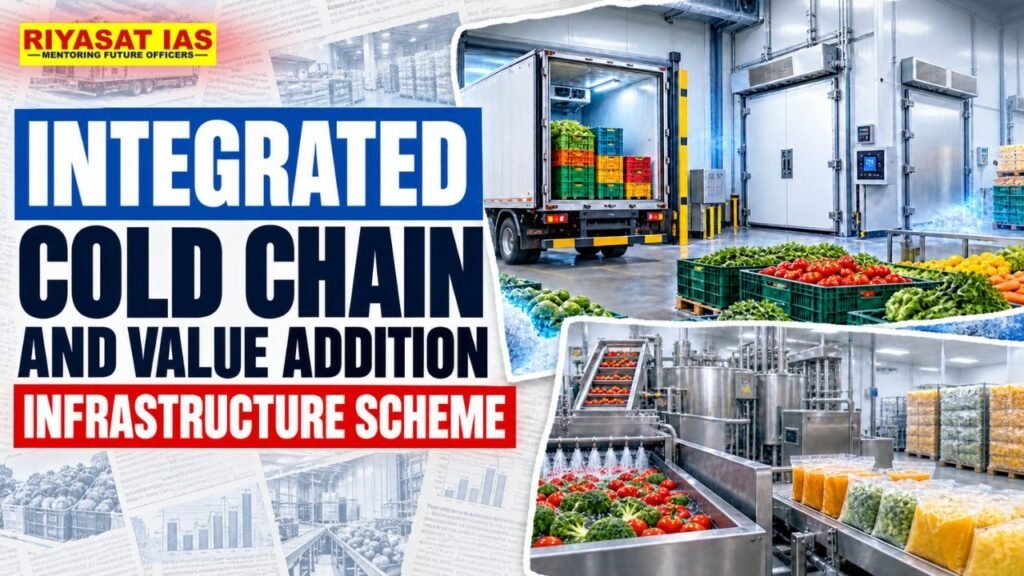
Every year, millions of tons of fresh harvest, milk, and seafood get wasted in the process of being kept in a hot environment. The Ministry of Food Processing Industries (MoFPI) launched an Integrated Cold Chain and Value Addition Infrastructure Scheme in 2008 as part of its larger umbrella scheme Pradhan Mantri Kisan SAMPADA Yojana (PMKSY).
Its primary mission is to create an integrated cold chain infrastructure that will help ensure a steady supply of farm-produce, dairy, and seafood from fields and farms directly to our plates without having to get spoiled en route.
However, the scheme also involves working on other aspects of the supply chain to make sure wastage is minimized and farmers have quality produce to sell.
What Does the Scheme Set Out to Do?
The main task of this program is to help construct a uniform cold supply chain infrastructure that leaves behind minimal or zero wastage of food products.
In specific terms, the aims include:
- Reducing post-harvest wastage and ensuring a steady supply of farm-produce, dairy, and seafood to markets and consumers.
- Increasing farmers’ bargaining power by helping them keep their produce longer.
- Ensuring a constant supply throughout the year and reducing price volatility in the produce market.
- Facilitating value addition and helping add more worth to farm-produce and dairy products.
How Much Money Does the Scheme Offer?
Setting up cold storage and cold chain infrastructure involves heavy capital costs. In this scheme, the central government offers grants-in-aid to approved organizations.
The quantum of financial assistance varies depending on whether the project location falls in a general area or a special category.
| Infrastructure Type | General Areas | North-Eastern & Himalayan States, ITDP Areas, Islands |
| Storage & Logistics (pack houses, pre-cooling, cold storage, reefers) | 35% of eligible cost | 50% of eligible cost |
| Value Addition & Processing (processing centres, preservation units) | 50% of eligible cost | 75% of eligible cost |



What Does the Scheme Cover?
The scheme involves setting up a comprehensive and integrated cold supply chain that includes the following:
- Farm Gate: Village collection centres pack houses with sorting and grading system, pre-cooling units.
- Transit: Containerized transport including insulated and refrigerated trucks and vans.
- Hubs: Multi-temperature cold storage, processing, and distribution centers. Specialized facilities like food irradiation units.
Note: Under the revised guidelines 2025, the focus areas of the cold supply chain are dairy, meat, poultry, marine/fish (excluding shrimp), and non-horticulture produce.
Who Can Apply?
All kinds of businesses can apply to this scheme ranging from small-time entrepreneurs to large farmland owners.
Eligible applicants include:
- Individual entrepreneurs and proprietary concerns
- Farmer Producer Organizations (FPOs) and Farmer Producer Companies (FPCs)
- Self-Help Groups (SHGs) and Cooperatives
- Private limited companies, Limited Liability Partnerships (LLPs), and partnership firms
- Central and State Public Sector Undertakings (PSUs) and NGOs
Where Are We Now in the Implementation of the Scheme?
- As of 31 March 2026, the MoFPI has sanctioned 408 cold chain projects in India.
- The guidelines were revised in May 2025 to update the scheme parameters based on the feedback received from the scheme’s implementers.
The Key Challenges Faced in the Implementation of the Scheme
Despite the laudable objectives of the scheme, several challenges have hindered the functioning of the cold supply chain in India.
These issues include:
- The island problem: Having a fully equipped cold storage room would not solve the problem if there is no means of transport to get the produce to markets or processing facilities.
- Heavy power bills: Keeping things cold continuously is a costly affair especially in the tropical climate. Power outages are not uncommon in rural India.
- Last-mile roadblocks: Connecting cold storages to secondary wholesale markets.
The Way Ahead
- India’s cold chain infrastructure needs a radical overhaul and reimagining to help achieve a sustainable supply chain.
- Cold storage could be linked directly to local solar power farms and biomass power packs to minimize the energy bill.
- At the farm level, micro chilling facilities linked with cloud-based tracking systems would help ensure the produce reaches the retailer without getting spoilt.
Frequently Asked Questions
When Was the Scheme Launched?
The scheme has existed since 2008 and later became a part of the PMKSY.
Which Ministry Was the Scheme Set Up Under?
The Ministry of Food Processing Industries (MoFPI).
What Is the Maximum Amount of Assistance Offered under the Scheme?
Up to ₹10 crore per approved project.
What is the Objective of the Scheme?
To create a seamless integrated cold chain system to help store and transport farm and dairy produce with minimum wastage.
What Kind of Facilities are Approved under the Scheme?
Farm gate pack houses, pre-cooling units, cold storage units, refrigerated transport, processing facilities, and food irradiation units.
How Many Projects Have Been Approved under the Scheme?
As of 31 March 2026, 408 integrated cold chain projects have been approved.


 Ravi Raaz
 Hassan Khan
 Shadab Ali