
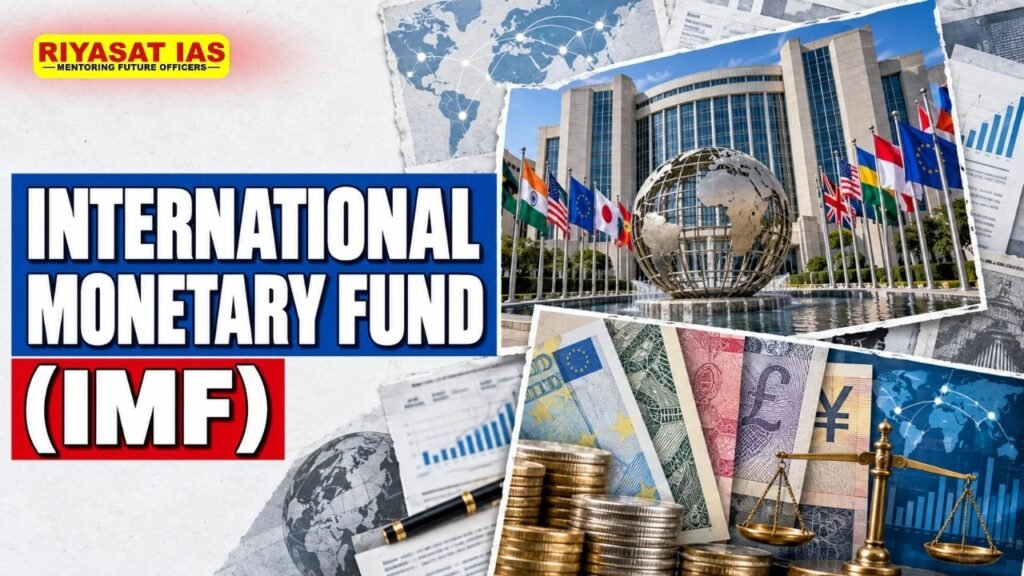
International Monetary Fund (IMF) is an international financial organization whose main goal is to ensure monetary cooperation and financial stability. In addition, the Fund’s objectives include facilitating international trade and sustainable economic growth.
The Fund can provide financial assistance to member states with a balance of payments problem. Surveillance and technical assistance are also available from the Fund.
Since its creation at the Bretton Woods conference, the Fund has been through several crises, such as the oil crisis of 1973, the Asian crisis of 1997, and the financial crisis of 2008.
In addition, the Fund is crucial to developing countries and emerging markets because the help the Fund provides can be both financial and technical.
Objectives of the Fund
At its core, the IMF’s purposes and objectives focus on promoting an international monetary system that seeks to provide monetary and financial stability.
1. Promoting Monetary Cooperation
The Fund encourages monetary cooperation among member countries.
2. Maintaining Financial Stability
The Fund monitors economic and financial developments and situations that may affect individual countries or the international monetary system.
3. Facilitating International Trade
With stable international finances, international trade between countries becomes more feasible. Therefore, the IMF facilitates international trade through its work at the financial stability front.
4. Promoting Economic Growth and Employment
The Fund also seeks to promote economic growth and sustainable employment.
5. Reducing Poverty
Apart from focusing on financial stability, the Fund also focuses on promoting cooperation and partnerships that seek to reduce poverty and address social issues.
6. Supporting Developing Countries
Developing countries are supported through policy advice, concessional financial assistance and technical assistance.
7. Promoting Exchange-Rate Stability
The Fund promotes exchange-rate stability and an open international payments system.
Functions of the Fund
The IMF’s work can be broadly divided into three major functions:
- Financial assistance
- Economic surveillance and assessment
- Capacity development
Apart from these three, the Fund promotes international trade and economic growth and discourages domestic policies that may impede financial and economic stability. Member countries cooperate with each other in promoting the objectives of the Fund.
1. Financial Assistance
A country facing a balance of payments problem can turn to the Fund for financial assistance. The Fund provides financial resources so that the country can meet its external financing needs, support growth and stability and reduce pressure on its foreign exchange reserves.
However such assistance usually comes with conditions and becomes crucial when the borrowing country has to undertake economic restructuring.
2. Surveillance
The Fund conducts surveillance which means it monitors and assesses economic and financial developments in member countries as well as the global economy.
The Fund analyses economic trends, assesses possible risks and provides policy recommendations which could be related to managing a country’s economy and finances or addressing issues affecting the international monetary system.
3. Capacity Development
The IMF supports capacity development by providing technical assistance and training.
This is particularly important for developing countries which need capacity development support in order to undertake economic policy designing, implementation and evaluation. The areas could include:
- Tax policy and administration
- Legal issues
- Economic statistics
- Bank management
- Governance
- Economic policy
History of the IMF
The Fund was created at the United Nations Monetary and Financial Conference, popularly known as the Bretton Woods Conference, held in New Hampshire in July 1944.
Representatives of 44 countries participated in the conference. The objective of the conference was to create a new economic system that would promote international cooperation as against the economic nationalism of the pre-World War II period.
The Bretton Woods system proved to be relatively stable for some time and helped maintain stable exchange rates and kept most currencies convertible. Under the Bretton Woods agreement, the US dollar was directly tied to gold while other currencies were directly linked to the US dollar.



However, the system eventually came under pressure and collapsed. A new international monetary system emerged under which exchange rates became more flexible in the early 1970s.
Role of the Fund in Major Global Crises
The role of the Fund has evolved over time in response to changing global economic and financial situations.
1. Oil Crisis
The 1973 oil crisis created balance of payments problems for many oil-importing developing countries. The Fund responded by setting up an Oil Facility which was wound up in 1976.
2. Transition of Former Soviet Economies
Following the collapse of the Soviet Union, the Fund provided technical assistance and policy advice to former Soviet republics as they transitioned to market-oriented economic policies.
3. Asian Financial Crisis
During the Asian Financial Crisis of 1997, several Asian countries turned to the Fund for assistance which came with requirements to undertake economic and financial reforms.
4. Global Financial Crisis
Following the 2008 financial crisis, the Fund strengthened its surveillance on financial systems, economic spillovers and external positions so that it could respond effectively in case of future crises.
Governance Structure of the Fund
The Fund has a multi-level governance structure. The major organs and leadership posts include:
- Board of Governors
- International Monetary and Financial Committee (IMFC)
- Development Committee
- Executive Board
- Managing Director
- Secretary
Board of Governors
The Board of Governors is the Fund’s supreme policy-making body that deals with important issues such as quotas, Special Drawing Rights (SDRs), membership and international agreements.
The Board consists of Governors and Alternate Governors who are nominated by member countries. The Board usually meets once a year, though can meet at any time.
International Monetary and Financial Committee
The International Monetary and Financial Committee (IMFC) advises the Board of Governors on issues relating to the international monetary and financial system and makes recommendations on areas where reforms should be considered.
The committee has 24 members and reviews the state of the world economy as well as issues relating to the Fund’s Articles of Agreement and international financial system.
Development Committee
The Development Committee focuses on issues affecting developing countries and emerging markets.
The committee provides a forum for consultations and promotes coordination on development and growth-related issues. The committee has 30 members with representation based on relative size of member economies.
Executive Board
The Executive Board deals with the day-to-day operations and activities of the Fund.
It reviews developments in member countries as well as international economic and financial issues. Decisions are usually taken by consensus, though voting can take place if consensus fails to be achieved.
Managing Director
The Managing Director heads the professional staff of the Fund and serves as President of the Executive Board. The Managing Director is elected or nominated by the Board of Governors.
Quotas in the Fund
Every member country has a quota which determines its contribution to the Fund as well as its voting power.
Several factors are taken into account while determining a country’s quota, including:
- Size of the economy
- Economic openness
- Economic variability
- International reserves
Out of these, GDP is the most important factor, determining a country’s relative economic position and its quota in the Fund.
Special Drawing Rights (SDRs)
Special Drawing Rights (SDRs) are international reserve assets issued and administered by the Fund.
Though not a currency, they represent a claim on the Fund and can be exchanged for freely usable currencies.
The SDR is based on a basket of currencies that includes the US dollar, Chinese renminbi, Japanese yen, euro and British pound sterling. Its value is based on the weighted value of these currencies.
Fund and India
India is one of the original members of the Fund and was among the first developing countries to join the Fund.
The Fund has played a crucial role in India’s economic development, particularly in times of balance of payments and foreign exchange difficulties.
The Fund’s financial assistance to India came with conditions, including measures for liberalisation of the Indian economy.
Fund Assistance to India
India soon after independence faced a serious foreign exchange crisis.
The country sought Fund assistance on several occasions including following the 1965 and 1971 wars as well as following increases in oil prices.
India faced another major foreign exchange crisis in the early 1980s and received a large IMF loan in 1981 to deal with the persistent balance of payments deficit.
The 1991 Balance of Payments Crisis
The 1991 balance of payments crisis was the most severe economic crisis of its kind in India’s history.
India’s foreign exchange reserves could fund imports for only about two weeks as against about three months considered appropriate at the time.
India sought around US$2.2 billion from the Fund and had to pledge its gold reserves as security.
The crisis had a major impact on the economic policy and led to a series of reforms, particularly liberalisation and deregulation, to improve the country’s foreign exchange position.
India’s Role in the Fund
India has an important role in the Fund.
The Finance Minister of India is the ex-officio Governor of the Fund. The Governor of the Reserve Bank of India is the Alternate Governor.
According to the source material, India’s voting power is 2.44% representing SDR 5,821.5 million.
India’s constituency includes Bangladesh, Bhutan, Sri Lanka and Nepal, according to the source material.
India is also a major supplier of funds to the Fund through Notes Purchase Agreement (NPA) and New Arrangements to Borrow (NAB).
Criticism of the Fund
While the Fund has played an important role in providing financial assistance, its policies have faced criticism.
One of the major criticisms is regarding the voting power which is based on quotas. Many developing countries consider the system to be unfair as it gives more say to countries with higher quotas.
IMF assistance usually comes with policy stipulations which are considered by critics as not being conducive to the interests of borrowing countries.
Another criticism of the IMF is that it fails to take into consideration the social, political, legal and economic conditions of the developing countries when designing its policy recommendations.
Structural Adjustment
One of the criticisms of the IMF is the structural adjustment programmes.
If privatisation measures are introduced without considering the social and political implications, it can lead to adverse social consequences.
Major IMF Reforms
Major IMF reforms were completed in 2010 and took effect from 2016.
The reforms were aimed at making the organisation more representative and effective. They:
- Increased the representation of emerging economies.
- Increased their quotas.
- Reduced the quotas of countries whose quotas were considered to be disproportionate to their economic weight.
- Increased emerging-market representation in the Executive Board.
Conclusion
The Fund promotes international economic cooperation through financial assistance, economic surveillance and capacity development.
Its financial assistance becomes crucial when member countries face balance of payments problems. India’s experience with the Fund, particularly in the context of the 1991 crisis, underlines the importance of the Fund’s financial assistance in times of severe external financial pressure.
At the same time, the Fund continues to face criticism on the issue of conditionality and unequal representation as well as its impact on the economic sovereignty of member countries.
FAQs
What is the IMF?
The IMF is an international financial organisation that promotes monetary cooperation, financial stability, international trade and sustainable economic growth.
When was the IMF created?
The IMF was created in 1944 at the Bretton Woods Conference.
What are the main functions of the IMF?
The three main functions are financial assistance, economic surveillance and capacity development.
What is IMF surveillance?
It refers to the IMF’s monitoring and assessment of the economic and financial conditions of member countries and the international economy.
What are SDRs?
Special Drawing Rights (SDRs) are international reserve assets administered by the IMF.
What determines a country’s voting power in the IMF?
A country’s voting power depends on its quota share in the IMF.
What was the IMF’s role in India’s 1991 crisis?
The IMF provided emergency financial assistance of about US$2.2 billion. The crisis also led to major economic reforms, including liberalisation and deregulation.
When did India last receive financial assistance from the IMF?
According to the source material, India has not received financial assistance from the IMF since 1993, and all loans taken from the Fund had been repaid by 31 May 2000.
Who represents India at the IMF?
The Finance Minister of India is the ex-officio Governor, while the Governor of the Reserve Bank of India is the Alternate Governor.


 Ravi Raaz
 Hassan Khan
 Shadab Ali