
6. (b) Some moral philosophers argue that spending some of your resources—without significantly affecting your financial stability—to help other people who badly suffer is our moral duty and not merely a matter of charity. Justify this claim by explaining the distinction between duty and charity. (Answer in 150 words)
Introduction
The difference between duty and charity is whether helping others is something we merely choose to do or something we ought to do. When a small sacrifice can prevent serious suffering without threatening our own basic well-being, compassion can become a moral responsibility.
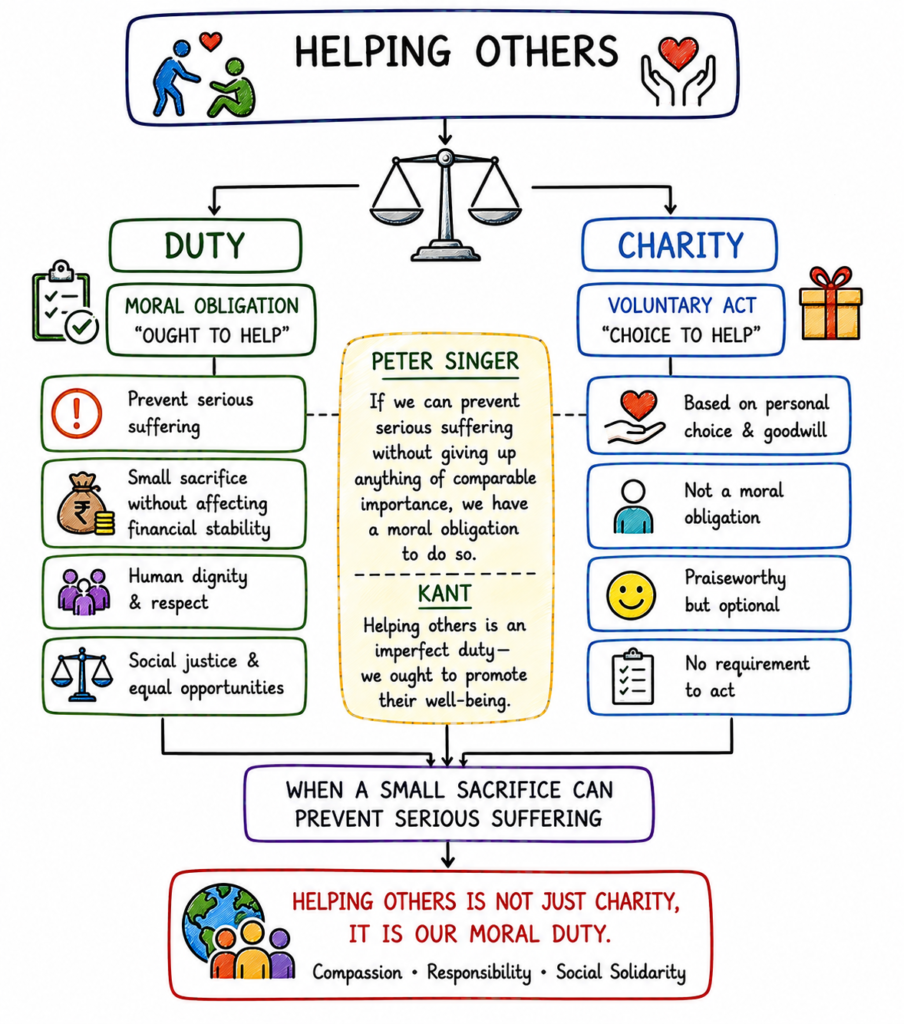
Duty versus Charity
- Moral obligation: A duty requires us to help when we reasonably can, while charity is generally a voluntary and praiseworthy act.
- Preventing suffering: Peter Singer argues that if we can prevent serious suffering without giving up anything of comparable importance, we have a moral obligation to do so.
- Beneficence: Kant considers helping others an imperfect duty, requiring us to contribute to their well-being while retaining reasonable freedom in choosing how to help.
- Social justice: Sharing surplus resources can reduce the effects of unequal opportunities and circumstances of birth.
- Human dignity: Helping someone facing hunger or homelessness should not be viewed merely as generosity; it reflects respect for their dignity.
- Reasonable limits: Duty does not demand self-sacrifice that threatens one’s own basic needs.



Example: Donating a small part of one’s income to provide meals or education for an underprivileged child may have little impact on the donor’s financial security but can significantly improve another person’s life.
Conclusion
Thus, when a small sacrifice can prevent serious suffering, helping others moves beyond charity and becomes a matter of moral responsibility, compassion and social solidarity.





 Ravi Raaz
 Hassan Khan
 Shadab Ali