
2. (a) An endangered tribe has developed a severe skeletal deformity. A university research has identified a mineral supplement as a possible remedy, though clinical trials are yet to be conducted. Should the District Magistrate (DM) use this research on the tribe? Discuss from the perspective of medical and administrative ethics. (Answer in 150 words)
Introduction
The DM faces a difficult choice between offering a potentially life-changing remedy and protecting a vulnerable tribe from an unproven treatment. Since the community is endangered, even a well-intentioned experiment could have serious consequences.
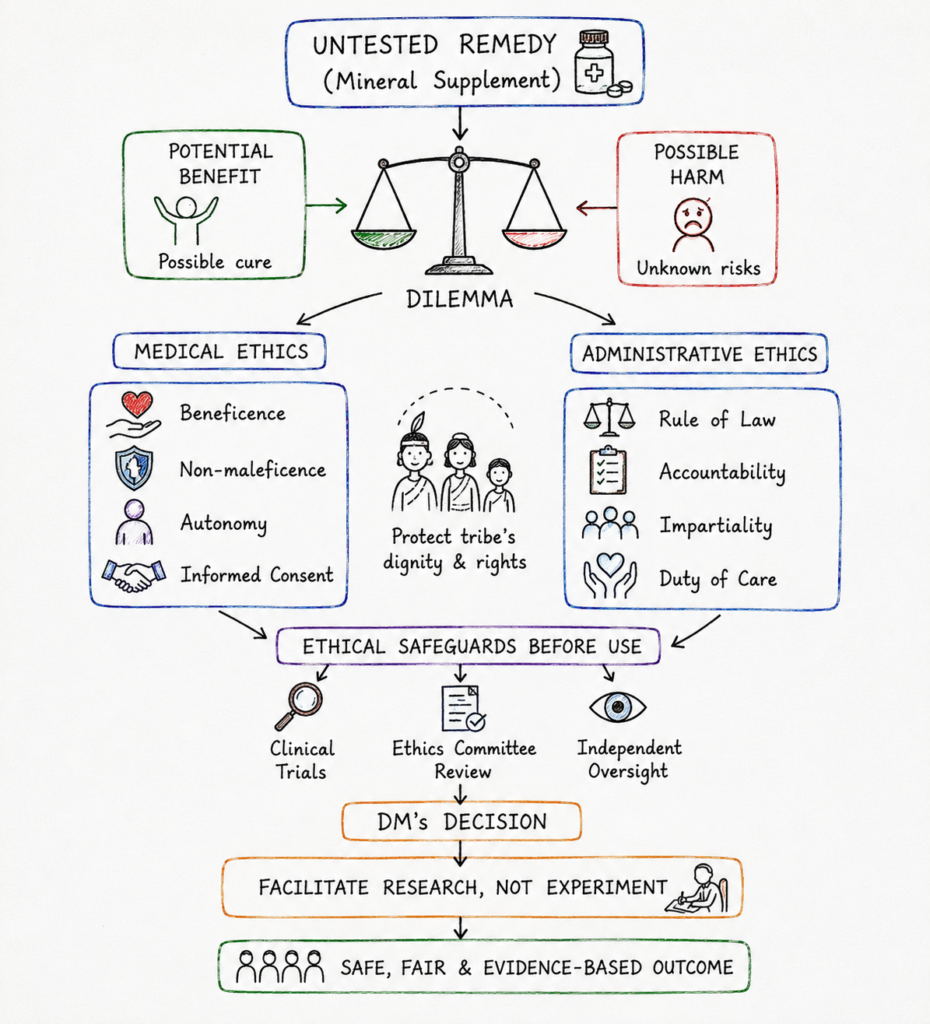
Medical Ethics
- Non-maleficence: An untested supplement may produce unforeseen side effects and cause greater harm.
- Beneficence: The possibility of treating a severe deformity creates a responsibility to explore the remedy rather than simply ignore it.
- Autonomy: The community should receive information in a culturally appropriate and understandable manner before making any decision.
- Informed consent: Participation must be voluntary and free from coercion, particularly because the tribe may be socially and economically vulnerable.
- Research ethics: The community should not become a testing ground merely because it has limited alternatives; proper scientific and ethical safeguards must precede human trials.



Administrative Ethics
- Rule of law: The DM cannot bypass established medical, research and regulatory procedures merely because the situation is urgent.
- Duty of care: At the same time, administrative responsibility requires him to facilitate scientific investigation of a potentially useful remedy.
- Impartiality: The decision should be based on evidence and expert advice rather than political pressure, emotion or the desire for quick results.
- Accountability: Any approved study should have independent oversight, monitoring and clearly assigned responsibility.
- Trust and dignity: Protecting the community from exploitation is essential for maintaining its faith in public institutions.
Example: In vulnerable populations, medical research must follow safeguards such as ethical committee review and informed consent so that communities are not exposed to experimental interventions simply because they have fewer healthcare alternatives.
Conclusion
The DM should not directly administer the untested supplement. Instead, he should facilitate its scientific evaluation through competent medical and regulatory authorities, ensure informed participation and continue available supportive care meanwhile.
Thus, the ethical approach is to “not abandon a possible cure, but never pursue it by bypassing safety.” This balances beneficence, non-maleficence, autonomy and administrative responsibility.



 Ravi Raaz
 Hassan Khan
 Shadab Ali