

The most instinctive response to disappointing UPSC mock test scores, stagnating answer quality, or a sense of inadequate preparation is to study more — add another hour, reduce sleep by 30 minutes, cut leisure activities, push the daily study count from 9 to 11 hours. This response is natural, admirable in its commitment, and frequently counterproductive.
Additional hours of preparation produce better results only when the existing preparation hours are being used in the right direction. When they are not — when the preparation architecture is flawed, when the activities don’t match what the examination rewards, when the feedback loop is absent — more hours in the same direction produce more of what the current hours are already producing. Which, if the current hours are not producing results, is exactly the problem.
This guide identifies six specific situations where studying more hours will not solve the preparation problem — and what change will.
Situation 1: Mock Test Scores Are Plateauing
When mock test scores stop improving despite continued reading and test-taking, the instinct is to read more on the subjects where scores are low. This is almost always the wrong response. A mock test score plateau almost never indicates insufficient reading. It almost always indicates one of three things that additional reading cannot fix:
- Recall failure, not knowledge gap: The information was read and initially understood but has not been maintained through revision cycles. Additional reading adds more information to a system that is already losing what it has; additional revision cycles of what was already read would improve scores more than additional reading.
- Reasoning error pattern: The wrong option is consistently chosen for a specific type of MCQ (statement-based, elimination-based, cause-and-effect) despite knowing the content. This is a technique problem, not a content problem — technique training on that specific MCQ type will improve scores; more content reading will not.
- Current affairs gap: Questions on current developments are being missed not because of insufficient reading but because the current affairs note system is not producing the specific, GS-tagged, revision-ready format that Prelims recall requires. A better note system, not more reading, addresses this.
The fix: error categorisation (knowledge gap vs recall failure vs reasoning error vs current affairs) within 48 hours of each mock test. The category of the error determines the type of preparation that addresses it — not the quantity.
Situation 2: GS Answer Quality Is Not Improving
When GS Mains practice answers are not improving in quality despite extensive reading and regular writing practice, more reading and more writing are unlikely to accelerate the improvement. Answer quality improvement is driven by one specific input that more study hours cannot substitute: specific, external, sentence-level feedback on your actual answers.
An aspirant who has written 200 practice answers and self-evaluated them across 10 months has developed preparation confidence — and possibly a well-practised set of answer writing habits, some of which are costing marks in ways that self-evaluation cannot see. More writing without external feedback reinforces the existing habits, both strong and weak. What changes answer quality is the external evaluation that reads your specific answer, identifies what your specific sentences communicated (not what you intended them to communicate), and tells you precisely what the correction looks like.
The fix: two answers per week submitted for external evaluation from someone who reads them as an examiner would, with specific written feedback on your sentences. Not model answers — your answers.
Situation 3: You Are Reading the Same Material Again Instead of Practising with It
Re-reading a primary reference that was already covered — Laxmikanth for the third linear read, the same History source for the second cover-to-cover pass — is the most common form of ‘studying more’ that produces the least incremental benefit. The material is already known; what the preparation lacks is not exposure to it but retrieval practice that makes it exam-day accessible.



The specific preparation activities that convert known material into exam-day-retrievable knowledge are: active recall from revision capsules (close notes, recall from memory, check gaps), PYQ practice on covered chapters (tests retrieval under MCQ-format pressure), and timed answer writing on covered topics (tests retrieval under construction-format pressure). All three are more efficient than re-reading for the specific goal of improving exam performance on material already covered.
The fix: when you find yourself re-reading material you have already covered, substitute one of the three retrieval practice activities above. The time investment is similar; the examination performance return is substantially higher.
| Want a specific diagnosis of what change will improve your preparation more than additional hours? → Apply for Riyasat IAS Mentorship |
Situation 4: You Are Exhausted and Cognitive Performance Is Declining
The most straightforward situation where more studying is counterproductive: sustained cognitive fatigue. An aspirant who has reduced sleep to 5–6 hours for several weeks to accommodate a longer study schedule is producing significantly lower quality preparation in their additional hours than they would in 7–8 hours of sleep-supported preparation.
Memory consolidation occurs primarily during sleep — the retention of what was studied on a given day is strengthened during that night’s sleep. Cutting sleep to gain study hours simultaneously reduces the effectiveness of all the study hours that preceded the cut. A 9-hour study day with 7.5 hours of sleep is meaningfully more productive than an 11-hour study day with 5 hours of sleep, because the consolidation of the 9 hours is stronger than the consolidation of the 11.
The fix: when preparation productivity is declining despite increasing hours, investigate sleep quality and quantity before any other variable. Restoring 7.5–8 hours of sleep and reducing study hours to 8 will produce better retention and answer quality than the sleep-deprived 11-hour schedule.
Situation 5: Your Optional Subject Is Receiving ‘Extra Hours’ That GS Has Not Received
Some aspirants discover late in preparation that their Optional Subject is inadequately prepared and respond by adding Optional hours on top of an already full GS schedule — producing an 11–12 hour day that is not sustainable and that may be borrowing cognitive capacity from the well-prepared GS material.
The fix here is not additional hours but reallocation: reduce the time spent on well-performing GS subjects to protect a fixed, quality Optional slot. The preparation pie does not need to grow; it needs to be redistributed. The net preparation quality is higher with a sustainable 9-hour day that includes 2 dedicated Optional hours than with an unsustainable 12-hour day that includes 3 Optional hours at the end of cognitive depletion.
Situation 6: The Preparation Architecture Is Wrong, Not Inadequate
When preparation has been consistently hard for 6+ months without producing the mock test scores or answer quality that the effort warrants, the problem is almost certainly architectural, not volumetric. The preparation is working in the wrong direction — reading without revision, writing without evaluation, covering without practising, accumulating current affairs without integrating it. More hours in the wrong direction will never produce the results that fewer hours in the right direction would.
The fix: a preparation audit that identifies what is wrong with the architecture, not how many more hours can be added. What is the current affairs format? How many answers have been externally evaluated? When was the last full revision cycle of Month 1 material? What does the Optional daily allocation actually look like? The answers to these diagnostic questions identify the architectural problems that additional hours cannot solve.
| Signal That More Study Hours Will Not Help | What Will Actually Help |
| Mock test scores plateauing despite continued reading | Error categorisation to identify recall vs knowledge vs technique — then address the specific category |
| Answer quality not improving despite regular writing | External answer evaluation with sentence-level specific feedback — not more writing, better feedback |
| Re-reading already-covered material | Substitute active recall, PYQ practice, or timed answer writing on the same material |
| Declining concentration and memory across the day | Restore 7.5–8 hours of sleep; reduce study hours if necessary to protect sleep |
| Optional Subject being crammed into extra hours | Reallocate existing study time — protect a dedicated Optional slot by reducing well-performing GS time |
| 6+ months of hard preparation without results | Preparation architecture audit — diagnose the structural problem before adding more hours |
Frequently Asked Questions
How many hours per day is optimal for UPSC preparation?
Quality hours — hours of focused, directed, varied preparation that includes output (answer writing, PYQ practice, active recall) as well as input (reading, note-making) — matter more than total hours. For most full-time aspirants, 8–9 quality hours of preparation produces better results than 12 hours where the final 3–4 hours are degraded by fatigue. Working professionals with 5–6 available hours should prioritise the highest-return activities (revision, answer writing, Optional) in those hours rather than attempting to extend to match full-time aspirant schedules.
How do I know if my preparation hours are being used in the right direction?
Three indicators: First, is PYQ accuracy improving on topics I covered more than 4 weeks ago? If not, the revision cycle is insufficient. Second, have any of my practice answers been externally evaluated and received specific feedback? If not, writing without evaluation may be reinforcing weak habits. Third, is the ratio of output time (writing, PYQ practice, active recall) to input time (reading) at least 30:70 or better? If output is less than 20% of preparation time, the preparation is input-heavy in ways that limit examination performance.
Is there a point at which studying fewer hours with better direction is clearly better?
Yes — and the research on learning and memory consolidation consistently shows this. Studies on deliberate practice across high-performance domains (medicine, music, language learning) show that 4–6 hours of focused, varied, feedback-rich practice typically produces more skill development than 10–12 hours of undifferentiated practice. For UPSC, this translates to: 8 quality hours (2–3 hours answer writing with external evaluation, 2 hours targeted revision, 1.5 hours Optional, 45 minutes current affairs, remaining time on primary reading) is likely to outperform 12 hours of primarily input-only reading.
Conclusion
Studying more is the right response to preparation problems caused by insufficient time investment. It is the wrong response to preparation problems caused by wrong direction, absent feedback, insufficient revision, architectural flaws, or cognitive fatigue. Distinguishing between these two types of problem — and responding to each correctly — is the preparation intelligence that separates aspirants who work hard and improve from those who work hard and plateau. The six situations above, with their specific fixes, give you the diagnostic framework for identifying which problem you are actually facing and what change will actually address it.
| Riyasat IAS Mentorship — Personal Guidance for UPSC CSE Direct mentorship from Riyasat Ali Sir │ Hindi & English Medium │ 100% Online — Apply Now |


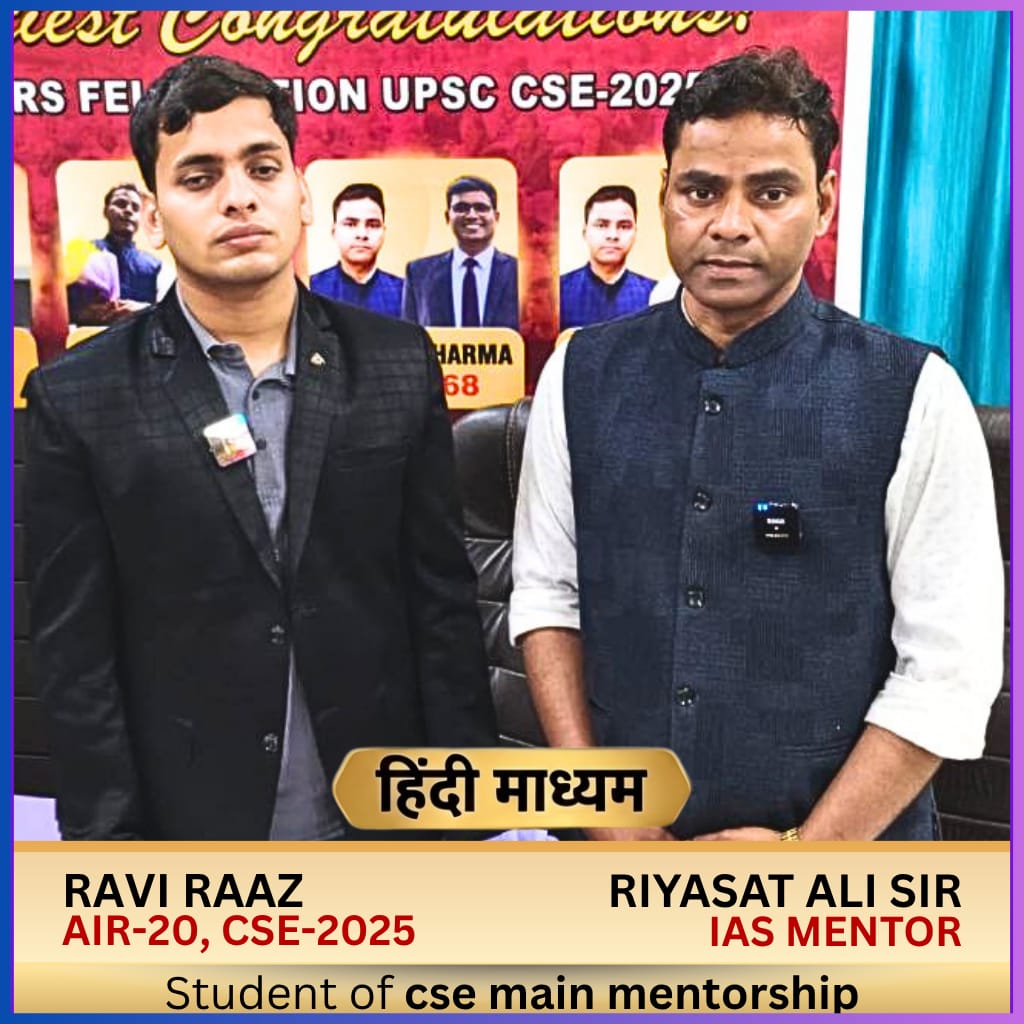 Ravi Raaz
 Hassan Khan
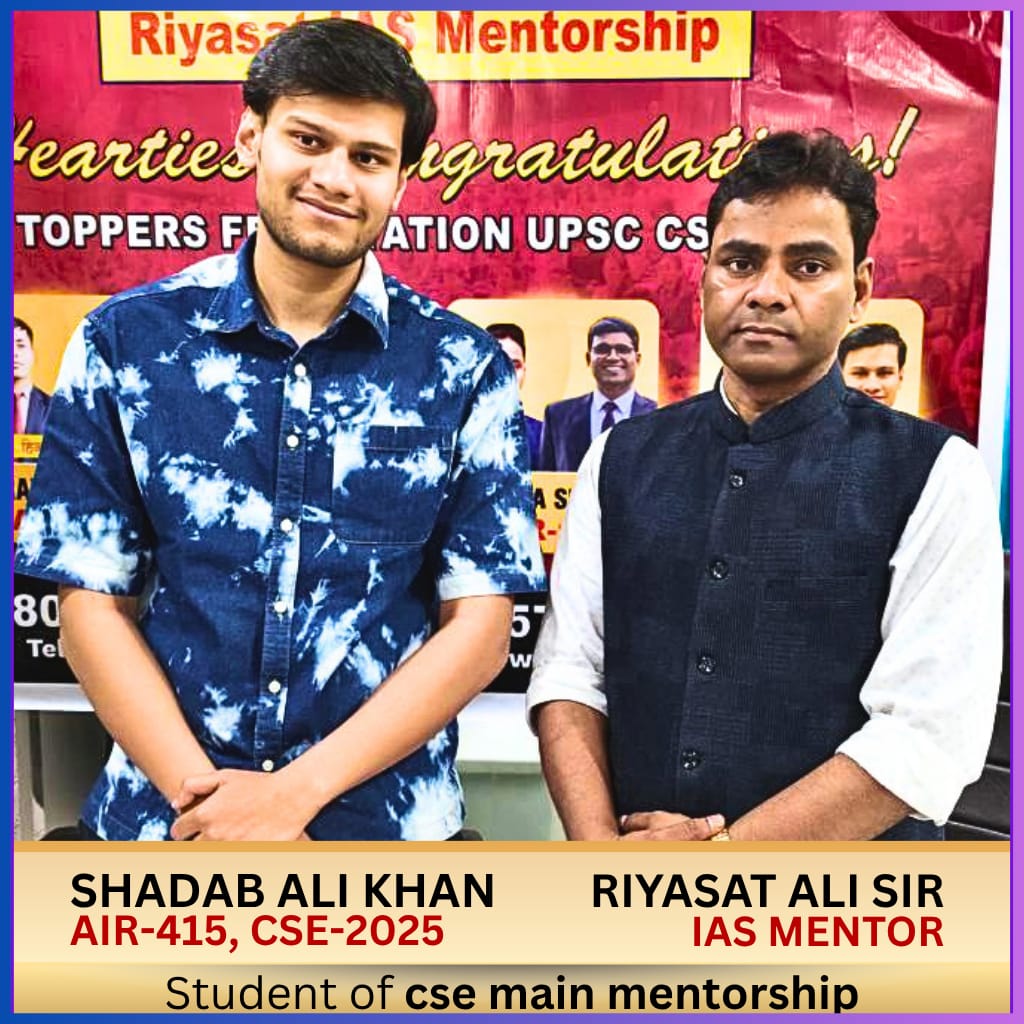 Shadab Ali