
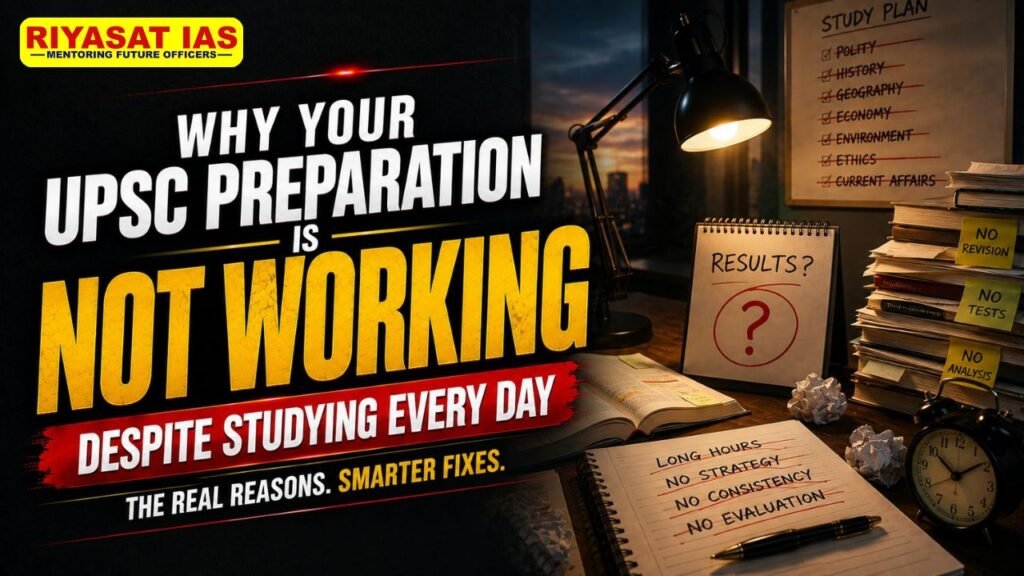
One of the most demoralising experiences in UPSC preparation is studying 8–10 hours daily for months and not seeing the results that the effort should produce. Mock test scores plateau. Mains answers feel inadequate despite reading extensively. The syllabus feels endless despite sustained reading. The gap between effort invested and results produced is real — and it is almost never caused by insufficient effort.
The cause is almost always structural. The preparation is working hard in the wrong direction, using the wrong measurement of progress, or lacking the specific activities that convert knowledge into examination performance. This guide identifies six specific structural reasons that preparation fails despite consistent daily effort — and what changes in each case.
Reason 1: You Are Measuring Progress by Coverage, Not by Performance
The most common mismeasurement in UPSC preparation is treating the completion of chapters as a proxy for preparation quality. ‘I covered Laxmikanth this month’ feels like progress — and it is. But covering Laxmikanth and being able to produce a competitive analytical answer on Article 356 under 9-minute time pressure are entirely different states that feel identical from inside the preparation.
When coverage is the primary measurement, more reading feels productive even when it is not producing examination-level performance. The signal that this mismeasurement is occurring: mock test scores are not improving despite continued reading. When this pattern appears, the problem is not insufficient coverage — it is that coverage without the output practice that converts knowledge into performance is producing familiar information, not exam-level retrieval.
The fix: shift the primary measurement from coverage completed to performance produced. How did I score on the PYQs from this chapter immediately after reading it? How many of the 7 value points in this answer were present when I wrote it timed at 9 minutes? These are performance measurements that coverage measurements cannot substitute.
Reason 2: You Are Reading Without Revision — Building Coverage That Decays
Reading 10 hours per day without a revision architecture produces a specific and consistent failure pattern: the aspirant covers more and more material while retaining less and less of the material covered in the first months. By Month 8, Month 1’s Polity is largely forgotten. By Month 10, Month 3’s Economy has faded. The preparation is simultaneously growing in breadth and shrinking in retrievable depth.
The Ebbinghaus forgetting curve is the mechanism: without revision at 48 hours, 7 days, and 3 weeks after first coverage, retention falls to 10–15% within a month. Ten hours of daily reading without revision cycles is less efficient than 6 hours of reading with revision cycles, because the reading without revision is producing information that the examination cannot access.
The fix: 30–40% of daily preparation time allocated to revision from Month 1 — active recall from revision capsules, PYQ practice on covered topics, and timed answer writing that retrieves rather than re-reads. Reading more is not the solution to poor retention; revising what has been read is.
Reason 3: You Have Never Had Your Answers Evaluated by Anyone
An aspirant can write 500 practice answers across a preparation cycle and plateau in quality if none of those answers are read by someone who assesses them as an examiner would. Self-evaluation is structurally limited: you read what you intended to write, credit implied evidence, and interpret ambiguous sentences favourably. The specific errors that cost marks — demand misidentification, generic evidence, restatement conclusions — are systematically less visible from inside the writing than from outside it.
The paradox: the more preparation experience you have, the more confident your self-evaluation becomes — and the less accurately it reflects examiner-perspective quality. An aspirant who has written 200 answers over 10 months feels confident in their self-assessment. That confidence may be entirely valid — or it may be a well-practised blind spot. Only external evaluation can distinguish between the two.
The fix: submit two answers per week for external evaluation from someone who reads them as an examiner reads them — not comparing to a model answer, but assessing what your specific sentences communicate. The first session of genuine external evaluation typically reveals specific, chronic weaknesses that months of self-evaluation had not identified.
| Want a preparation audit that identifies why your effort is not producing results? → Apply for Riyasat IAS Mentorship |
Reason 4: You Are Reading Broadly Instead of Practising at Depth
The UPSC syllabus is vast and the instinct is to cover all of it at least once before the examination. This coverage instinct — however natural — consistently produces aspirants who have read everything shallowly and mastered nothing at examination depth. UPSC questions are not comprehensive; they are selective and deep within the topics they do select. An aspirant who has read Laxmikanth once broadly will lose to one who has read it once, revised it twice, and practised PYQs from it three times — even though the first aspirant has also read five additional sources the second has not.
The fix: identify the highest-frequency, highest-mark topics in each GS paper from PYQ analysis and go genuinely deep on those — primary source + multiple revision cycles + timed answer practice + current affairs integration. Accept that lower-frequency topics will receive lighter treatment. Depth on 70% of the syllabus beats breadth across 100% of it in UPSC Mains performance.
Reason 5: Your Current Affairs Preparation Is Prelims-Oriented, Not Mains-Oriented
Many aspirants maintain a daily current affairs habit for 10–12 months and arrive at Mains unable to integrate current affairs into GS answers — because their notes record what happened (Prelims-usable) without recording the analytical GS angle (Mains-usable). Current affairs that is read and noted factually prepares for MCQ recall. Current affairs that is read, noted with GS paper tag and analytical application, and integrated into answer writing practice prepares for Mains analytical arguments.
The fix: convert the current affairs note format to the four-part Mains-oriented structure (event, GS paper and sub-topic tag, static connection, analytical GS angle) from today. Apply it retrospectively to the most recent 6–8 weeks of notes. Integrate current affairs into every GS answer practice session — not as an addition, but as a required element of each answer’s evidence bank.
Reason 6: Your Optional Subject Is Receiving Leftover Time
Optional Subject carries 500 marks — and ‘leftover time’ is exactly the preparation it receives in most aspirants’ daily schedules. GS preparation expands to fill the available hours; Optional gets what remains, which is typically 30–60 minutes at the end of an already-long preparation day. This allocation produces an Optional that is partially covered and weakly answered — and a Mains total that GS performance cannot rescue.
The fix: Optional receives a fixed, first-priority daily slot that is allocated before GS preparation begins, not after it ends. 1.5–2 hours at the start of the day, protected from encroachment regardless of what GS work remains. This single scheduling change — moving Optional from leftover to first-priority — consistently produces the most immediate improvement in overall Mains mark trajectory for aspirants whose Optional has been under-invested.
Frequently Asked Questions
How do I know which of these six reasons is causing my preparation to underperform?
The fastest diagnosis comes from two specific data points: your most recent mock test’s error categorisation (what types of errors, in which subjects — knowledge gaps vs recall vs reasoning vs current affairs) and an honest count of how many of your practice answers have been externally evaluated in the last 3 months. If errors are primarily recall failures (not knowledge gaps), Reason 2 is primary. If answers have never been externally evaluated, Reason 3 is primary regardless of other factors. If Optional preparation has received less than 1.5 hours daily, Reason 6 is primary.
Can all six of these structural problems be addressed simultaneously?
Not effectively — and attempting to change six preparation dimensions simultaneously disperses attention without producing durable change in any. Identify the two most significant structural problems from the diagnosis above and address those specifically for 4–6 weeks before adding others. The highest-return single change is almost always external answer evaluation (Reason 3) — because its benefits cascade across preparation quality in ways that the other changes do not.
Is it possible to fix these structural problems in the final 2–3 months before Prelims?
Most — but not all. External answer evaluation (Reason 3), current affairs format conversion (Reason 5), and Optional scheduling (Reason 6) can produce significant improvement within 6–8 weeks of consistent implementation. The revision architecture (Reason 2) requires 3–4 months to produce its full compounding benefit; what can be addressed in 3 months is damage control — building capsules and running 2–3 rapid revision cycles on the highest-frequency topics. Reasons 1 and 4 (measurement and depth) are addressed immediately by shifting to output practice — measurable improvement typically appears within 3–4 weeks.
Conclusion
UPSC preparation that fails despite consistent daily effort almost always traces to one or more of six structural problems: measuring progress by coverage instead of performance, reading without revision architecture, no external answer evaluation, broad coverage instead of analytical depth, Prelims-oriented current affairs, or Optional receiving leftover time. Each problem has a specific, implementable fix. Identifying which ones apply to your current preparation — from mock test error data, from an honest coverage audit, and from counting how many of your answers have been externally evaluated — is the first step in making preparation that is hard become preparation that is effective.
| Riyasat IAS Mentorship — Personal Guidance for UPSC CSE Direct mentorship from Riyasat Ali Sir │ Hindi & English Medium │ 100% Online — Apply Now |

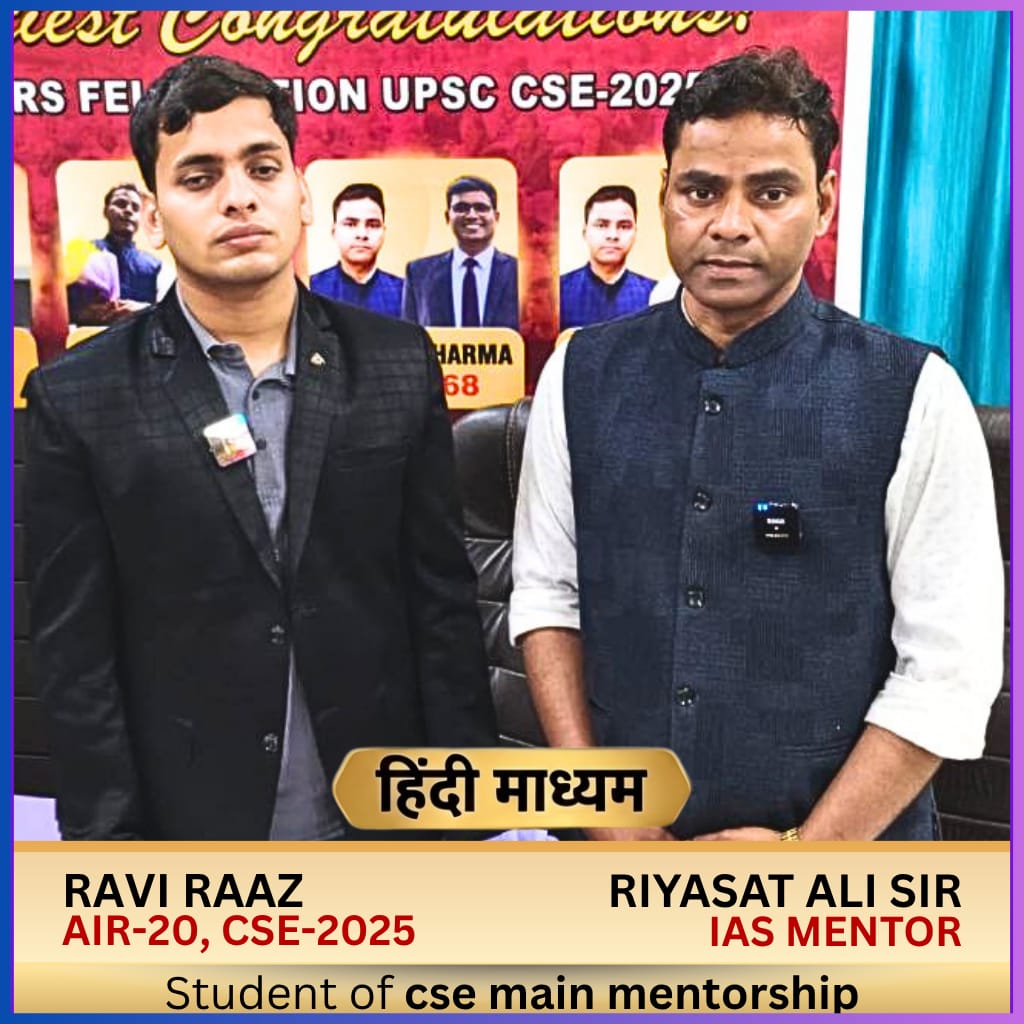 Ravi Raaz
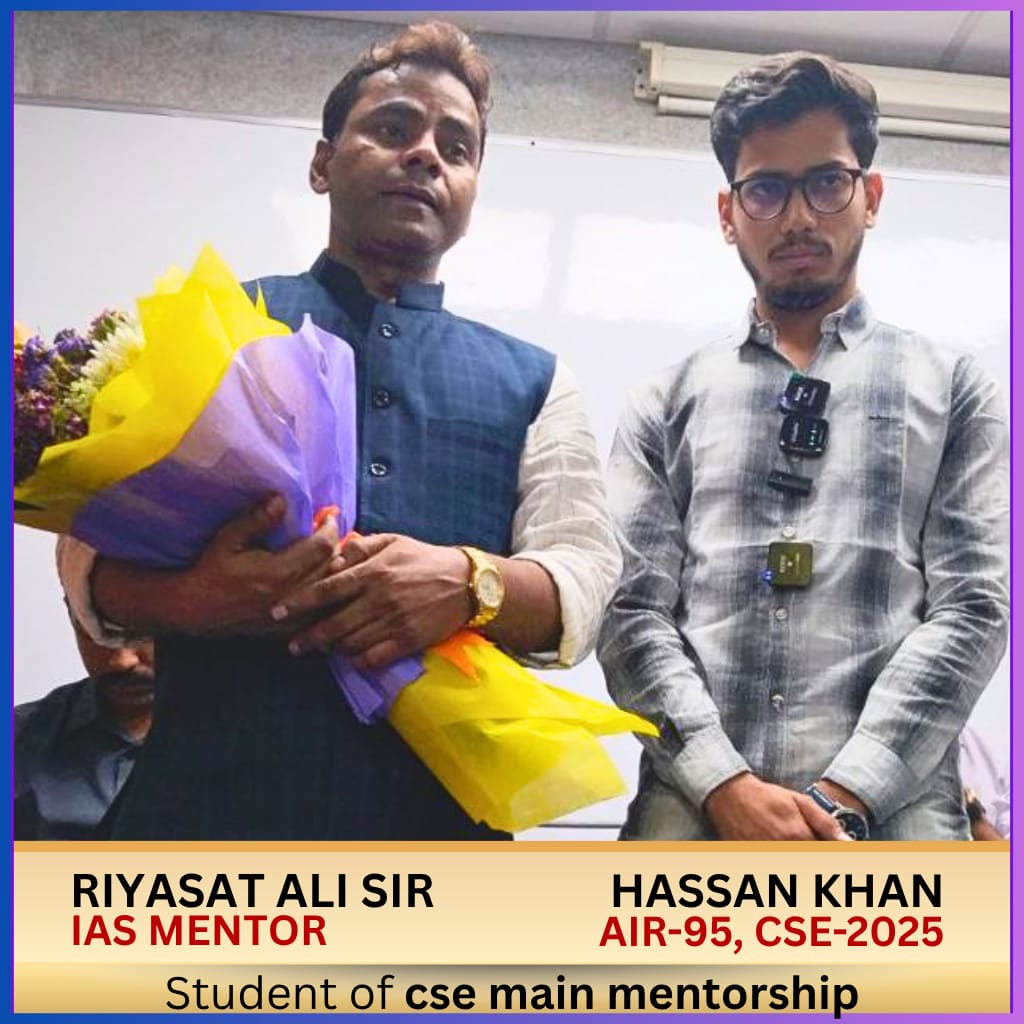 Hassan Khan
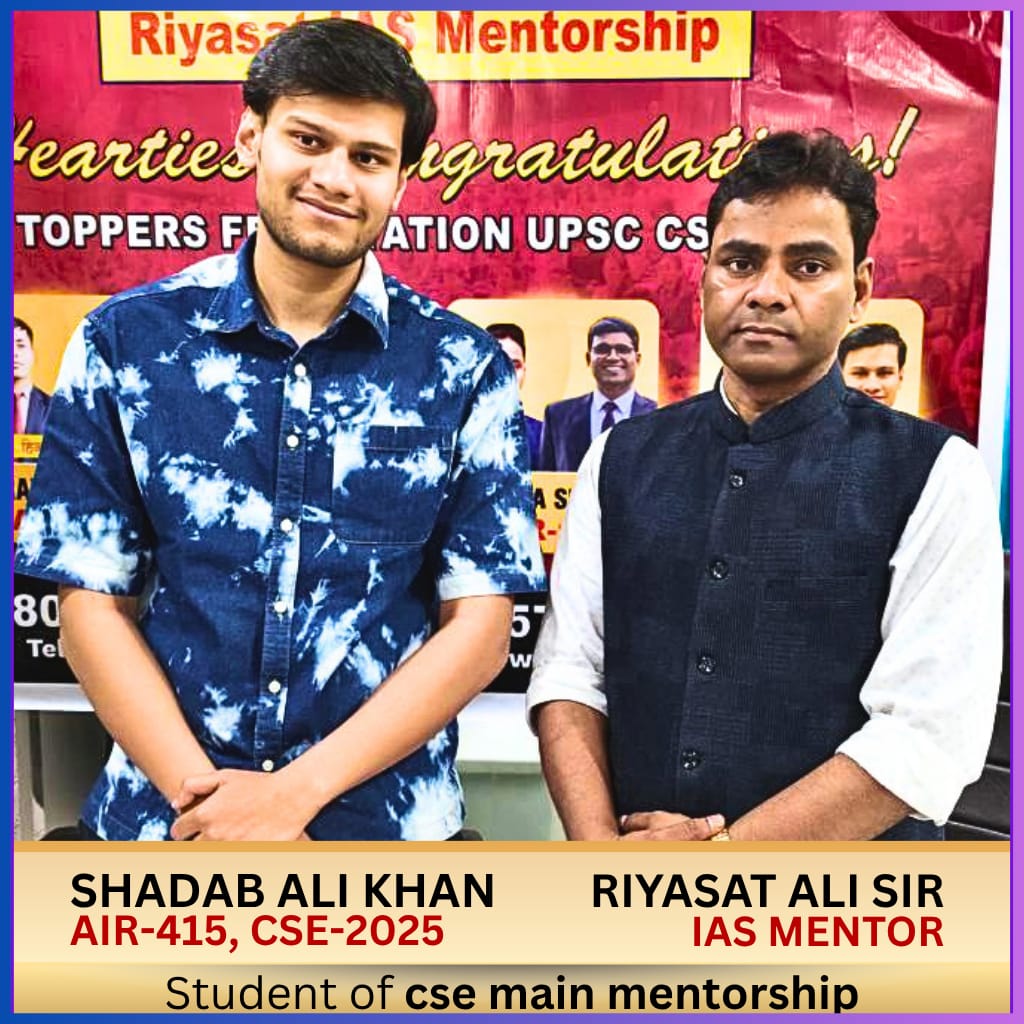 Shadab Ali