

Introduction
The Law of Supply and Demand explains how buyers and sellers interact in a market and how their decisions influence the price and quantity of goods and services. It describes the relationship between the price of a product and the willingness of consumers to buy it or producers to supply it.
The concept is based on two fundamental principles: the Law of Demand and the Law of Supply. Their interaction determines the equilibrium price, at which the quantity demanded by consumers equals the quantity supplied by producers.
Law of Demand
The Law of Demand states that, other factors remaining constant, the quantity demanded of a good generally falls when its price rises and increases when its price falls.
• Inverse Price Relationship: Price and quantity demanded generally move in opposite directions.
• Higher Price, Lower Demand: As the price of a good increases, consumers tend to purchase less of it.
• Opportunity Cost: A higher price increases the opportunity cost of purchasing the good because consumers may have to give up other goods or services they value.
• Consumer Choice: Consumers tend to shift towards relatively cheaper alternatives when the price of a product increases.
Demand Curve
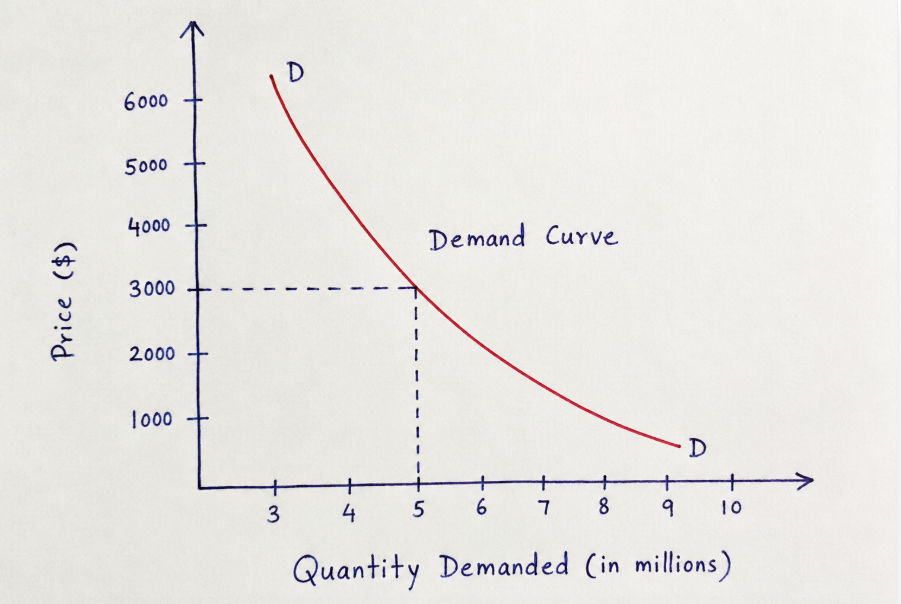
The demand curve generally slopes downward from left to right, reflecting the inverse relationship between price and quantity demanded.
Law of Supply
The Law of Supply states that, other factors remaining constant, the quantity supplied of a good generally increases when its price rises and decreases when its price falls.
• Direct Price Relationship: Price and quantity supplied generally move in the same direction.
• Higher Price, Higher Supply: Higher selling prices can encourage producers to supply more because additional production becomes more profitable.
• Production Incentive: An increase in the expected selling price can encourage firms to expand production and bring more goods to the market.
Supply Curve
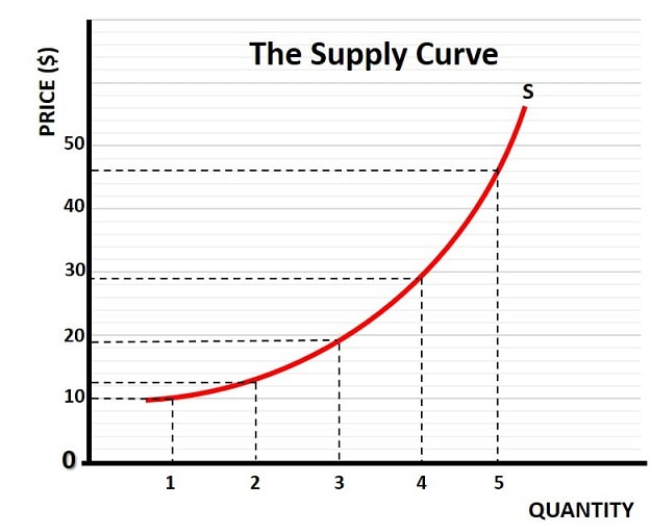
The supply curve generally slopes upward from left to right, showing the positive relationship between price and quantity supplied over time.



In the short run, the quantity of a product available in the market may be relatively fixed. Over a longer period, however, producers can adjust production in response to expected prices and market conditions.
Supply and Demand Curves
The interaction between the demand and supply curves determines the market price and quantity.
• Demand Curve: Generally slopes downward because consumers tend to demand less when prices rise.
• Supply Curve: Generally slopes upward because producers are willing to supply more at higher prices.
• Market Interaction: Buyers and sellers respond to price signals, influencing both the quantity demanded and quantity supplied.
• Market Adjustment: When demand or supply changes, the equilibrium price and quantity may also change.
Equilibrium Price
The equilibrium price, also known as the market-clearing price, is the price at which the quantity demanded by consumers equals the quantity supplied by producers.
At equilibrium:
Quantity Demanded = Quantity Supplied
The equilibrium occurs at the point where the demand and supply curves intersect.
• No Persistent Shortage: Producers supply the quantity that consumers are willing to purchase.
• No Persistent Surplus: Producers do not have unsold excess supply at the equilibrium quantity.
• Market-clearing Price: The price balances the decisions of buyers and sellers.
The exact equilibrium price and quantity depend on the shape and position of the demand and supply curves, which can change due to several economic factors.
Factors Affecting Supply
The supply of a good depends on production conditions and the costs faced by producers.
• Cost of Labour and Materials: Higher input costs can reduce the willingness of firms to supply at existing prices.
• Technology: Improved technology can increase productive capacity and reduce production costs.
• Number of Sellers: A greater number of producers can increase the total supply available in the market.
• Taxes and Regulations: Higher taxes or regulatory costs can affect production costs and reduce supply incentives.
• Production Capacity: The ability of firms to expand production influences the quantity they can supply.
• Competition and Supply Chains: Competitive conditions and the availability of reliable supply chains can affect production and market supply.
Factors Affecting Demand
Demand depends on consumer preferences, income, prices of related goods, and other market conditions.
• Consumer Preferences: Changes in tastes and preferences can increase or reduce demand for a product.
• Prices of Related Goods: Changes in the prices of substitute or complementary goods can influence demand.
• Consumer Income: Changes in income can affect consumers’ ability and willingness to purchase goods.
• Changing Market Conditions: Social, economic, and other changes that influence consumer preferences can alter demand.
Importance of Supply and Demand
The concept of supply and demand is fundamental to understanding how markets function and how prices are determined.
• Price Determination: The interaction of demand and supply helps determine the market price of goods and services.
• Business Decisions: Firms use demand conditions and expected prices to make decisions regarding production, investment, and pricing.
• Resource Allocation: Market prices provide signals that influence how resources are allocated among different economic activities.
• Investment Decisions: Investors and entrepreneurs can use changes in demand, supply, and prices to assess market opportunities.
• Understanding Market Conditions: Economists use supply and demand to analyse shortages, surpluses, price changes, and market behaviour.
Example of Supply and Demand
Suppose demand for a particular product increases while its supply remains unchanged. Consumers compete for the available quantity, putting upward pressure on prices. Higher prices may then encourage producers to increase supply.
Similarly, if supply increases while demand remains unchanged, greater availability can place downward pressure on prices.
This continuous interaction between buyers and sellers helps markets adjust towards a new equilibrium.
Conclusion
The Law of Supply and Demand provides a basic framework for understanding how markets determine prices and quantities. The Law of Demand explains the inverse relationship between price and quantity demanded, while the Law of Supply explains the positive relationship between price and quantity supplied.
Their interaction determines the equilibrium price and quantity, while changes in consumer preferences, income, production costs, technology, taxation, and market conditions can shift demand or supply. Understanding these principles is therefore essential for analysing consumer behaviour, business decisions, resource allocation, and market outcomes.
Frequently Asked Questions (FAQs)
What is the Law of Supply and Demand?
The Law of Supply and Demand explains how the interaction between buyers and sellers influences the price and quantity of goods and services in a market.
What is the Law of Demand?
The Law of Demand states that, other factors remaining constant, quantity demanded generally decreases when price increases and increases when price decreases.
What is the Law of Supply?
The Law of Supply states that, other factors remaining constant, quantity supplied generally increases when price increases and decreases when price decreases.
What is the Equilibrium Price?
The equilibrium price is the market-clearing price at which quantity demanded equals quantity supplied.
Why does the Demand Curve slope downward?
The demand curve generally slopes downward because consumers tend to purchase less of a good when its price rises, assuming other factors remain unchanged.
Why does the Supply Curve slope upward?
The supply curve generally slopes upward because higher prices can provide producers with greater incentives to increase the quantity supplied.
What factors affect supply?
Major factors include production costs, technology, number of sellers, taxes, regulations, productive capacity, competition, and supply-chain conditions.
What factors affect demand?
Demand is influenced by consumer preferences, income, prices of related goods, and changing market conditions.
Why is Supply and Demand important?
Supply and demand help explain price determination, resource allocation, production decisions, investment opportunities, shortages, and surpluses.


 Ravi Raaz
 Hassan Khan
 Shadab Ali