UPSC Exam
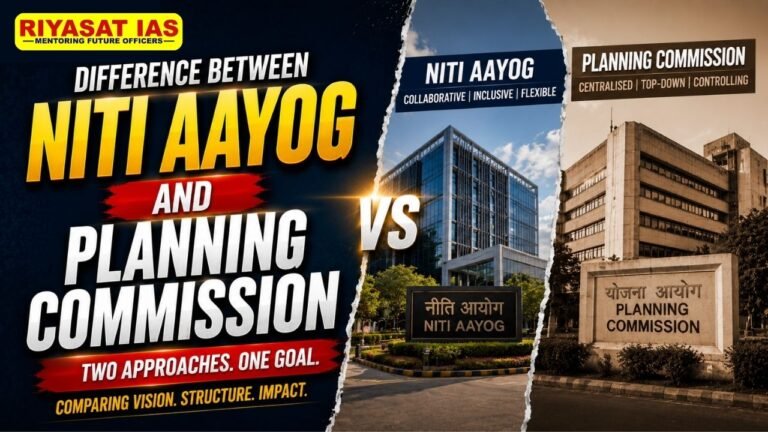
Difference Between NITI Aayog and Planning Commission
Introduction The establishment of NITI Aayog in 2015 marked a shift in India’s development planning from a centralised planning model towards a more flexible,…

Archive
Notes, editorials and exam explainers written by the Riyasat IAS mentor team — syllabus-mapped reading for UPSC Civil Services aspirants.
436 articles · page 28
Introduction The establishment of NITI Aayog in 2015 marked a shift in India’s development planning from a centralised planning model towards a more flexible,…
Introduction India adopted economic planning after Independence to accelerate development, mobilise scarce resources and address challenges such as poverty, food insecurity, unemployment and inadequate…
Introduction Purchasing Power Parity (PPP) is an economic concept used to compare the purchasing power of different currencies. It considers differences in prices and…
About Civil Services Civil services constitute the permanent executive of the State, responsible for assisting the elected government in policy formulation, implementation, regulation, public…
What is Civil Society? · Civil society refers to the space between the State, market and family where citizens voluntarily organise…
Introduction · A Citizen’s Charter is a public declaration by a government department or public service organisation specifying the services it…
Introduction E-governance in the judiciary refers to the use of digital technology, information systems and online platforms to improve access to justice, judicial efficiency,…
Introduction · E-Governance refers to the use of information and communication technology (ICT), digital platforms and data-driven systems by government to…
Introduction Media is often regarded as the “fourth pillar of democracy” because it facilitates the flow of information between the State and citizens and…
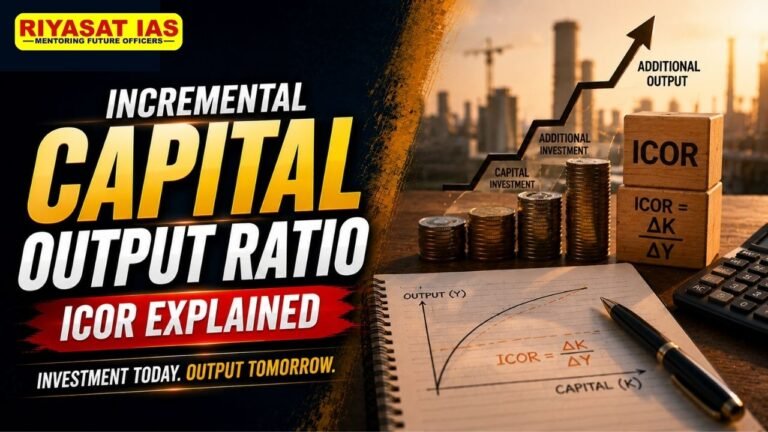
Introduction The Incremental Capital Output Ratio (ICOR) is a macroeconomic measure used to understand how efficiently an economy converts new investment into additional output.…
Free for every serious aspirant
Everything below opens up the moment you share your details. No payment, no catch.
Study plan, daily Current Affairs, topper answer copies, interview videos and free study material — all unlocked, free.
 Ravi RaazAIR 20
 Hassan KhanAIR 95
 Shadab AliAIR 415
A mentor — not a salesperson — calls you within 24 hours.