
India is rich in natural vegetation due to its diverse climate and physiography. Indian agriculture is broadly classified into food grain crops and cash crops. Agriculture provides food and raw materials to the people.
The three types of agricultural seasons are:
- Rabi
- Kharif
- Zaid
Major Crops of India
- Food Crops: Rice, wheat, millets, maize, and pulses
- Cash Crops: Sugarcane, oilseeds, horticultural crops, tea, coffee, rubber, cotton, and jute.
Cropping Seasons in India
| Cropping Season | Sowing and Harvesting | Major Crops | Major Producing States |
| 1. Rabi | Sown in October – December and harvested in April – June | Wheat, barley, peas, gram, mustard | Punjab, Haryana, Himachal Pradesh, Jammu and Kashmir, Uttarakhand, and Uttar Pradesh |
| 2. Kharif | Sown in June – July and harvested in September – October | Rice, maize, jowar, bajra, tur, moong, urad, cotton, jute, groundnut, soybean | Assam, West Bengal, coastal Odisha, Andhra Pradesh, Telangana, Tamil Nadu, Kerala, and Maharashtra |
| 3. Zaid | Sown and harvested in March – July; grown in between Rabi and Kharif | Seasonal fruits, vegetables, and fodder crops | Most of the northern and northwestern states |
Major Food Crops of India
1. Rice
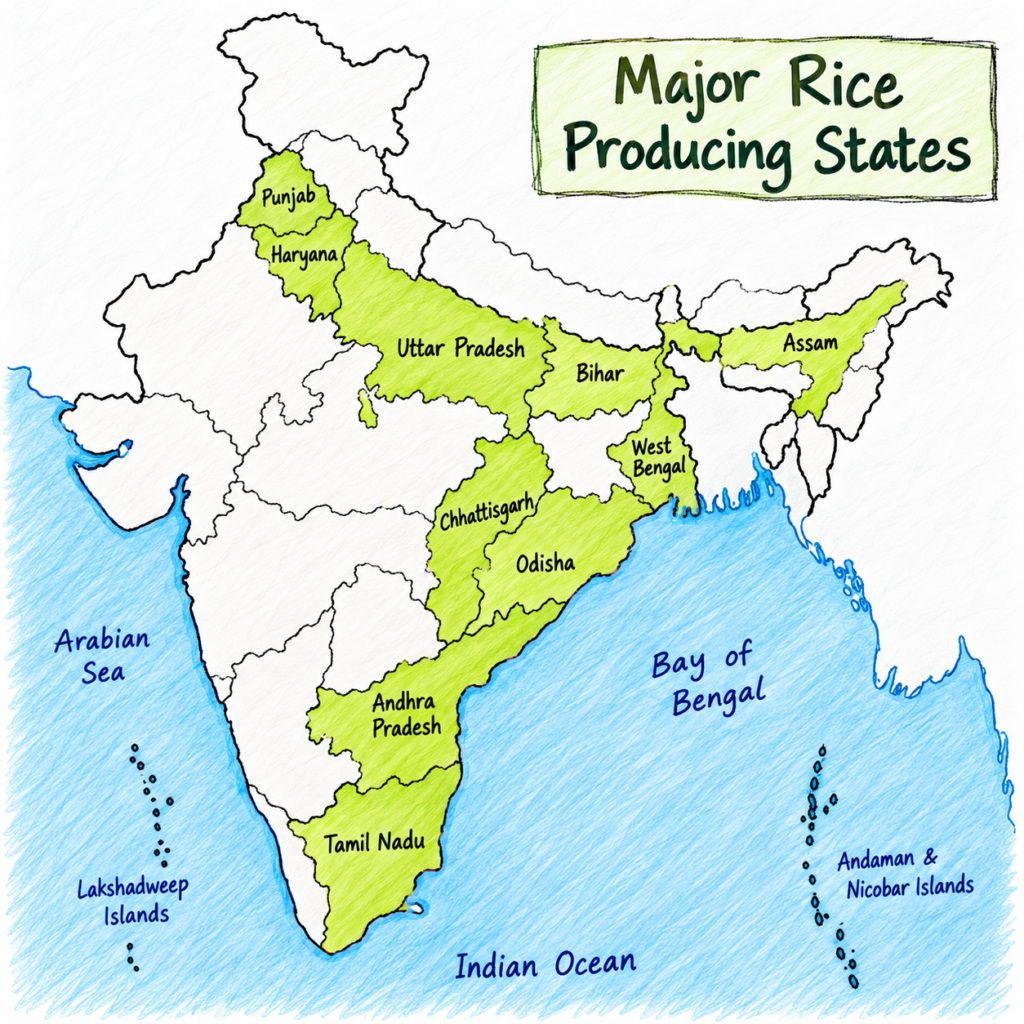
Rice is one of the most important food crops of India. It is a staple food crop for millions of people in India. It needs a warm climate during growth, high humidity, and heavy rainfall.
- Temperature: 22°C – 32°C
- Rainfall: 150 cm – 300 cm
- Soil: Deep clayey and loamy soil
- Top Producing States: West Bengal, Punjab, Uttar Pradesh, Andhra Pradesh, and Bihar
- India is the second-largest producer of rice in the world.
- In Assam, West Bengal, and Odisha, three types of rice crops are produced – Aus, Aman, and Boro
- Government schemes related to rice cultivation: National Food Security Mission, Hybrid Rice Seed Production, Rashtriya Krishi Vikas Yojana
2. Wheat
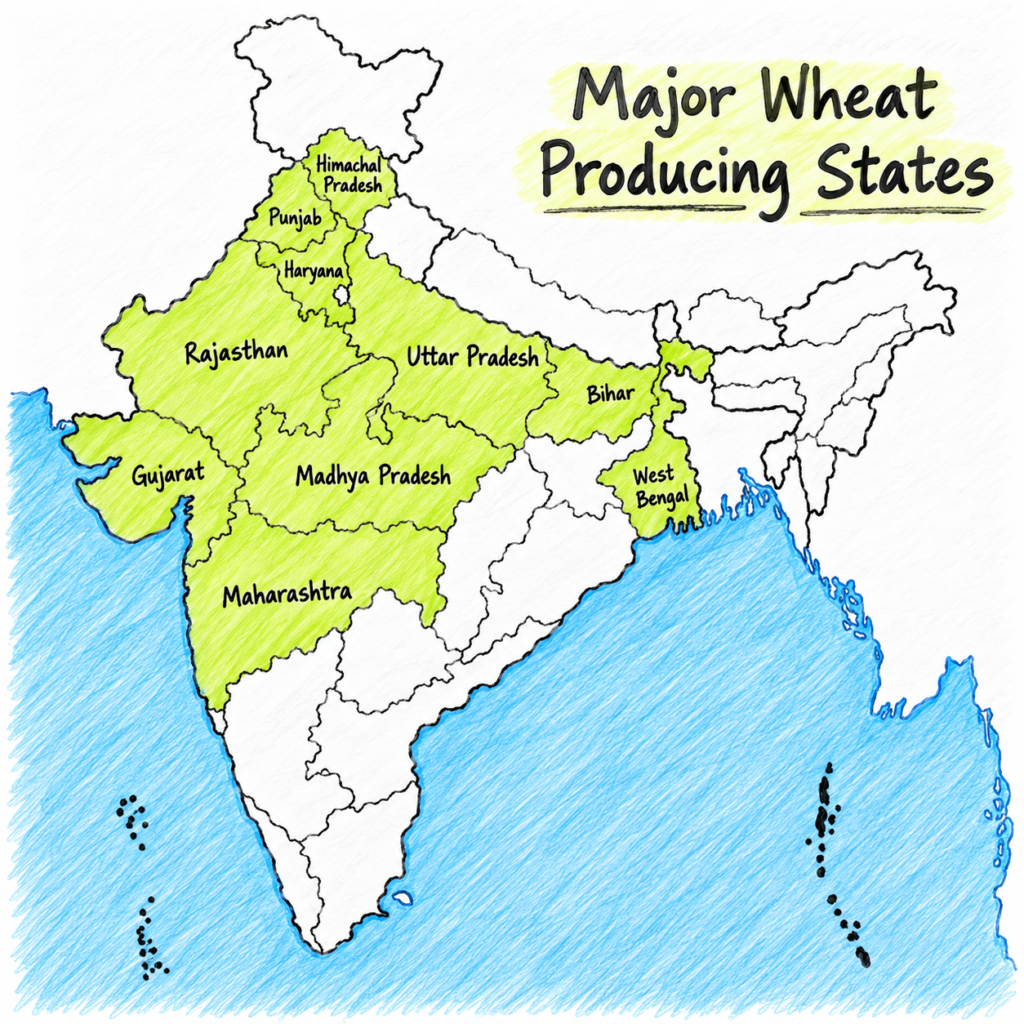
Wheat is a major Rabi crop and a staple food crop in northern and northwestern India. The Green Revolution has played a significant role in wheat production.
- Temperature: 10°C – 15°C (during sowing), 21°C – 26°C (during ripening and harvesting)
- Rainfall: 75 cm – 100 cm
- Soil: Fertile, well-drained loamy and clayey-loamy soil
- Top Producing States: Uttar Pradesh, Punjab, Madhya Pradesh, Haryana, and Rajasthan
- India is the second-largest producer of wheat in the world.
- Government schemes related to wheat cultivation: Macro Management Mode of Agriculture, National Food Security Mission, Rashtriya Krishi Vikas Yojana



3. Millets (Nutri-Cereals)
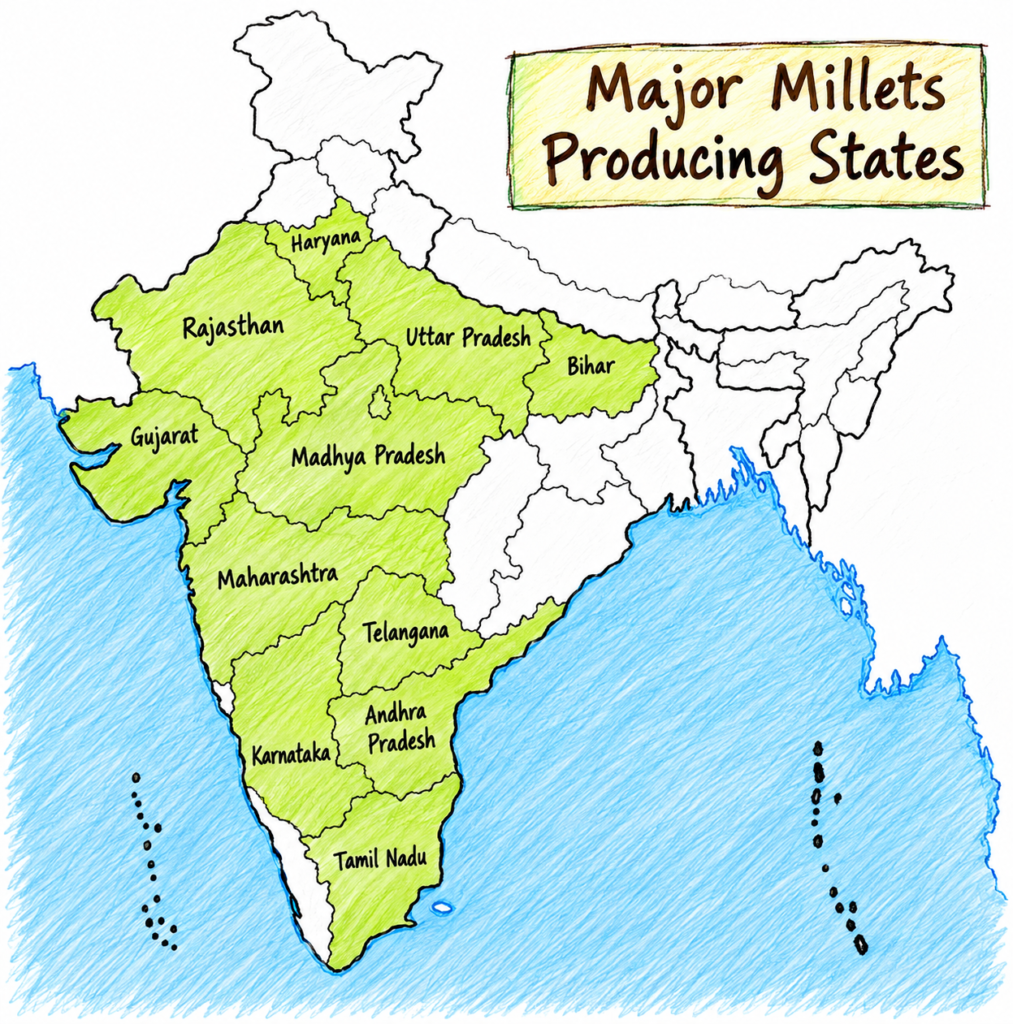
Millets are nutritious and hardy crops. They can be cultivated in comparatively less fertile soils and require low rainfall. Millets are rich in iron, calcium, micronutrients, and roughage. They are coarse grains.
| Jowar | Bajra | Ragi |
| Temperature: 27°C – 32°C | Temperature: 27°C – 32°C | Temperature: 27°C – 32°C |
| Rainfall: 50 cm – 100 cm | Rainfall: 50 cm – 100 cm | Rainfall: 50 cm – 100 cm |
| Soil: Inferior alluvial and loamy soil | Soil: Sandy and shallow black soil | Soil: Red, black, sandy, loamy, and shallow black soils; grows well in drylands |
| Major producing states: Rajasthan, Karnataka, Maharashtra, Madhya Pradesh, and Uttar Pradesh | Major producing states: Maharashtra, Karnataka, Madhya Pradesh, Tamil Nadu, and Andhra Pradesh | Major producing states: Tamil Nadu, Andhra Pradesh, Karnataka, Rajasthan, and Odisha |
| It is a rain-fed crop and grows well in moist areas with little or no irrigation. | It grows well in sandy and shallow black soils. | It grows in a wide range of soils, including red, black, sandy, loamy, and shallow black soils. |
| Jowar is the third-largest cultivated crop in terms of area and production. | It is a coarse grain crop and is used for human consumption and livestock feed. | It is highly nutritious and requires low inputs for cultivation. |
4. Maize
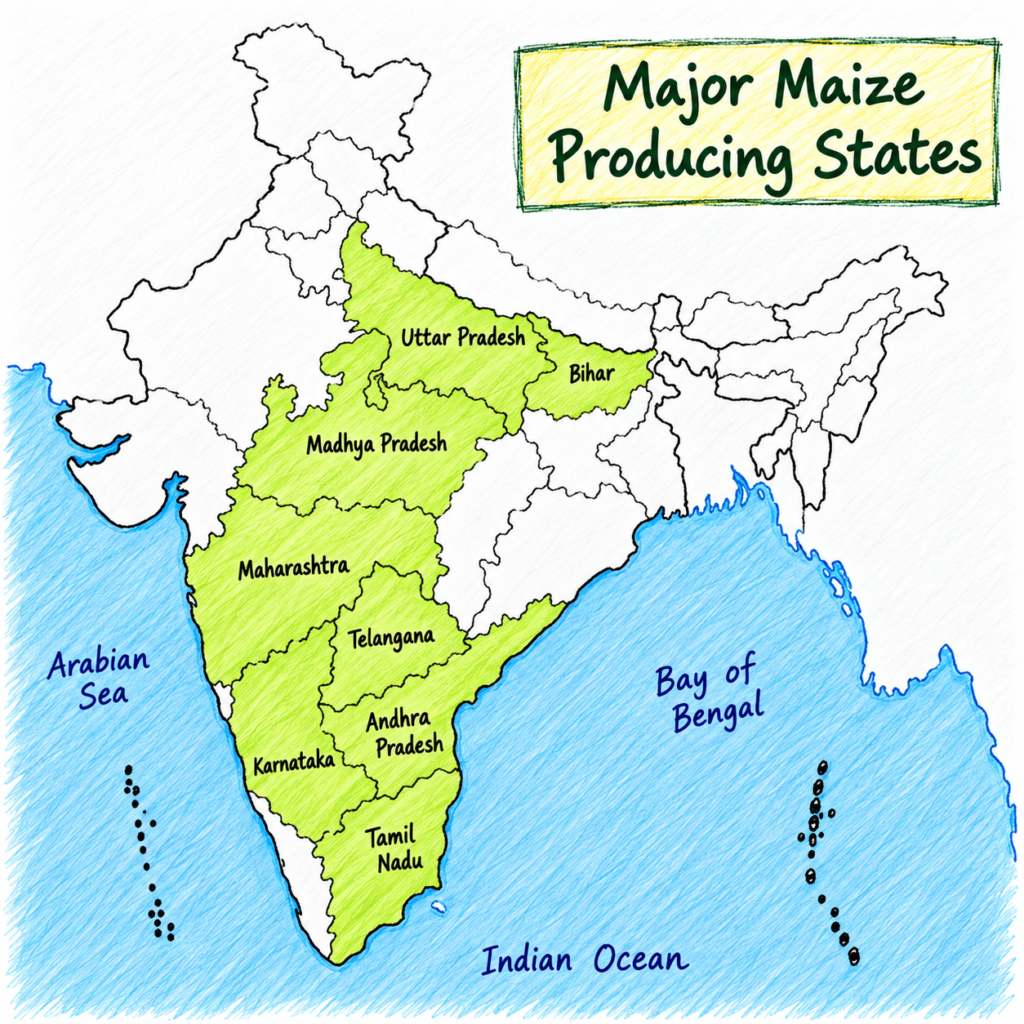
Maize is a kharif crop that is cultivated for both food and fodder. The use of high-yielding variety seeds, fertilizers, and irrigation has led to an increase in maize production.
- Temperature: 21°C – 27°C
- Rainfall: Heavy rainfall
- Soil: Old alluvial soil
- Top Producing States: Karnataka, Maharashtra, Madhya Pradesh, Tamil Nadu, and Telangana
- India is the 7th-largest producer of maize in the world.
- Use of HYV (high-yield variety) seeds, fertilizers, and irrigation has resulted in higher production of maize.
- Government schemes related to maize cultivation: Technology Mission on Maize
5. Pulses
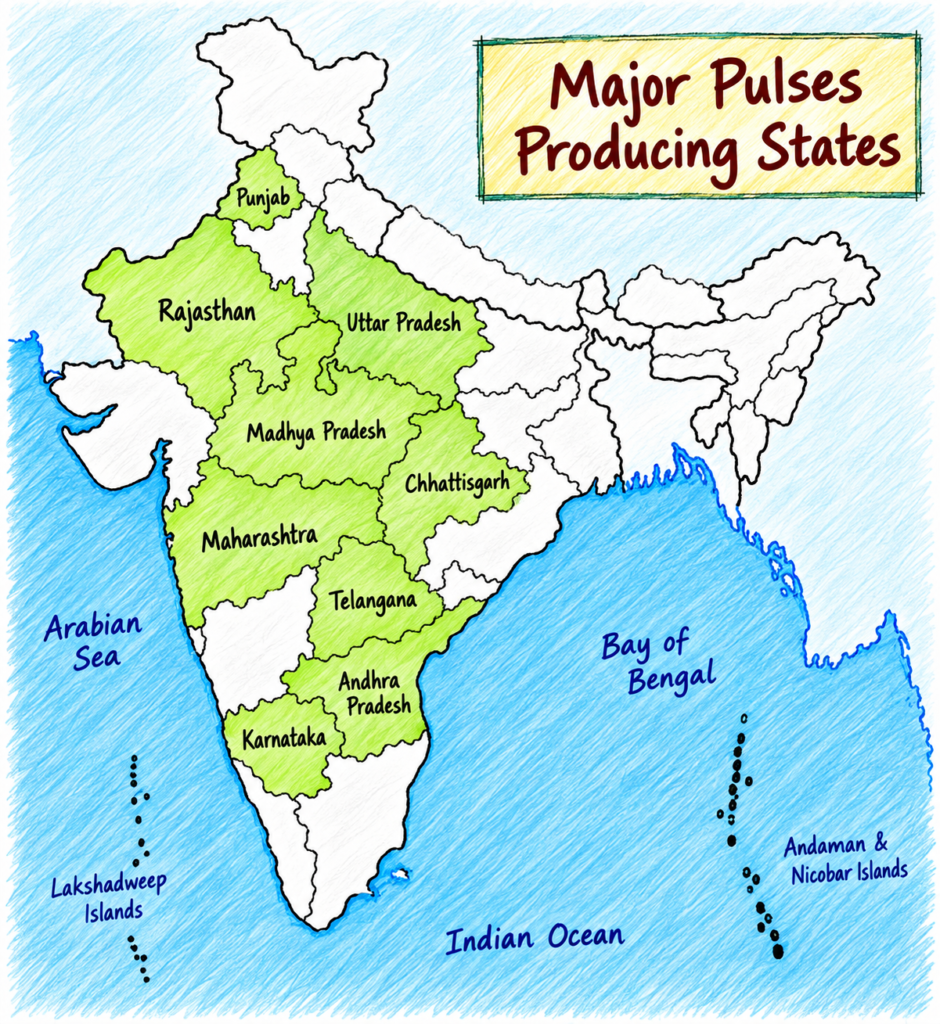
Pulses are an important source of protein in the vegetarian diet. India is the largest producer and consumer of pulses in the world. Pulses are leguminous crops. They help in fixing nitrogen in the soil, enriching it in return. Hence, they are often rotated with other crops.
- Temperature: 20°C – 27°C
- Rainfall: 25 cm – 60 cm
- Soil: Sandy-loamy soil
- Top Producing States: Madhya Pradesh, Rajasthan, Maharashtra, Uttar Pradesh, and Karnataka
- Major pulses: Tur (arhar), urad, moong, masur, peas, and gram
- Government schemes related to pulses cultivation: National Food Security Mission for Pulses, Pulses Development Scheme, Technological Mission on Pulses
FAQs on Cropping Patterns and Major Crops of India
1. What are the three main cropping seasons in India?
The three main cropping seasons are Rabi, Kharif, and Zaid.
2. What are Rabi crops?
Crops sown in October – December and harvested in April – June are called Rabi Crops. These are wheat, gram, barley, peas, and mustard.
3. What are Kharif crops?
Crops sown in June – July and harvested in September – October are called Kharif Crops. These are rice, maize, cotton, jute, soybean, and various pulses.
4. What are Zaid crops?
Crops that are sown and harvested in March – July, i.e., in between the Rabi and Kharif seasons, are called Zaid Crops. These include seasonal fruits, vegetables, and fodder crops.
5. Which is India’s major staple food crop?
Rice is the major staple food crop of India.
6. Which are the major food crops of India?
The major food crops of India are rice, wheat, millets, maize, and pulses.
7. Why are millets called ‘nutri-cereals’?
Millets are called ‘nutri-cereals’ because they are rich in essential minerals like calcium, micronutrients, iron, and roughage.
8. Why are pulses important for soil fertility?
Pulses are leguminous crops. They enrich the soil with nitrogen during their growth cycle. This makes them suitable for rotation with other crops.




 Ravi Raaz
 Hassan Khan
 Shadab Ali