
GS-II | Governance | Social Justice | Vulnerable Sections | Senior Citizen Welfare | GS-III | Employment
Introduction
- The Keralam Senior Citizens (Care and Protection of Rights) Bill, 2026 intends to control elder-care facilities, provide certification for caregivers, and implement health-care decision-making options for senior citizens such as living wills.
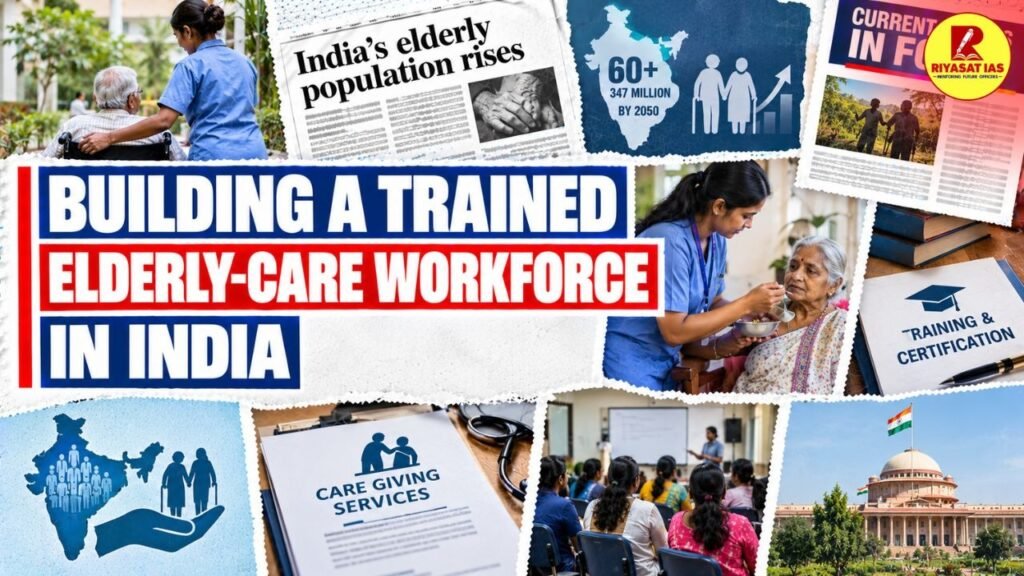
- The study also emphasizes that India needs to develop an adequately trained professional elder-care workforce in order to address the fast-changing demographic trends within its borders.
Demographic Profile of the Elderly in India
- Rapid ageing: The UNFPA India Ageing Report 2023 indicates that the number of people aged 60 and older will increase rapidly, growing from 10.5% (149 million) of the total population in 2022 to 20.8% (347 million) of the total population in 2050.
- Growth of oldest-old population: The population of older adults who are 80 years old or more will increase by 279 percent from 2022 through 2050.
- Feminisation of ageing: Women are expected to live longer than men once they reach age 60; therefore, a larger number of women will become widows and be dependent on others for support during their old age.
- Regional differences: Southern states such as Kerala have a larger elderly population compared to other parts of India.
Key Provisions of the Keralam Senior Citizens Bill, 2026
- Living wills: Recognises advanced medical directives for end-of-life care.
- Caregiver certification: Training, background checks with local police department, and continuing education/refresher courses at least once every three years.
- Elderly rights: Free Legal Aid, Affordable Home Care, Free Internet Access, Safe Public Space.
- Preventing abuse through law enforcement: Prison sentence up to 3 years for those guilty of cruelty, as well as a requirement to report suspected abuse within 48 hours.
- Ageing at home: Promotes home-based care and ensures fair wages for caregivers, as well as safe working conditions, and social security.
Why Does India Need a Trained Geriatric Workforce?
- Demographic shift: Increasing rates of chronic illness, dementia, and other age-related conditions are driving the need for longer-term care, geriatric care, palliative care and home-based care. There are 26.8 million people with disabilities in India. Caregiving provided by trained professionals has the potential to both meet the care needs of these individuals, and provide jobs for them.
- Women’s economic empowerment: The National Statistical Office (NSO) Time Use Survey (2024) indicates that 41 percent of women ages 15 to 59 were involved with caregiving activities while only 21.4 percent of men were.



o Women devoted approximately 140 minutes each day to providing care, which was about double the amount of time that men devoted to providing care (about 74 minutes).
o The formalization of care-giving can decrease the amount of unpaid labor being done by women, while at the same time increase their involvement in the formal labor market.
- Demographic dividend: A professional caregiving workforce can help create skilled jobs and human resources for Viksit Bharat @ 2047.
- International competitiveness: The World Health Organization (WHO) projects that there will be a shortfall of approximately 11 million healthcare professionals worldwide by 2030, and the Organization for Economic Cooperation and Development (OECD) estimates that its member nations will need an extra 13.5 million care providers by 2040.
o India is capable of meeting worldwide demands for caregiving services, especially from countries such as Japan and Europe, through certified caregivers, a strong knowledge of the English language, and G2G mobility pathways. This can promote youth employment, remittances and India’s global soft power.
- Purple Economy: The Indian market for care services was worth USD 29.62 billion in 2023. It is anticipated to increase to USD 72.31 billion by 2030.
- Breakdown of traditional support systems: Nuclear families and urbanization create a lack of family members available to provide informal care. A formal education can decrease the number of preventable medical problems as well as lower the stress that is placed upon families both physically and emotionally.
Challenges in Elderly Care in India
- Inadequate financial and institutional support: According to NITI Aayog’s 2024 senior-care position paper, more than 75% of older adults in India are living with at least one chronic illness, yet less than 18% of those older adults have health insurance coverage.
- Epidemic shift: Most health care resources remain directed toward treating acutely ill pregnant women and children. Approximately 75% of elderly people have a chronic disease, and there are few if any palliative and/or psycho-geriatric care facilities available.
- Feminisation of ageing and poverty: More than 40 percent of India’s elderly are in the bottom wealth quintile, which increases their out-of-pocket health expenditures.
- Lack of regulation: The Maintenance and Welfare of Parents and Senior Citizens Act of 2007 requires adult children to financially support their parents.
- Skilled caregiver shortfall: The Union Budget 2026-27 provided for NSQF-aligned training to be available to 1.5 lakh caregivers. However, with an aging population there will be a need for many more trained caregivers.
Measures Needed for a Future-Ready Caregiving Ecosystem
- National policy on caregiving: Establish a National Caregiver Council (NCC) as per the recommendations of NITI Aayog to:
o Develop and monitor standards for skills and education of caregivers.
o Create uniform educational programs for caregivers.
o Maintain a national database of registered caregivers.
- Standardised training and certification: Introduce NSQF-aligned training for mobility assistance, palliative care, and dementia care. Utilize models such as the Keralam Geriatric Care Certification Framework.
- State-level innovations:
o Kerala: Kudumbashree’s K4Care initiative provides training for qualified senior citizen care professionals.
o Karnataka: The State Government of Karnataka provides monthly allowances for caregivers of persons with disabilities, as well as assistance to individuals with disabilities through Self Help Groups (SHGs).
- Elderly Budget: Kerala became the first state in India to introduce a separate “Elderly Budget” in 2026. This budget allocates money to build senior living facilities (retirement homes), establish palliative care systems, and expand the Vayomithram program.
- Social security: Provide a fair wage to all workers, provide a safe work environment for all workers, and provide social security coverage to all workers under the Unorganized Workers Social Security Act, 2008.
- Help for unpaid caregivers: Give employees paid time off work to care for family members; establish community-based respite-care facilities; allow employees to receive certification of prior learning.
- Living wills: Create clear, nationwide legal processes for registering advance medical directions.
Conclusion
- India needs to make its formal care economy work by establishing national standards for elderly care education, as well as providing employees with living wage and social security benefits.
- This will provide a sense of respect to our elderly population, increase female employment rates, and generate employment opportunities; thus providing an opportunity to convert the challenge of an aging population into a viable source of revenue for Viksit Bharat @ 2047.
UPSC Mains Practice Question
Q. India’s demographic transition necessitates a professionally trained elderly-care workforce. Discuss the challenges in India’s elderly-care ecosystem and suggest measures to build a future-ready caregiving system.





 Ravi Raaz
 Hassan Khan
 Shadab Ali