
GS-II | Polity & Governance | Election Commission | Judicial Review | Electoral Reform
Why in News?
- A two-judge bench of the Supreme Court issued a divided judgment regarding the challenge to the 2023 law which regulates the process for appointing the Chief Election Commissioner (CEC) and Election Commissioners (ECs).
- Justice Dipankar Datta: Stated that the 2023 Act challenge should be evaluated based upon the guidelines set forth by the Anoop Baranwal (2023) case.
- Justice Satish Chandra Sharma: Stated that, due to the significance of the matters being considered, this matter should go before a larger Constitution Bench.
- Expeditious Hearing: Judges were of the opinion that the matter should be heard expeditiously by a Constitution Bench.
Key Issues in the Judgment
- Executive Predominance: The Baranwal method is simple and easy to understand: a committee that has executive control cannot choose fair and unbiased judges (such as the Chief Election Commissioner and other Election Commissioners).
- Composition of the Selection Committee: The composition of the selection committee (three members), which includes the Prime Minister and one other Union Minister, clearly indicates that the executive has a majority on this committee.
- Delay in Decision: More time is needed for a ruling on the constitutionality of the law that provides for the selection process of the CEC and the ECs.
- Role of the Opposition: Since the Prime Minister and the Cabinet Minister appointed by the Prime Minister make up two-thirds of the members of the Committee, the role of the Leader of the Opposition is simply symbolic.
- Legitimacy of the Electoral Body: The legitimacy of the electoral body (Commission) and its 2023 law is now being challenged by opposition parties and other groups.
- Public Protests: The public has been protesting against Chief Election Commissioner, Gyanesh Kumar, across the nation. Many have called for him to resign.
The Impact
- Systemic Weaknesses: Replacing one person does not solve the long-term problems of a system’s weaknesses.
- Repeal of Statute: The statute that reverses the Baranwal principle and provides the Chief Election Commissioner (CEC) and the Election Commissioners (ECs) with immunity from prosecution throughout their lifetime for anything they do or say during their term in office should be repealed.
- Neutral Appointment Process: A new law should be created that utilizes the principle of a non-partisan group making appointments for the Chief Election Commissioner (CEC) and the Election Commissioners (ECs); this will provide for independent judges within the Commission.
- Electoral Roll Revision: The revision of the electoral roll, which was highly controversial, needs to be revisited and its effects undone.
Political and Moral Lessons
- Dr. B.R. Ambedkar’s Caution: Dr. Ambedkar’s warning has become more important as we witness institutional capture, and some describe it as mass disenfranchisement directed centrally.
- Free and Fair Elections: Dr. B.R. Ambedkar raised issues regarding Government servants’ influence on elections for the benefit of the governing political group and therefore making free and fair elections impossible.
- Parliamentary Democracy: “If Parliamentary Democracy fails in our nation (and it will fail, due to the factors I have listed), the only outcome will be a revolution, a state of lawlessness, and Communism.”
- Historical Record: The historical record distorts and flips what is true, thus forcing the current government, claiming the heritage of Shyama Prasad Mukherjee, to look at themselves through a mirror.
Judicial Impartiality and Conflict of Interest
- Conflict of Interest: Because Justice Satish Chandra Sharma’s son was an appointed standing counsel for the Election Commission in the Madhya Pradesh High Court, it may create a potential conflict of interest.
- Non-Disclosure: The failure of the judge to declare this relationship has caused concern regarding whether the decision-making process will be unbiased.
- Rupa Ashok Hurra vs Ashok Hurra (2002): A Constitution Bench of India has held that a judge’s failure to disclose his/her relationship to either the party to the case or the issue being litigated will render the court decision void and require a review.
- Judicial Conduct: A judge will refrain from committing acts of improper behavior and from appearing to behave improperly in every aspect of the judge’s life.
- Family Relationship: A judge cannot make decisions on a matter if his/her family members are representing either side of the dispute, or if they have some other association with the matter.
- Restatement of Values of Judicial Life: Adopted by the Court in May 1997, it includes many of the same limitations.
Beyond the Courts
- Political Struggle: The political struggle is often on a much grander scale than the legal process.
- TADA and POTA: Although both the Terrorist and Disruptive Activities (Prevention) Act (TADA) and the Prevention of Terrorism Act (POTA) had previously received the Court’s approval, both were either left to expire or repealed by the Central Government.
- National Emergency (1975–1977): The National Emergency was upheld through court decisions, such as the ADM Jabalpur Case (1976), where the court supported the decision to suspend individual fundamental rights.
- Electoral Accountability: In finality, the electorate voted Mrs. Gandhi’s administration out of office in the next general election.
- Farm Laws: The controversial farm laws were repealed by Parliament in 2021 after large-scale protests.
- People’s Movement: It should be acknowledged that the Constitution has a chance of remaining viable if it is supported by non-violent people’s movements.
Way Forward
- Neutral Appointment Process: A new law should be created that utilizes the idea of a non-partisan organization choosing the CEC and ECs to create unbiased arbiters within the Commission.
- Electoral Roll Revision: The controversial revision of electoral rolls should be revisited and its consequences reversed.
- Judicial Neutrality: A judge must refrain from being improper and having the appearance of being improper in every aspect of his/her life.
- Systemic Problems: Individual replacement does not offer a long-term solution to systematic problems.
- Peaceful People’s Movements: The potential of the Constitution for its survival through peaceful people’s movements.
Conclusion
A reading of the political and moral aspects of the split decision in Dr. Jaya Thakur’s case will help us understand that the Constitution has the capacity to survive with the help of peaceful popular movements.
UPSC Mains Practice Questions
Q. Discuss the importance of judicial impartiality and the avoidance of conflicts of interest in maintaining public confidence in the judiciary.
Build Your UPSC Foundation with Current Affairs! Connect emerging topics like AI in agriculture with the UPSC syllabus and strengthen your General Studies preparation through the Riyasat IAS Foundation Mentorship Program – English Medium for UPSC CSE 2027–2028.
Explore the program: https://iasmentorship.com/foundation-mentorship-english/



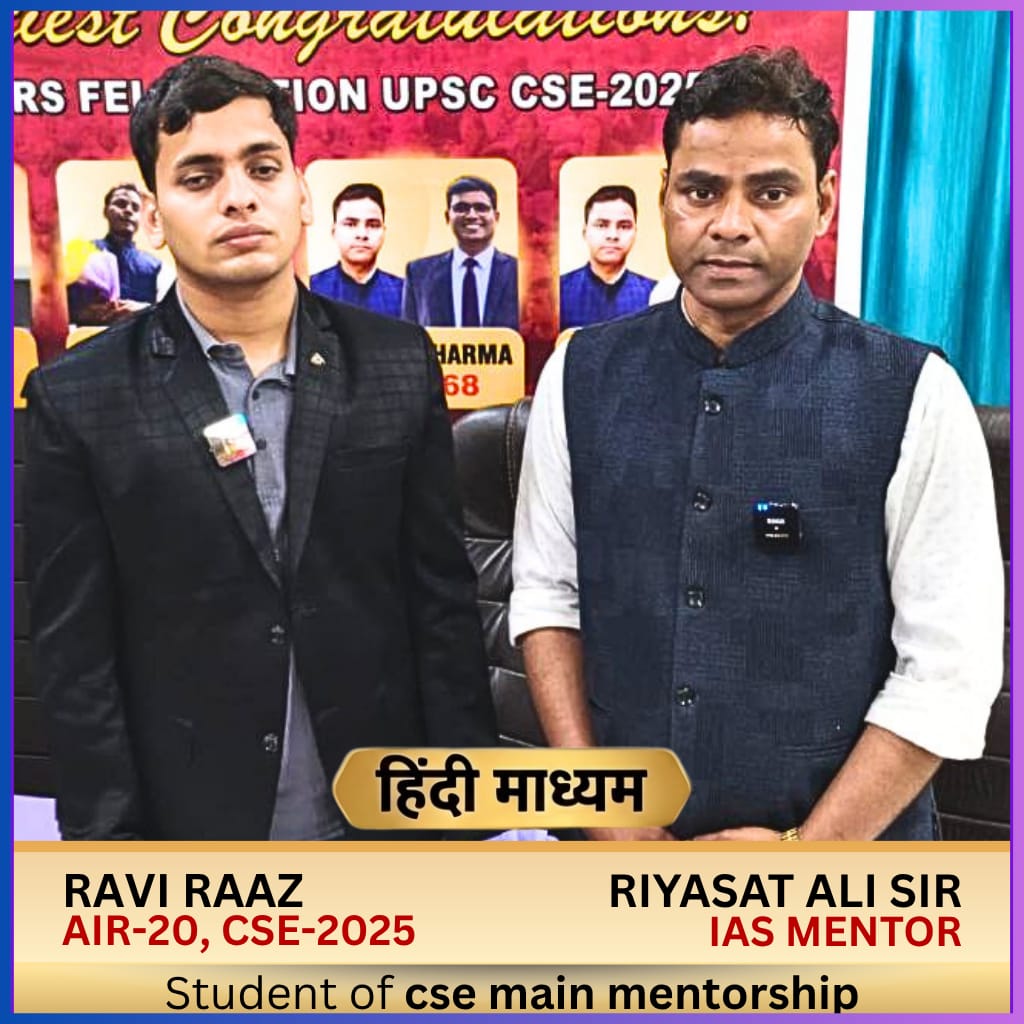 Ravi Raaz
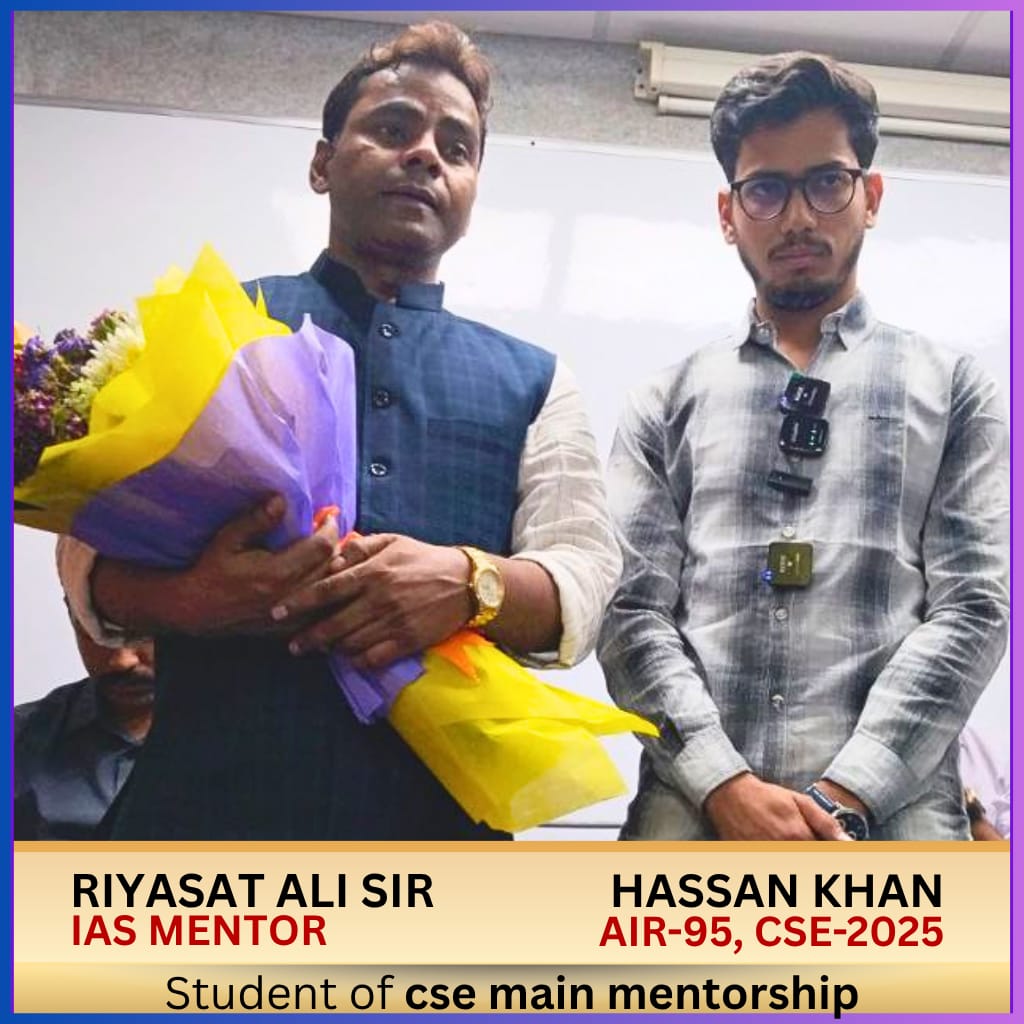 Hassan Khan
 Shadab Ali