
Aptitude can be defined as an inherent talent or natural propensity towards a specific skill or area of expertise. It indicates a person’s potential to perform well in a given domain, often making the learning process more intuitive and efficient. For example, someone with an aptitude for mathematics may possess an innate ability to quickly grasp numerical concepts and solve intricate problems.
Nature of Aptitude
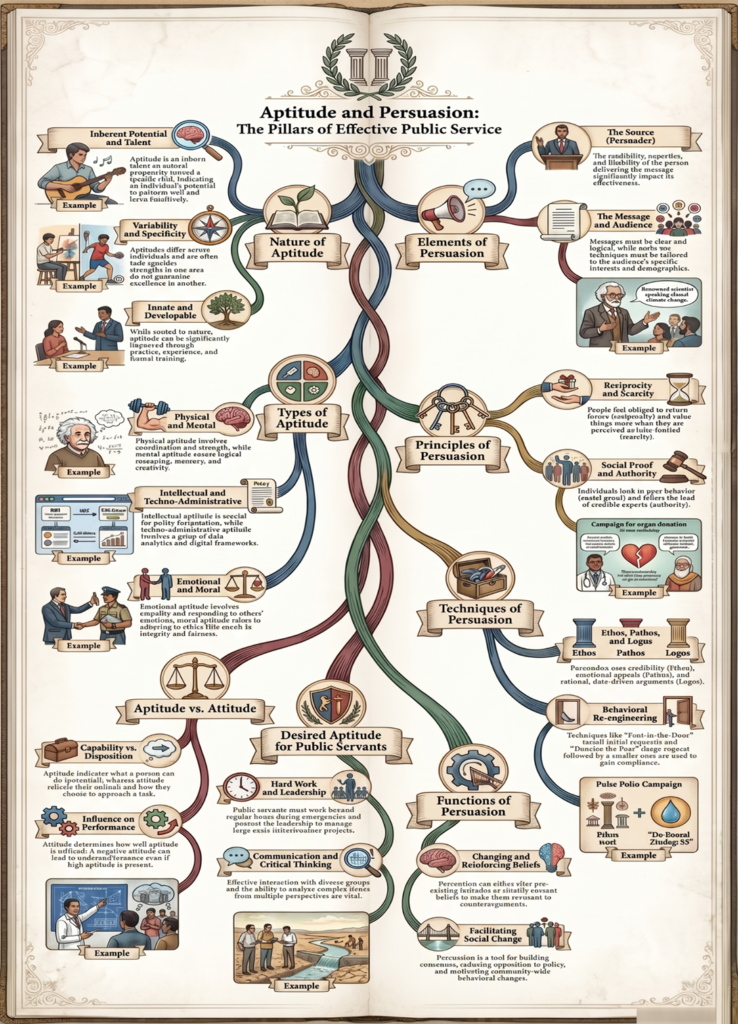
- Inborn Potential: Aptitude refers to a person’s natural ability or talent in a specific area, always present to some extent. For example, a person may naturally understand music without formal training.
- Variability: Aptitudes differ among individuals, with varying levels of strength in different areas. For example, some students easily grasp mathematics, while others struggle.
- Task-Specific: Aptitude is often specific to particular skills, with strengths in one area not necessarily translating to another. For example, a gifted painter may not excel in sports.
- Innate and Developable: While aptitude has an innate component, it can be developed to varying degrees through practice. For example, a natural public speaker can improve with experience and training.
Types of Aptitude
- Physical Aptitude: The natural ability to perform physical tasks effectively, involving strength, coordination, and fitness. For example, Simone Biles’ exceptional agility and coordination in gymnastics.
- Mental Aptitude: The capacity for intellectual tasks, including logical reasoning, memory, and creativity. For example, Albert Einstein’s innovative thinking and problem-solving in physics.
- Intellectual Aptitude: It involves the ability to analyze, evaluate, and create solutions to complex problems. It is crucial in areas such as policy formulation, strategic planning, and decision-making.
- Emotional Aptitude: It involves understanding, empathizing, and effectively responding to the emotions of others. For example, an administrator exhibiting high emotional resonance to support citizens calmly during a public health crisis or natural disaster.
- Moral Aptitude: It refers to the adherence to ethical principles and values such as integrity, honesty, and fairness. For example, an official consistently upholding transparency and accountability in their administrative roles despite facing continuous operational challenges and frequent transfers.
Example for Types of Aptitude: Techno-Administrative Aptitude: Modern public administrators possessing a natural grasp for data analytics, data mining, and digital frameworks, allowing them to optimize real-time welfare delivery via platforms like DBT (Direct Benefit Transfer) or PM-Kisan, thereby reducing leakages systematically through technical precision.
Aptitude vs Attitude
- Capability vs. Disposition: Aptitude indicates capability, while attitude reflects one’s outlook and approach. For example, a civil servant may have the aptitude for crisis management but needs a positive attitude to handle stress effectively.
- Influence on Behavior: Attitude can influence how well aptitude is utilized. A positive attitude can enhance the application of one’s aptitude. For example, an officer with a positive attitude and high analytical aptitude is likely to approach data analysis with enthusiasm and diligence.
- Impact on Performance: While aptitude determines potential performance, attitude affects actual performance and persistence. For example, a civil servant with the aptitude for public speaking but a negative attitude towards public engagement may underperform.
- Adaptability: Attitude can determine how aptitudes are applied in various situations. A flexible attitude allows better utilization of one’s aptitudes. For example, an officer with a proactive attitude can effectively apply problem-solving aptitude in unexpected situations.
Example for Aptitude vs Attitude: The Smart City Project Implementation: An elite urban planning engineer may possess top-tier technical aptitude for designing complex smart grids; however, if they harbor a dismissive attitude toward grass-roots public feedback and local street vendors, the final public infrastructure project will suffer from severe implementation resistance.
Desired Aptitude for Public Servants
- Hard Working: Civil servants often need to work beyond regular hours to ensure the timely completion of tasks. For example, working tirelessly during administrative emergencies to implement effective health and safety measures.
- Leadership: Civil servants must possess strong leadership qualities to guide teams, manage projects, and oversee large organizations. For example, demonstrating exceptional leadership to complete complex public infrastructure projects successfully.
- Good Communication and Interpersonal Skills: Civil servants must interact with diverse groups and effectively convey their ideas and policies. For example, utilizing negotiation and communication skills to engage with corporate stakeholders to reduce the prices of essential services or life-saving medicines for the public.
- Critical Thinking and Listening Ability: Civil servants need to analyze complex issues, listen to various perspectives, and devise practical solutions.
- Quick and Innovative Solutions: The ability to think on their feet and come up with innovative solutions is vital for civil servants, especially in emergency situations or when dealing with resource constraints.



Example for Desired Aptitudes: Aspirational Districts Programme: District Magistrates utilizing quick and innovative solutions by cross-leveraging local corporate social responsibility (CSR) funds alongside existing MNREGA allocations to swiftly construct community water-harvesting check dams during sudden, severe seasonal droughts.
Persuasion
Persuasion is the process of convincing someone to adopt a particular belief or follow a course of action. It involves presenting arguments, reasoning, and information in a way that influences the audience’s mindset.
Key Elements of Persuasion
- Source (Persuader): The credibility, expertise, and likability of the source can significantly impact the effectiveness of persuasion. For example, a well-known scientist advocating for climate change initiatives can be more persuasive.
- Message: A persuasive message should be clear, logical, and tailored to the target audience. For example, a campaign promoting healthy eating that uses relatable stories and nutritional facts can be more compelling.
- Audience: Persuasion techniques should resonate with the audience’s interests, demographics, and motivations. For example, tailoring a seminar by focusing on immediate financial goals that matter directly to a specific age group.
- Communication Channels/Medium: The medium through which the message is conveyed affects persuasion. It can include face-to-face interactions, written materials, digital platforms, or mass media.
Principles of Persuasion
- Reciprocity: People feel obliged to return favors and acts of kindness. For example, offering small helpful gestures or services initially to encourage positive future engagements.
- Commitment and Consistency: Once people commit to something, they are more likely to follow through. For example, encouraging small initial commitments that lead to larger moral or civic commitments over time.
- Social Proof: People look to others to determine their own actions. For example, highlighting positive peer behavioral choices and community testimonies to guide public compliance.
- Authority: People tend to follow the lead of credible and knowledgeable experts. For example, using formal endorsements from certified professionals or domain specialists to advocate for public safety.
- Liking: People are more likely to be influenced by those they like or admire. For example, building genuine rapport, empathy, and likability during administrative discussions and negotiations.
- Scarcity: People value things more when they perceive them as scarce or time-limited. For example, creating a sense of urgency through limited windows of opportunity to prompt immediate action.
Example for Principles of Persuasion: Organ Donation Drives: Public health departments invoking social proof and authority by broadcasting testimonial clips of prominent spiritual leaders, respected local doctors, and neighboring families who have signed organ donor pledges, systematically normalizing the choice across traditional communities.
Techniques of Persuasion
- Ethos (Credibility): Establishing the speaker’s credibility, character, and authority. For example, a medical expert endorsing a public health guideline.
- Pathos (Emotional Appeal): Appealing directly to the audience’s core emotions. For example, public campaigns using moving personal stories and evocative imagery to solicit support for disaster relief.
- Logos (Logical Appeal): Using rational arguments, data, and factual evidence. For example, presenting clear statistics and scientific data to support an administrative policy proposal.
- Storytelling: Engaging the audience through compelling narratives. For example, public figures using personal anecdotes to connect deeply with citizens.
- Foot-in-the-Door Technique: Starting with a very small request to increase the likelihood of the audience agreeing to a larger request later.
- Door-in-the-Face Technique: Making an intentionally large request expecting it to be rejected, immediately followed by a smaller, much more reasonable request.
Example for Persuasion Techniques: Pulse Polio Campaign Behavior Re-engineering: The historical success of using Pathos and Ethos in tandem. Leveraging the highly credible and universally liked persona of cultural icons (Ethos) alongside the evocative, urgent emotional appeal of “Do Boond Zindagi Ki” (Pathos) successfully systematically re-engineered deep-seated vaccination hesitations across rural communities.
Functions of Persuasion
- Changing Attitudes: Persuasion can alter pre-existing attitudes by presenting compelling arguments or new information. It helps individuals reassess their beliefs and potentially adopt new perspectives.
- Reinforcing Existing Beliefs: Persuasion can strengthen and solidify current beliefs or attitudes, making them more resistant to counterarguments.
- Encouraging Behavioral Change: Persuasive messages can motivate individuals to change their behaviors, especially when the messages highlight direct benefits or long-term consequences.
- Reducing Opposition and Resistance: Persuasion can minimize resistance or active opposition by directly addressing concerns, dispelling myths, and presenting alternatives in a favorable light.
- Creating a Sense of Urgency: Persuasion can instill a sense of urgency, prompting immediate action, which is particularly effective in situations where time-sensitive decisions are necessary.
- Facilitating Social Change: Persuasion can be a powerful tool in advocating for progressive social change by challenging the status quo and inspiring collective community action.
- Building Consensus and Unity: Persuasion can help build consensus and foster unity among a group by effectively aligning their views and goals.
Previous Year Questions
Q. How could social influence and persuasion contribute to the success of Swachh Bharat Abhiyan?
Q. Young people with ethical conduct are not willing to come forward to join active politics. Suggest steps to motivate them to come forward.
Case Study Analysis
Context & Dilemma
A major agricultural reform introducing new farm laws encounters severe local resistance. While the administration intends to expand market freedoms, a large section of farmers perceives the changes as a direct threat to their livelihood and the Minimum Support Price (MSP) framework. The situation rapidly escalates into widespread protests, highway blockades, border encampments, and polarized media coverage, raising significant concerns regarding public order, human rights, and economic stability. As the newly appointed Chief Negotiator, you must find a balanced resolution.
Ethical Considerations
- Upholding Justice and Fairness: Ensuring the economic safety and livelihood concerns of vulnerable agrarian communities are genuinely heard.
- Maintaining Law and Order Objectively: Balancing the right to peaceful protest with public safety and preventing violence without utilizing excessive administrative force.
- Transparency and Honesty: Countering misinformation and polarized media narratives through clear, open governance channels to rebuild fractured public trust.
Action Plan
- Immediate Engagement: Initiate immediate, open-ended rounds of dialogue with farmer unions in an atmosphere of mutual respect, utilizing a neutral, accessible negotiation style to de-escalate tensions.
- Deploying Persuasion Principles: Utilize Logos (presenting clear, audited data showing protections for small farmers) and Liking (building a trustworthy administrative rapport) to address fears regarding corporate exploitation.
- Institutional Safetynets: Propose explicit, legally anchored administrative guidelines that guarantee the continuation of the MSP framework alongside new choices, balancing structural agricultural modernization with robust grass-roots welfare.
Practice Questions
Question 1 With the increasing reliance on technology in public administration, which technical aptitudes are becoming critical for public servants? Discuss the importance of digital literacy and cybersecurity awareness in modern governance. (10 marks, 150 words)
Question 2 What ethical considerations should be taken into account when using persuasion in public policy advocacy? How can transparency and honesty in communication build trust and enhance persuasive efforts? (10 marks, 150 words)
Question 3 An administrator’s technical aptitude determines their capacity to execute public service, but it is their moral and emotional aptitude that defines the equity and compassion of that execution.” Critically evaluate this statement with relevant examples from contemporary Indian governance. (10 marks, 150 words)



 Ravi Raaz
 Hassan Khan
 Shadab Ali