
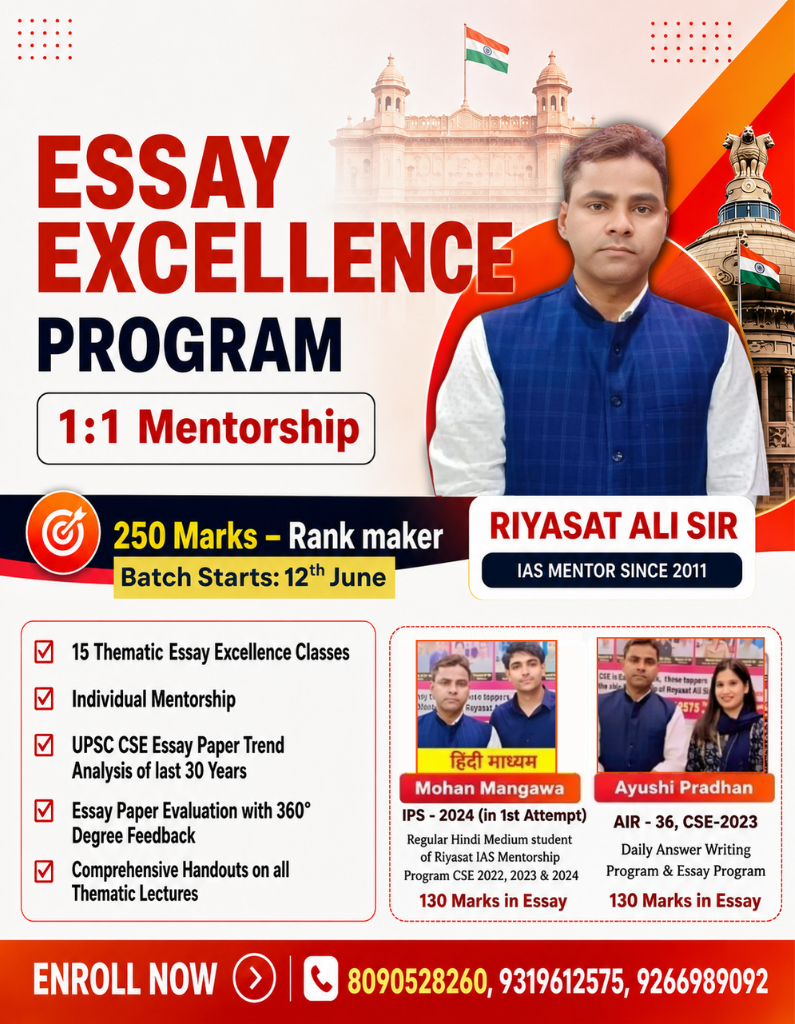
The best UPSC essay test series is the one whose evaluation tells you exactly why an essay scored what it did and what to change in the next one — fast, specific feedback plus mentoring, not just a mark and a model answer. Before you pay for any series, check turnaround time, the depth of margin remarks, the balance of philosophical and contemporary topics, and whether a mentor discusses your copies with you. Our Essay Foundation programme is built around those exact checks.
The essay paper carries 250 marks, equal to a full GS paper, and it is often the biggest mark differentiator among candidates with similar GS scores. That is why practice under evaluation matters more here than almost anywhere else. For the paper’s structure, see our UPSC essay paper complete guide.
Why a UPSC essay test series matters more than reading
You can read every model essay available and still write an average one. Essay writing improves only through a loop:
- Write under realistic conditions.
- Get specific feedback.
- Rewrite or apply the feedback in the very next essay.
- Repeat.
Without step 2, step 4 just repeats the same mistakes. Most aspirants who stay stuck around the average band are not short of content — they are short of honest feedback on structure, argument and coherence.
What to check before choosing an essay test series
| Criterion | What good looks like | Red flag |
| Turnaround | Essays returned within a few days, so feedback reaches you before your next essay | Copies back after two or three weeks |
| Margin remarks | Comments on intro, thesis, each paragraph, transitions, examples, conclusion | A mark and two lines at the end |
| Topic mix | Both philosophical and contemporary topics, mirroring the actual paper | Only current-affairs topics |
| Mentoring | A mentor discusses your pattern of mistakes with you | No human contact after submission |
| Volume | Enough evaluated essays to see a trend (15–20 in a cycle) | 4–5 tests across many months |
| Language | Evaluation available in the medium you write in | Hindi copies checked by English-only evaluators |
| Structure teaching | Clear frameworks for introductions, bodies and conclusions | Only “write more essays” |
Use this table as a checklist. Ask for a sample evaluated copy before enrolling; a serious programme will show one.
How evaluation should read
Here is the difference between weak and useful feedback on the same introduction.
Weak: “Good attempt. Improve introduction. 6/10.”
Useful: “Your opening anecdote is strong but your thesis arrives only in paragraph three. Move the last line of paragraph two to the end of the introduction. The quote in line 4 is decorative — it does not advance the argument. Cut it.”
The second kind of remark changes your next essay. In the Essay Foundation programme, every essay gets margin remarks on structure, content depth, value-additions, quotes, anchor-shifting and conclusion, and is returned within 72 hours.
How many essays should you write before Mains?
There is no magic number, but the trend matters more than the total. A reasonable plan:
- Foundation phase: one essay a week while learning structures.
- Intensive phase (8–12 weeks): two essays a week, alternating philosophical and contemporary.
- Final month: full three-hour simulations writing two essays together.
Across an intensive cycle that gives you 16–20 evaluated essays — enough for your mentor and you to see which mistakes have disappeared and which persist. For more on the timing inside the three hours, read UPSC essay time management.
Using your test series the right way
Most aspirants waste half the value of a test series. Avoid that with these habits.
Before the test
- Write in the actual time limit. Do not “finish later”.
- Brainstorm on paper, as you will in the exam.
After evaluation
- Read every margin remark, not only the mark.
- Write down the top two mistakes in a single “error log”.
- Rewrite the weakest paragraph — usually the introduction or conclusion.
- Before your next essay, read your error log.
Every two weeks
- Discuss the error log with a mentor. Patterns become visible only across several copies: a habit of late theses, too many quotes, weak counter-views, or conclusions that summarise instead of resolve.
The Essay Foundation programme builds this in with a 1:1 mentor call every two weeks.
Philosophical vs contemporary balance
Recent papers lean heavily on quote-based topics. For example, the 2022 paper’s Section A included “Poets are the unacknowledged legislators of the world” and “A ship in harbour is safe, but that is not what a ship is for”. A series that sets mostly “Write about digital India” style topics will leave you unprepared for that. Make sure at least half your practice is philosophical — our guide to abstract essay topics explains why.
Online or offline?
For essay practice, online works well because the core activity — writing and evaluation — does not need a classroom. What matters is:
- Live sessions where structures are taught and doubts cleared
- Recorded archives so you can revisit a session
- Quick digital submission and return of copies
- Scheduled mentor calls
The Essay Foundation programme runs online with weekly live sessions and recorded archives, in English and Hindi. Hindi-medium writers can read our UPSC essay in Hindi guide.
Who should join an essay test series, and when
- Fresh aspirants should start structured essay practice early; the skill takes months to mature.
- Prelims-qualified aspirants should join immediately after the result, as essay is the highest-return paper in the short Mains window.
- Repeaters with an average essay score need diagnosis before more practice — the mentor conversation is what matters most.
The programme runs in two cycles a year (June and December batches), with small capped batches and rolling admissions. Check the course page for the current batch.
A sample week inside a good essay series
| Day | Activity |
| Mon | Live session: one structure or one theme |
| Tue | Write philosophical essay (timed) |
| Wed | Read model approaches, update idea and quote banks |
| Thu | Write contemporary essay (timed) |
| Fri | First essay returned with remarks; update error log |
| Sat | Rewrite weakest paragraph; revise banks |
| Sun | Second essay returned; mentor call every alternate week |
If you want this rhythm with a mentor who has taught essay since 2011, book a free counselling call on the Essay Foundation page.
FAQs
Is an essay test series necessary for UPSC?
For most aspirants, yes. Essay is 250 marks and improves mainly through evaluated practice; self-assessment rarely catches structural problems.
How quickly should essays be evaluated?
Ideally within a few days, so the feedback reaches you before you write the next essay. In our programme the turnaround is 72 hours.
How many essays should I write in a test series?
Around 16–20 evaluated essays in a focused 8–12 week cycle is a practical target, followed by full-paper simulations.
Can I take an essay test series in Hindi?
Yes. The Essay Foundation programme accepts essays in English or Hindi.
Should I join an essay test series before Prelims?
If you have time, start structured practice early at a lower frequency, then intensify after Prelims.


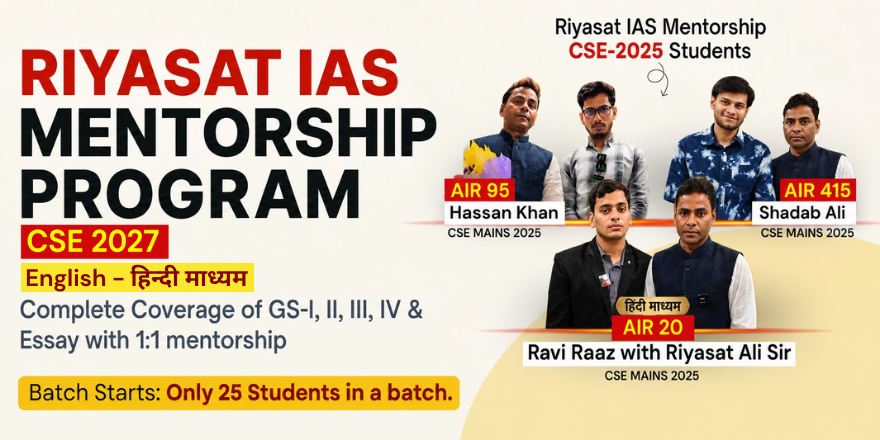

 Ravi Raaz
 Hassan Khan
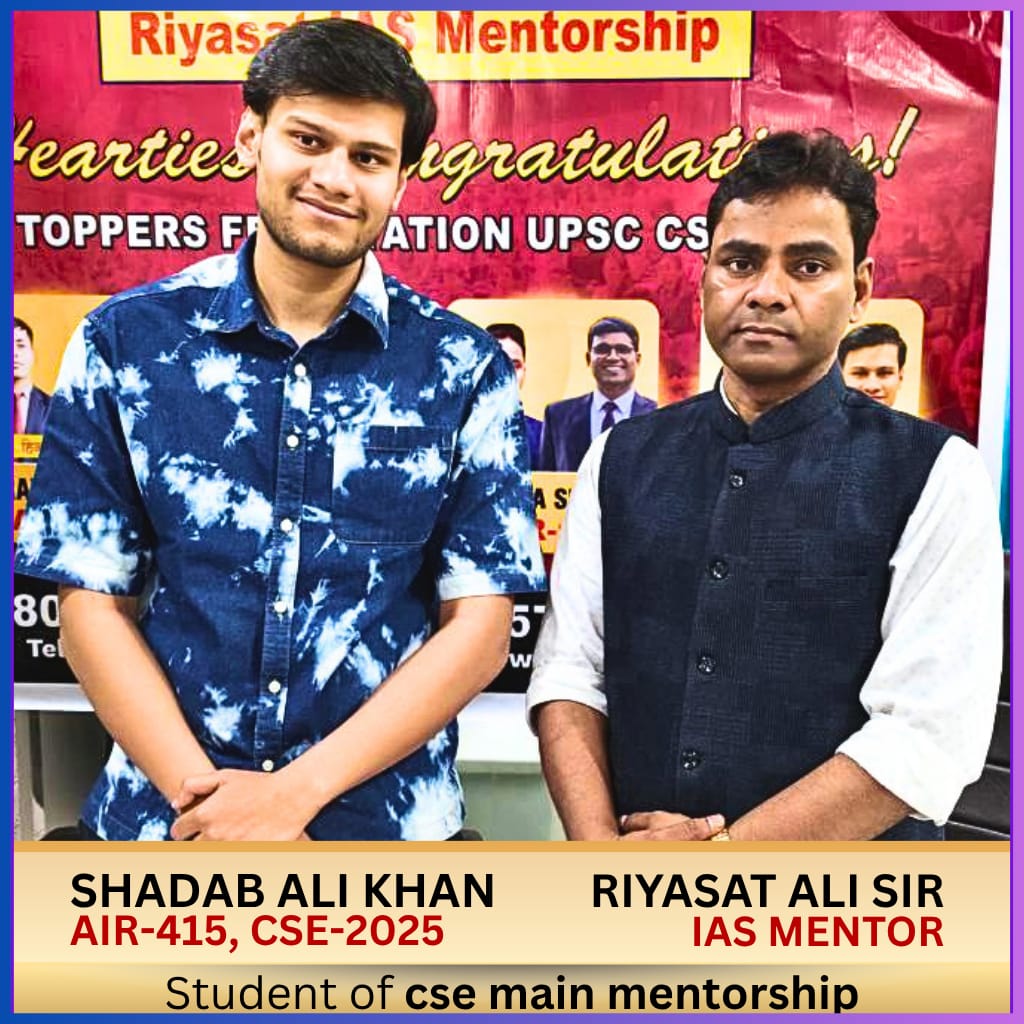 Shadab Ali