
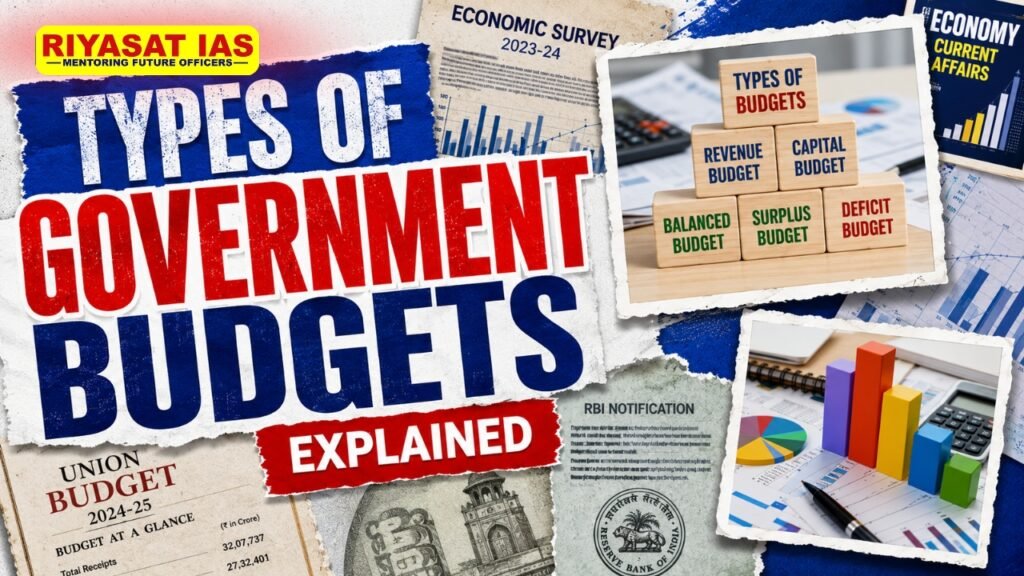
Governments use different types of budgeting methods depending on what they want to achieve. Some focus on controlling expenditure, while others look at results, social priorities and the impact of government spending.
Zero-Based Budgeting
Zero-Based Budgeting (ZBB): In this approach, the government does not simply continue with last year’s spending pattern. Each expenditure has to be reviewed and justified afresh for the new budget period.
The process starts from a “zero base”, and the needs and costs of different government activities are examined before funds are allocated.
Outcome Budgeting
Outcome Budgeting: It looks beyond how much money a ministry or department receives and asks a more important question: What was achieved with that money?
It tracks the progress of government programmes and connects budget allocations with their expected outcomes.
India introduced the Outcome Budget in 2005 to make government spending more focused on results.
Gender Budgeting
Gender Budgeting: It means looking at the budget from a gender perspective and ensuring that government policies and spending address the needs of women and promote gender equality.



It does not mean preparing a completely separate budget for women. Instead, it involves assessing existing programmes and allocating resources in ways that support women’s welfare, development and empowerment.
FAQs
What is Zero-Based Budgeting?
A budgeting method where expenditure is reviewed and justified from the beginning for each new budget period.
What is Outcome Budgeting?
It focuses on what government programmes achieve, rather than only looking at how much money is spent.
When was Outcome Budgeting introduced in India?
The Outcome Budget was introduced in 2005.
What is Gender Budgeting?
It incorporates a gender perspective into government budgeting to promote women’s welfare and gender equality.


 Ravi Raaz
 Hassan Khan
 Shadab Ali