
The role of personal mentorship in GS preparation becomes clear once you see what General Studies for UPSC Mains demands: four papers, a syllabus of extraordinary breadth, and a quality of analytical written expression that most aspirants have never been explicitly trained to produce. The distance between ‘I have studied the GS syllabus’ and ‘I am ready to score competitively in the GS Mains papers’ is where most aspirants lose potential marks — and where personal mentorship makes the most direct and specific difference.
This article examines the distinct role that personal mentorship plays in each critical dimension of GS preparation — from how you select and use sources, to how you write and revise, to how you manage the vast intersections between four different papers and a relentless current affairs stream.
1. Source Selection and Coverage Calibration
The GS syllabus is vast enough that no aspirant can read everything that has ever been written about it. The critical question — which sources to read, at what depth, and in what sequence — is one that generic booklists answer poorly, because the answer depends on your academic background, your preparation stage, and what UPSC’s actual question patterns reveal about depth and emphasis.
Personal mentorship addresses this through a source audit early in the preparation cycle: assessing which GS subjects need NCERT foundations before advanced sources, which subjects you have academic background in that allows you to skip or skim certain foundational material, and which sub-areas of each GS paper carry a disproportionate share of previous year questions and therefore deserve more preparation time than their syllabus share suggests.
The output is not a generic booklist — it is a personalised, sequenced reading plan where the depth allocated to each topic reflects its actual exam importance relative to your starting competency in it.
2. Current Affairs Integration Across All Four GS Papers
Current affairs in UPSC GS is not a separate section — it is woven through all four Mains papers, with questions that require connecting a current development to a static constitutional provision, a policy scheme to an economic theory, or an international event to India’s bilateral relationship history. Building this connection actively — rather than reading current affairs in isolation from your GS subject study — is one of the most important preparation disciplines, and one of the hardest to maintain without external direction.
A personal mentor helps build what might be called a ‘current affairs integration habit’: a systematic practice of connecting each significant current development to the specific GS paper and syllabus topic it belongs to, and reviewing those connections weekly. Over 12 months, this produces a current affairs understanding that is genuinely analytical and GS-connected rather than a collection of isolated news facts.
3. Answer Writing Quality Across GS I–IV
The most direct impact of personal mentorship on GS preparation is on answer writing quality — and this impact is specific and measurable. When a mentor reads your GS answers and gives specific, written feedback, several things happen that self-evaluation cannot reliably produce:
| Dimension of Answer Quality | What Self-Evaluation Misses | What a Mentor Identifies |
| Demand fulfilment | You read your answer knowing what you intended to say — making it easy to perceive demand fulfilment that may not be on the page | Reads only what is on the page: whether the specific question directive (critically examine, discuss, analyse) has actually been addressed in the answer’s content and structure |
| Structural coherence | Familiarity with your own thinking makes structures that are logically connected in your mind seem clear on the page | Assesses whether the argument flows logically for a reader encountering it for the first time — the standard the actual examiner applies |
| Evidence precision | Generic policy statements feel specific when you know you are referring to a particular scheme or judgement | Identifies where a named scheme, specific judgement, or concrete data point would strengthen the answer — the specificity that earns marks |
| Conclusion quality | It is difficult to assess your own conclusion when you have just written the body — the sense of completion makes the conclusion feel adequate | Specifically evaluates whether the conclusion synthesises, proposes a way forward, or merely repeats the introduction — distinguishing these produces immediate, actionable improvement |
| Ready to get specific, examiner-calibrated feedback on your GS answers? → Explore Answer Writing Mentorship Resources |



4. Revision Architecture Across Four Papers
Managing revision across four GS papers — each with multiple sub-areas, each requiring multiple revision cycles to reach exam-ready retention — is one of the logistically most complex aspects of UPSC GS preparation. Without an explicit, mentor-guided revision architecture, aspirants typically over-revise subjects they feel strong in and under-revise subjects that feel intimidating — the exact inverse of what a performance-maximising strategy demands.
A personal mentor builds and regularly audits a revision plan that counters this natural tendency. The mentor prioritises revision for subjects where mock tests reveal the greatest scope for improvement and schedules revision cycles for every GS paper at appropriate intervals instead of allowing aspirants to postpone revision until the final month.
5. Maintaining Preparation Balance Across GS and Optional
One of the subtler but significant roles of personal mentorship in GS preparation is ensuring that GS and Optional Subject preparation do not crowd each other out. Many aspirants allow one to dominate at the expense of the other — either treating GS so lightly in favour of Optional depth that GS Paper scores are consistently weak, or over-investing in GS at the expense of the 500-mark Optional that can make or break a final rank.
A mentor tracking your weekly preparation allocation across both GS and Optional — asking directly whether the time distribution reflects the mark distribution in the examination — prevents this imbalance from persisting across months.
The Role of Personal Mentorship in GS Preparation: The Compounding Effect Over 12 Months
The value of personal mentorship in GS preparation is not fully apparent in any single week’s session — it is apparent in the trajectory over 12 months. An aspirant receiving weekly mentor guidance on GS preparation accumulates approximately:
- 48 course corrections — interventions that redirect effort from lower-return to higher-return activities before the gap compounds
- 70–80 reviewed GS answers — building structural habits against examiner standards rather than self-assessed ones
- 12 comprehensive source and coverage audits — ensuring each GS paper stays calibrated to UPSC’s actual depth requirements rather than drifting toward comfortable over-coverage
- 52 current affairs integration check-ins — maintaining the GS-linkage discipline across the entire preparation year, not only in the final month when it feels urgent
These numbers compound. An aspirant who arrives at Mains with this preparation history behind them is qualitatively different from one who covered the same material without this external shaping — and the difference shows in answer quality, coverage balance, and ultimately in marks.
Frequently Asked Questions
Is personal GS mentorship most valuable early in preparation or closer to Mains?
Most valuable when started early — in Month 1 or 2 of preparation. The reason is that the habits built earliest (source selection, current affairs integration, answer writing approach) are the ones that persist longest and compound most across the preparation cycle. Mentorship started 3 months before Mains can still significantly improve answer quality and revision architecture, but it cannot undo 9 months of differently-built habits.
Can personal mentorship compensate for weak academic preparation in GS subjects?
It can accelerate improvement significantly — but it cannot substitute for the actual study. A mentor provides a far more efficient path by identifying the exact sub-areas that need foundational work, recommending the most relevant sources, and using PYQs to test retention. This approach prevents aspirants from wasting time on topics they already understand well.
How is personal GS mentorship different from enrolling in a GS test series?
A test series measures performance against a group benchmark and provides generic feedback on aggregate scores. Personal GS mentorship tracks your specific preparation quality — source depth, answer writing habits, current affairs integration, revision coverage — and provides guidance calibrated to your individual gaps. The test series tells you how you compare to others; a mentor tells you what specifically to change to improve.
Does a mentor need to be involved in both GS and Optional preparation?
Ideally yes — because the allocation of time between GS and Optional is one of the most consequential strategic decisions in Mains preparation, and it requires someone with visibility into both. A mentor who oversees only GS or only Optional cannot make the integrated time allocation recommendation that full-cycle mentorship can.
Conclusion
The role of personal mentorship in GS preparation is not to provide more content — there is already more UPSC content available than any aspirant can meaningfully consume. The role is to ensure that the content you do cover is the right content, studied at the right depth, tested through the right practice, connected to current affairs in the right way, and expressed in written answers that meet the examiner’s specific standards. Across four papers and 1,000 merit marks, the difference that this quality of direction makes — compounded over 12 months of weekly guidance — is one of the most reliable predictors of whether GS preparation ultimately converts into competitive Mains marks.
| Riyasat IAS Mentorship — Personal Guidance for UPSC CSE Direct mentorship from Riyasat Ali Sir │ Hindi & English Medium │ 100% Online — Apply Now |


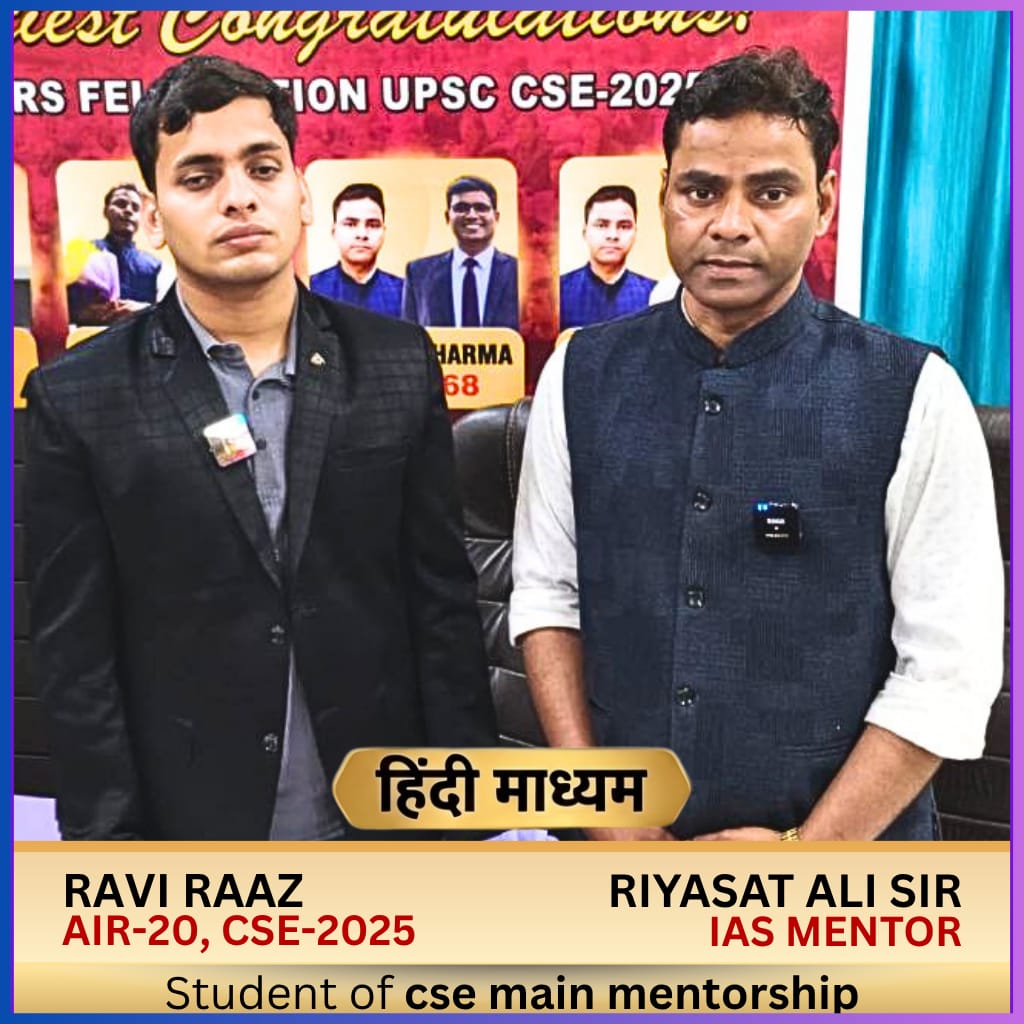 Ravi Raaz
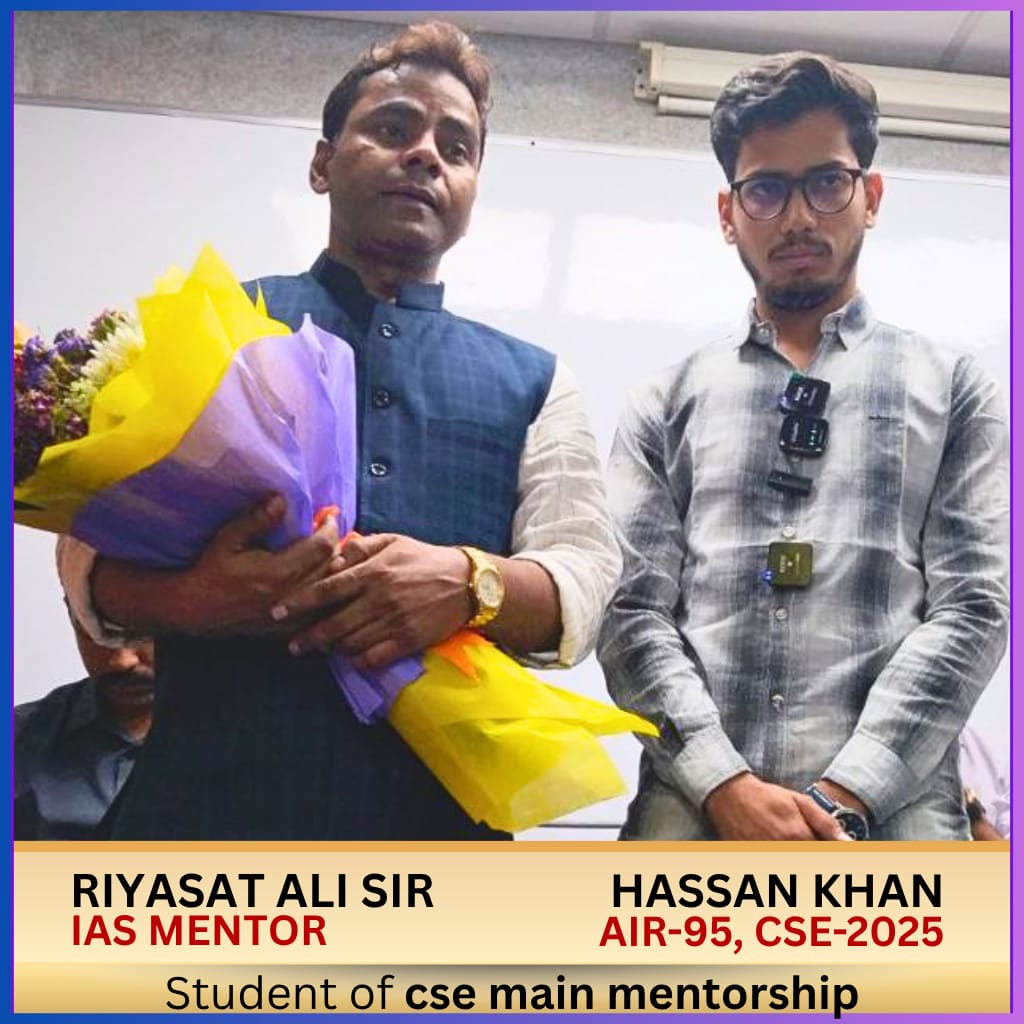 Hassan Khan
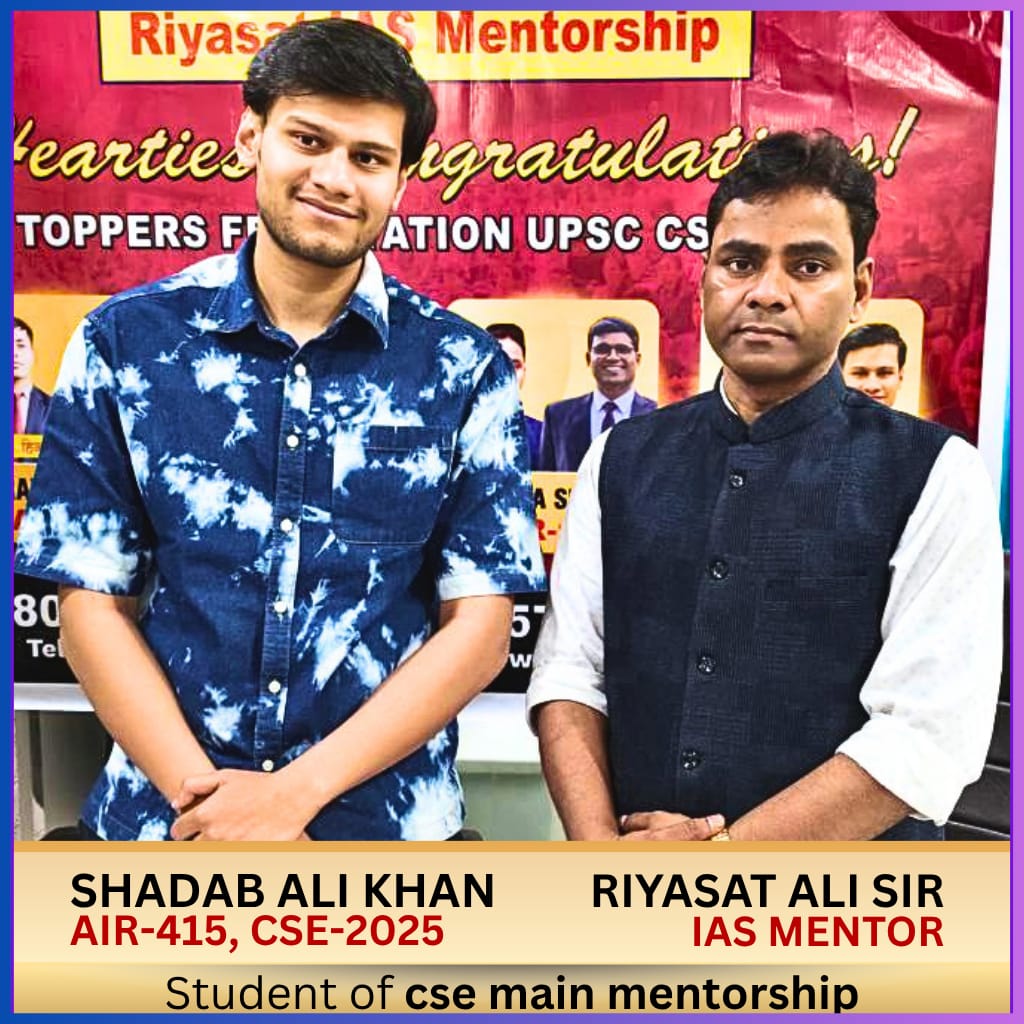 Shadab Ali