
About
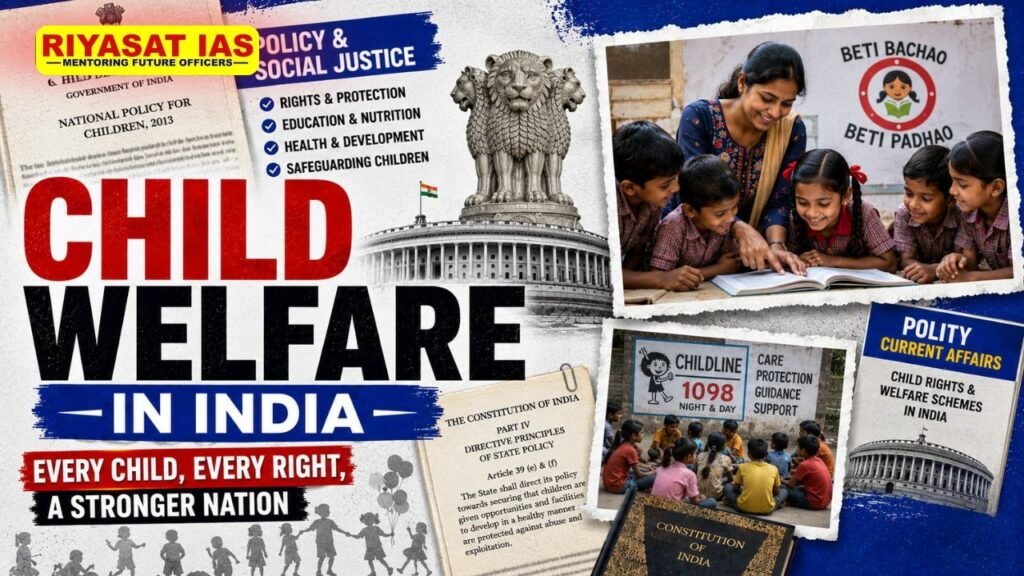
Child welfare refers to the policies, programmes and legal measures aimed at ensuring the survival, protection, development, education, health, nutrition and participation of children, while protecting them from exploitation, abuse, trafficking, child labour and other forms of vulnerability.
According to the UN Convention on the Rights of the Child (UNCRC), every child has rights to survival, development, protection and participation.
The Convention has 54 articles. Every child has rights, without discrimination of any kind against the child, parent, or legal guardian (Article 2). The following rights are of equal importance to every child. Every child has the right to:
§ Relax and play (Article 31)
§ Freedom of expression (Article 13)
§ Be safe from violence (Article 19)
§ An education (Article 28)
§ Protection of identity (Article 8)
§ Sufficient standard of living (Article 27)
§ Know their rights (Article 42)
§ Health and health services (Article 24)
India is a party to the UN Convention on the Rights of the Child (UNCRC).
- Adopted by UN: 20 November 1989.
- India: Acceded to the Convention on 11 December 1992.
- UNCRC came into force: 2 September 1990, in accordance with article 49.
Constitutional Provisions
· Article 15(3): It enables the State to make special provisions for children.
· Article 21A: It provides the right to free and compulsory education for children between 6 and 14 years.
· Article 23: It prohibits trafficking in human beings and forced labour, providing protection against exploitation.
· Article 24: It prohibits the employment of children below 14 years in factories, mines and other hazardous employment.
· Article 39(e): It directs the State to ensure that children are not forced by economic necessity to enter occupations unsuited to their age or strength.
· Article 39(f): It directs the State to ensure that children develop in a healthy manner and in conditions of freedom and dignity, and are protected against exploitation and abandonment.
· Article 45: It directs the State to provide early childhood care and education for all children until they complete six years of age.
· Article 47: It directs the State to improve nutrition and the standard of living, which has direct significance for child welfare.
Legal Framework
Juvenile Justice (Care and Protection of Children) Act, 2015: The Act provides a comprehensive framework for the care, protection, rehabilitation and social reintegration of children in conflict with law and children in need of care and protection.
o It covers children below 18 years of age falling within the categories defined under the Act.
o It provides for Juvenile Justice Boards, Child Welfare Committees, rehabilitation, adoption, foster care, sponsorship and institutional as well as non-institutional care.
Right of Children to Free and Compulsory Education Act, 2009: The Act aims to guarantee free and compulsory elementary education to children.
o It covers children between 6 and 14 years of age.
o It provides for free and compulsory education, age-appropriate admission, specified norms and standards for schools, and protection against certain forms of exclusion and discrimination.



Protection of Children from Sexual Offences (POCSO) Act, 2012: The Act protects children from sexual assault, sexual harassment and pornography.
o A child is defined as any person below 18 years of age.
o It provides for child-friendly procedures, special courts, reporting obligations and safeguards to reduce trauma during investigation and trial.
Child Labour (Prohibition and Regulation) Amendment Act, 2016: The law seeks to prohibit child labour and regulate the conditions of work for adolescents.
o It generally prohibits employment of children below 14 years, while regulating hazardous employment of adolescents aged 14–18 years.
o It strengthens restrictions on child employment while providing limited exceptions for children assisting their families in certain circumstances, subject to statutory conditions.
Prohibition of Child Marriage Act, 2006
o The Act aims to prevent child marriages and protect children from their harmful social, health and economic consequences.
o It provides for prohibition of child marriage, punishment for persons involved in facilitating such marriages and protection of affected children.
Major Government Schemes and Initiatives
Mission Vatsalya
o Mission Vatsalya aims to strengthen the child protection system and promote family-based and community-based care for vulnerable children.
o It focuses on children in need of care and protection, children in conflict with law and other vulnerable children.
o It supports Child Care Institutions, Child Welfare Committees, Juvenile Justice Boards, foster care, sponsorship, adoption and after-care services.
Mission Saksham Anganwadi and POSHAN 2.0
o The programme aims to improve nutrition, early childhood development and health outcomes among children and other vulnerable groups.
o It primarily covers children below six years, pregnant women, lactating mothers and adolescent girls, as applicable under its components.
o It provides supplementary nutrition, health and nutrition education, growth monitoring, early childhood care and education and convergence with health services.
PM POSHAN
o PM POSHAN aims to improve nutrition among schoolchildren and encourage regular school attendance and retention.
o It primarily covers children studying in Classes I–VIII in eligible government and government-aided schools, subject to scheme provisions.
o The scheme provides one hot cooked meal on school days and combines nutritional support with educational objectives.
Beti Bachao Beti Padhao (BBBP)
o BBBP aims to address gender-biased sex selection and discrimination against the girl child while promoting her survival, protection and education.
o It focuses on girls and communities where gender disparities are significant.
o It emphasises behavioural change, awareness, education and convergence among government departments, rather than direct cash transfers.
Palna
o Palna aims to provide safe and accessible childcare facilities and support women’s participation in the workforce.
o It primarily benefits children in the prescribed age group and working mothers.
o It provides day-care facilities, nutrition, health support, growth monitoring and early childhood care and development.
Integrated Child Development Services (ICDS)
o ICDS aims to address child malnutrition, health deficiencies and developmental needs during early childhood.
o It focuses primarily on children below six years, pregnant women and lactating mothers.
o Services are delivered mainly through Anganwadi Centres and include supplementary nutrition, health check-ups, referral services, immunisation support, nutrition education and pre-school education.
Major Challenges in Child Welfare
· Malnutrition: Undernutrition, anaemia and micronutrient deficiencies continue to affect child development.
· Child Labour: Poverty, lack of educational opportunities and informal employment contribute to the persistence of child labour.
· Child Marriage: Early marriage can adversely affect education, health, nutrition and economic opportunities, particularly for girls.
· Child Trafficking: Children remain vulnerable to trafficking for labour, sexual exploitation, begging and other forms of exploitation.
· Child Sexual Abuse: Abuse within homes, institutions and communities remains a major protection concern.
· School Dropouts: Poverty, migration, poor learning outcomes, inadequate infrastructure and social barriers can contribute to educational discontinuation.
· Institutionalisation: Children without adequate family support may become dependent on institutional care, which can affect long-term emotional and social development.
· Digital Vulnerability: Increasing internet use exposes children to cyberbullying, online exploitation, inappropriate content, grooming and privacy risks.
· Weak Last-Mile Delivery: Gaps in staffing, infrastructure, monitoring and inter-departmental coordination can reduce the effectiveness of welfare programmes.
Way Forward
· Strengthen Early Childhood Care: Greater investment should be made in nutrition, healthcare, early learning and cognitive development during the first six years.
· Improve Convergence: Health, education, nutrition, sanitation and child-protection systems should work through integrated and coordinated service delivery.
· Strengthen Family-Based Care: Institutionalisation should be used as a last resort, with greater emphasis on foster care, sponsorship, adoption and family reintegration.
· Improve Child Protection Systems: Child Welfare Committees, Juvenile Justice Boards and Child Care Institutions require adequate staffing, training and infrastructure.
· Promote Digital Safety: Children should receive digital literacy and online safety education, while platforms should strengthen safeguards against online exploitation.
· Strengthen Community Participation: Panchayats, schools, Anganwadi workers, parents and civil society organisations should be actively involved in child protection.
· Focus on Outcomes: Government programmes should increasingly be evaluated through nutrition outcomes, learning outcomes, school retention, protection outcomes and child well-being, rather than merely expenditure and enrolment.
Conclusion
· Child welfare is not merely a matter of social assistance but a constitutional and developmental obligation. Ensuring that every child receives adequate nutrition, quality education, healthcare, protection and opportunities for development is essential for building India’s human capital and demographic dividend.
· A child-centred governance approach, supported by strong institutions, family and community participation and effective implementation, can transform child welfare from a welfare objective into a foundation for inclusive and sustainable development.
FAQs
1. What is child welfare?
Ans: Child welfare refers to the policies, programmes and legal measures aimed at ensuring children’s survival, health, nutrition, education, protection and overall development.
2. What are the major constitutional provisions related to child welfare in India?
Ans: Important provisions include Articles 15(3), 21A, 23, 24, 39(e), 39(f) and 45, which provide for children’s protection, education, development and freedom from exploitation.
3. What are the major laws for child protection in India?
Ans: Important laws include the Juvenile Justice (Care and Protection of Children) Act, 2015; POCSO Act, 2012; Right to Education Act, 2009; Child Labour (Prohibition and Regulation) Amendment Act, 2016; and Prohibition of Child Marriage Act, 2006.
4. What are the major government initiatives for child welfare?
Ans: Major initiatives include Mission Vatsalya, Mission Saksham Anganwadi and POSHAN 2.0, PM POSHAN, Beti Bachao Beti Padhao and Palna, which address child protection, nutrition, education, early childhood care and development.
5. What are the major challenges to child welfare in India?
Ans: Major challenges include malnutrition, child labour, child marriage, trafficking, sexual abuse, school dropout, digital risks, inadequate child-protection infrastructure and gaps in last-mile delivery of welfare services.


 Ravi Raaz
 Hassan Khan
 Shadab Ali