
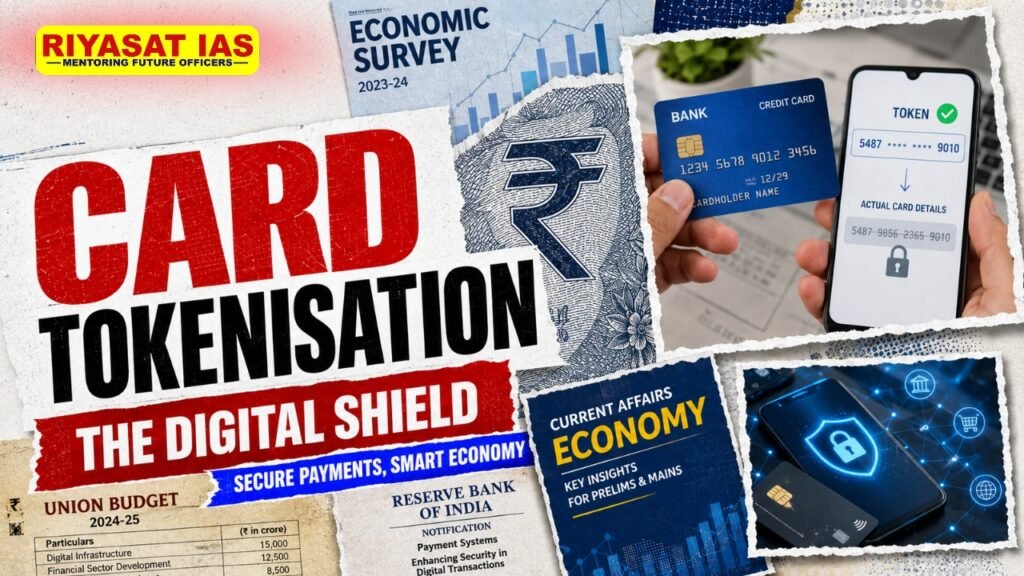
Digital payments have become a part of everyday life in India, from online shopping and food delivery to subscriptions and bill payments. As the use of card payments grows, protecting sensitive card information has become increasingly important. Card tokenisation addresses this concern by replacing actual card details with a secure digital token, making online payments safer and more convenient.
What Is Card Tokenisation?
Card Tokenisation: It is a payment security technology that replaces sensitive card details, such as the card number, with a unique and randomly generated code called a token. The token can be used for eligible transactions without exposing the customer’s actual card details to the merchant.
Digital Substitute: A token acts as a secure substitute for the original card number. This allows customers to make payments without requiring merchants to store their actual card credentials.
How Does it Work?
Enter Card Details: When making an online purchase, the customer enters their debit or credit card details as required.
Generate a Token: The card details are securely processed and a unique token is generated.
Store the Token: Instead of storing the actual card number, the merchant stores the token.
Process Future Payments: For eligible future transactions, the token is used to process the payment instead of the original card details.
Protect Card Information: Since the merchant does not need to store the actual card number, the exposure of sensitive payment information is reduced.
Types
Card-on-File Tokenisation: This is used when customers save their debit or credit card on an online shopping platform or merchant website. The token is associated with the specific merchant, allowing customers to make future payments without repeatedly sharing their actual card details.
Device Tokenisation: This links a card to a specific device, such as a smartphone, smartwatch, or tablet. It is commonly used with digital wallets and contactless payments to provide an additional layer of payment security.
Benefits
Protection Against Data Breaches: When merchants do not store actual card details, there is less sensitive information available to be exposed if their systems are compromised.
Reduced Risk of Card Fraud: Tokens can be restricted to a specific merchant, device, or payment environment, making them less useful if they are obtained by an unauthorised person.
Faster Checkout: It allows customers to securely save their payment methods, reducing the need to enter complete card details every time they shop online.



Safer Online Payments: By replacing actual card information with tokens, tokenisation adds an extra layer of security to digital card transactions.
Better Customer Experience: Securely stored tokens make repeat payments more convenient while reducing the need to repeatedly enter sensitive card information.
Card Tokenisation in India
India has taken significant steps to strengthen the security of digital card payments. The Reserve Bank of India (RBI) introduced a regulatory framework for card-on-file to reduce the storage and exposure of actual card credentials.
RBI Tokenisation Framework: Under the RBI framework, entities covered by the regulations are not permitted to store actual card credentials for eligible transactions. Instead, tokenised card information is used.
October 2022 Implementation: The RBI’s card-on-file tokenisation framework came into effect in October 2022, marking an important step towards improving the security of India’s rapidly growing digital payment ecosystem.
Growing Adoption: Card tokenisation has seen significant adoption in India, reflecting the increasing focus on secure and convenient digital payments.
Card Tokenisation and UPI
Card Tokenisation: Tokenisation is a security technology that protects card credentials by replacing actual card details with a token.
UPI: The Unified Payments Interface (UPI) is a digital payment system that enables instant bank-to-bank transactions through supported applications.
Credit Cards on UPI: Eligible credit cards, including supported RuPay credit cards, can be linked to UPI for certain transactions. Tokenisation can contribute to the security of digital payments, but tokenisation and UPI are separate technologies with different purposes.
RBI Card Tokenisation Rules
RBI Guidelines: The Reserve Bank of India introduced card-on-file tokenisation rules to prevent merchants and other covered entities from storing customers’ actual card credentials.
Data Protection: The framework aims to reduce the exposure of sensitive card information while allowing customers to continue using convenient card-based online payments.
Secure Transactions: Tokenisation provides a safer alternative to storing actual card details and supports the broader security of India’s digital payment ecosystem.
Future Scope of Card Tokenisation
Contactless Payments: Tokenisation can support secure contactless payments through smartphones, smartwatches, and other compatible devices.
Recurring Payments: Tokenisation can help make subscriptions, utility bills, OTT services, and other recurring payments more secure and convenient, subject to applicable regulations and authentication requirements.
E-Commerce Payments: As online shopping continues to grow, tokenisation can help merchants offer faster checkouts without storing customers’ actual card details.
Digital Wallets: Tokenisation can protect payment credentials in digital wallets while allowing users to make quick and convenient payments.
Connected Devices: As connected devices and Internet of Things (IoT) technologies expand, tokenisation could support secure payment experiences across a wider range of devices.
Conclusion
Card tokenisation is playing an important role in making digital payments in India more secure and convenient. By replacing actual card details with unique tokens, it reduces the exposure of sensitive payment information while enabling smoother online transactions.
With strong regulatory support from the RBI and growing applications across e-commerce, digital wallets, contactless payments, and recurring transactions, card tokenisation is expected to remain an important part of India’s evolving digital payment ecosystem.
Frequently Asked Questions (FAQs)
What Is Card Tokenisation?
Card Tokenisation: It replaces actual card details with a unique digital token for secure transactions.
Is Card Tokenisation Safe?
Security: Yes. It reduces the exposure of sensitive card details during eligible digital transactions.
What Are the Types of Card Tokenisation?
Types: The two common types are Card-on-File Tokenisation and Device Tokenisation.
When Did RBI Introduce Card Tokenisation?
RBI Rules: The RBI’s card-on-file tokenisation framework came into effect in October 2022.
Does Tokenisation Change My Card Number?
Card Number: No. Your actual card number remains unchanged.
What Are the Benefits of Card Tokenisation?
Benefits: It improves payment security, reduces data exposure, lowers fraud risks, and enables faster checkouts.
What Is the Future of Card Tokenisation?
Future Scope: Tokenisation is expected to expand across e-commerce, digital wallets, contactless payments, recurring transactions, and connected devices.


 Ravi Raaz
 Hassan Khan
 Shadab Ali