
- Fundamental Right: The Right to Access the Internet does not appear as a separate fundamental right in the Indian Constitution.
- Article 19(1)(a): Freedom of expression and thought has been interpreted to include the right to communicate one’s ideas using the Internet.
- Article 19(1)(g): The freedom to engage in a profession, trade, occupation, or business, may require access to the Internet.
- Reasonable Restrictions: The use of the internet for free speech and other activities protected by the Constitution can be limited in accordance with Article 19(2) and Article 19(6), depending upon the nature of the limitation.
- Important Supreme Court judgment: The Supreme Court’s ruling on freedom of speech and expression and the right to practice a profession or conduct business online was an important decision. In its case of Anuradha Bhasin vs. Union of India in 2020, the Supreme Court ruled that these rights are protected by the Constitution.
- Key ruling: The key ruling was that the indefinite suspension of the Internet is illegal. Also, any order for the suspension of the Internet must meet the criteria of being necessary and proportionate, and must be reviewed by a court.
- Article 21: Although access to the internet may be necessary for exercising various other rights such as those related to education and obtaining access to information, there is no declaration by the Supreme Court that there exists a right to access the internet as such, as a right separate from the others, which would be protected by Article 21.
- Constitutional Balance : The restrictions must meet all requirements of the Constitution and the relevant suspension rules.
- Recent critical updates (as of October 2026): Reports indicate that the Supreme Court has upheld the rights of individuals to access and utilize the Internet as a basic human right, particularly for children, pursuant to Articles 21 and 19(1)(a). At the same time, it has expressed opposition to broad-based prohibitions and supported measures aimed at protecting children on-line.

UPSC Prelims Practice Questions
Q. Regarding the right to use the Internet in India, review these two statements:
1. Article 19(1)(a) protects freedom of expression/speech over the internet.
2. Trade and business that are carried on via the internet may be protected under Article 19(1)(g).
3. A separate fundamental right to internet access is stated within the constitution.
A. 1 and 2 only
B. 2 and 3 only
C. 1 and 3 only
D. 1, 2 and 3
Correct! Answer: A
Both statements 1 and 2 are accurate. There is no specific listing in the Constitution of an Internet access right.
Master Polity & Governance for UPSC 2027
Get expert mentorship, structured current-affairs coverage, and answer-writing guidance on topics like the Right to Access the Internet.
[Join UPSC Mentorship Program 2027]



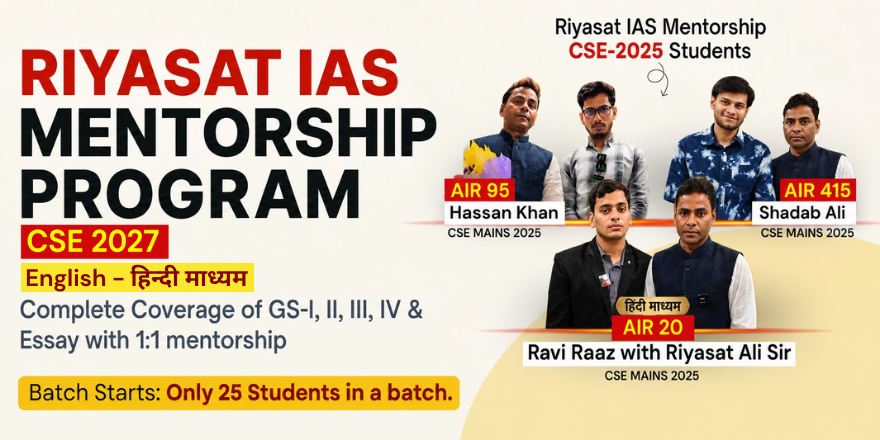

 Ravi Raaz
 Hassan Khan
 Shadab Ali