
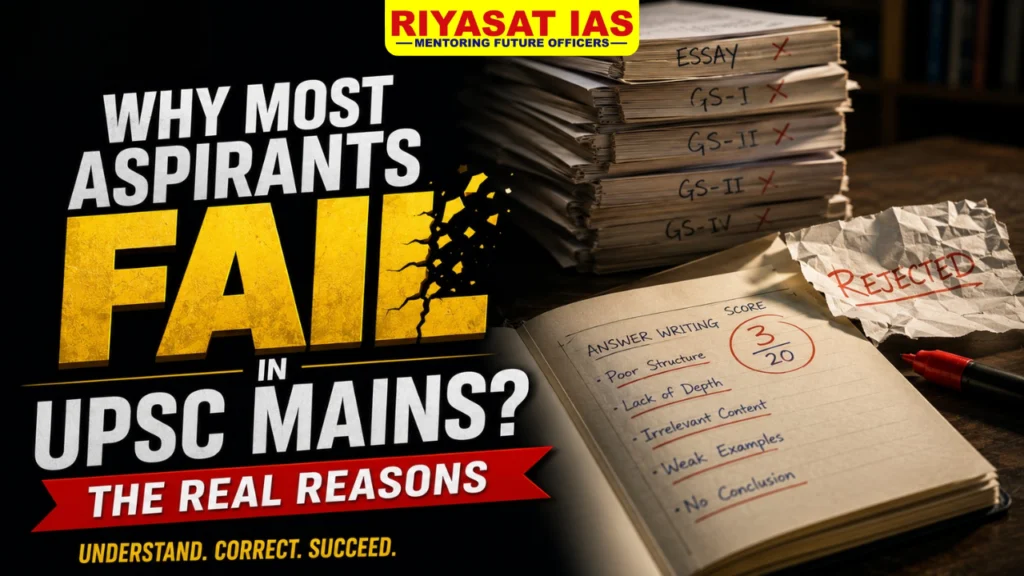
The most consistent and least examined fact about UPSC Mains failure is that it is rarely caused by insufficient effort. The aspirants who fail Mains — particularly in their first or second attempt — are almost always working genuinely hard. The problem is structural: their effort is applied to preparation activities that do not produce the specific, assessed outputs that Mains rewards. More effort in the same direction without changing the direction produces the same result.
Understanding why Mains attempts fail — with specific, evidence-based structural reasons rather than generalities — is the foundation for a preparation change that produces a different outcome. This guide identifies eight structural reasons for Mains failure and the specific correction each requires.
Reason 1: Treating Mains as a Longer, Harder Prelims
Prelims tests recognition under time pressure. Mains tests production under time pressure. These are entirely different cognitive skills. An aspirant who optimised their Prelims preparation — coverage breadth, MCQ practice, current affairs accumulation — and carries these habits into Mains preparation will study more material and produce weaker answers, because the skills that produce recognition (coverage breadth) are different from the skills that produce analytical expression (output practice with feedback).
Correction: from Month 3 of preparation, allocate 30–40% of daily preparation time to writing timed answers — not reading about answers, not reading model answers, but constructing arguments under time pressure from covered material. This is the output practice that Mains requires.
Reason 2: Starting Answer Writing After Prelims
The aspirant who clears Prelims in May and begins answer writing in June has 3–5 months to develop a skill that takes 8–9 months to reach competitive standard. The answers written in Month 3 of practice are structurally different from answers written in Month 9 — in their demand fulfilment, evidence specificity, argument coherence, and conclusion quality. Starting after Prelims means entering Mains with Month 3–4 answer writing quality.
Correction: begin structured answer writing in Month 3 of the GS Foundation phase — one answer per day on covered topics, evaluated against the demand-evidence-structure-conclusion checklist. The skill must develop in parallel with preparation, not sequentially after Prelims.
Reason 3: No External Evaluation of Written Answers
An aspirant can write 200 answers across a preparation cycle and plateau in quality if no one is reading those answers as an examiner would. Self-evaluation consistently misidentifies what is working and what is not — because the writer reads their intent, not what is on the page. The most costly Mains preparation gap is consistent self-evaluation without external calibration.
Correction: at least two answers per week must receive specific, written, sentence-level feedback from an external evaluator — mentor, study partner with evaluation experience, or mentorship programme. This feedback must be specific to your answer’s actual sentences, not generic advice that could apply to any answer on the topic.
| Want the specific external evaluation that changes Mains answer quality? → Explore Answer Writing Mentorship at Riyasat IAS |



Reason 4: Optional Subject Preparation Crowded Out by GS
Optional Subject carries 500 marks — the single largest concentrated mark pool in Mains. An aspirant who spends 90% of their preparation on GS and 10% on Optional will score well in GS (1,000 marks) and poorly in Optional (500 marks) — producing a total that falls below the selection threshold despite strong GS performance. Optional is not supplementary to GS; it is half the written Mains mark weight.
Correction: establish an inviolable Optional Subject daily slot from Month 3–4 of preparation — 1.5–2 hours per day, protected from GS encroachment by any means necessary. The mentor’s role is enforcing this allocation against the drift toward GS that occurs naturally as Mains pressure builds.
Reason 5: Generic Answers Without Named Evidence
GS Mains answers that earn marks above the average consistently name specific schemes, constitutional articles, landmark judgments, committee recommendations, and data points. Answers that describe general trends, mention ‘various government initiatives’, and cite ‘the Constitution’ without article numbers demonstrate awareness without knowledge — and awareness is not what Mains marks.
Correction: build a subject-wise evidence bank — scheme names with key metrics, article numbers with associated judgments, committee names with specific recommendations, current data from authoritative sources. Deploy two to three named evidence items per 250-word answer, every answer.
Reason 6: Essay and Ethics as Afterthoughts
Essay (250 marks) and Ethics GS Paper 4 (250 marks) together carry 500 marks — equal to the entire Optional Subject. Most aspirants who fail Mains wrote fewer than five practice essays and began Ethics case study practice within the final 2 months before the examination. Five essays is insufficient for topic interpretation accuracy and argument construction to reach competitive standard. Two months is insufficient for the Ethics five-step case study structure to become automatic under time pressure.
Correction: Essay — two evaluated essays per month from Month 4 through the examination. Ethics — weekly case study practice from Month 6 with five-step structure evaluation. The 500 marks these two components carry respond faster to evaluated practice than GS knowledge gaps respond to additional reading.
Reason 7: Preparation Drift Toward Comfortable Subjects
Over a 12-month preparation cycle, without external accountability, time allocation drifts toward subjects the aspirant finds interesting and away from those that feel difficult. By Month 8, an aspirant who started with a balanced schedule often has prepared History extensively and Economy superficially — and discovers this only when mock tests reveal an Economy-specific weakness that 4 months of targeted revision cannot fully close.
Correction: weekly time tracking by subject, reviewed in a weekly session with a mentor or self-honestly against a log. The mock test error pattern data (not how subjects feel but how they perform) drives the reallocation. Subjects that consistently underperform in mock tests receive proportionally more revision time in subsequent weeks, regardless of how they feel.
Reason 8: Excellent Preparation Quality That Cannot Survive Exam-Day Conditions
The most underrecognised Mains failure pattern: the aspirant who prepares well under comfortable conditions — writing thorough answers with adequate time, revising familiar material at a leisurely pace — but whose preparation quality does not transfer to examination conditions. Five consecutive days, nine papers, sustained handwriting across 3 hours per paper, the specific psychological pressure of high-stakes decisions — these conditions are fundamentally different from preparation conditions. An aspirant who has never simulated them cannot be confident their preparation will hold under them.
Correction: all answer writing practice from Month 3 must be strictly timed. All mock tests must be taken under simulated examination conditions (no phone, no breaks, strict time boxes per answer). At least three full-day mock examination simulations — writing full GS papers in the correct examination sequence — are necessary before Mains to calibrate preparation to examination conditions.
Frequently Asked Questions
Which of these eight reasons is most common across Mains failures?
Reasons 3 (no external evaluation), 2 (starting answer writing after Prelims), and 6 (Essay and Ethics as afterthoughts) are the most consistently present across Mains failure patterns — because all three share the same root cause: treating Mains as a knowledge test rather than an assessed production skill. The aspirant who builds individual evaluation, early answer writing, and regular Essay and Ethics practice into the foundation phase removes the three most common structural causes simultaneously.
Is it possible to fail Mains while scoring well in Prelims consistently?
Yes — and this combination is more common than most aspirants expect. Prelims is a recognition test; Mains is a production test. An aspirant who has mastered recognition skills (wide reading, MCQ familiarity, current affairs breadth) but has not built production skills (analytical expression, timed writing, evidence deployment) can clear Prelims repeatedly and fail Mains repeatedly by applying the same preparation approach. The skills do not transfer; they require separate, deliberate development.
How long does it typically take to correct these structural failures after identifying them?
Reason 3 (external evaluation) can begin improving scores within 4–6 weeks of consistent implementation. Reasons 2 and 6 (late answer writing start) require 6–8 months to develop the quality that competitive Mains demands — which means they cannot be fully corrected in a single 3–5 month Mains preparation phase if the foundation was not built in the prior months. This is why identifying these reasons before the next attempt — not from results, but from preparation audit — is more valuable than discovering them from marks.
Conclusion
Most aspirants fail UPSC Mains not because they did not work hard enough but because their hard work was applied to preparation activities that do not produce the specific outputs Mains assesses. The eight structural reasons identified above — treating Mains as harder Prelims, starting answer writing late, no external evaluation, Optional crowded out, generic evidence, Essay and Ethics as afterthoughts, subject drift, exam-condition mismatch — are identifiable from preparation audit before the examination, not only from results after it. Identifying which reasons apply and making specific structural changes is what converts a Mains attempt that disappoints into one that selects.
| Riyasat IAS Mentorship — Personal Guidance for UPSC CSE Direct mentorship from Riyasat Ali Sir │ Hindi & English Medium │ 100% Online — Apply Now |


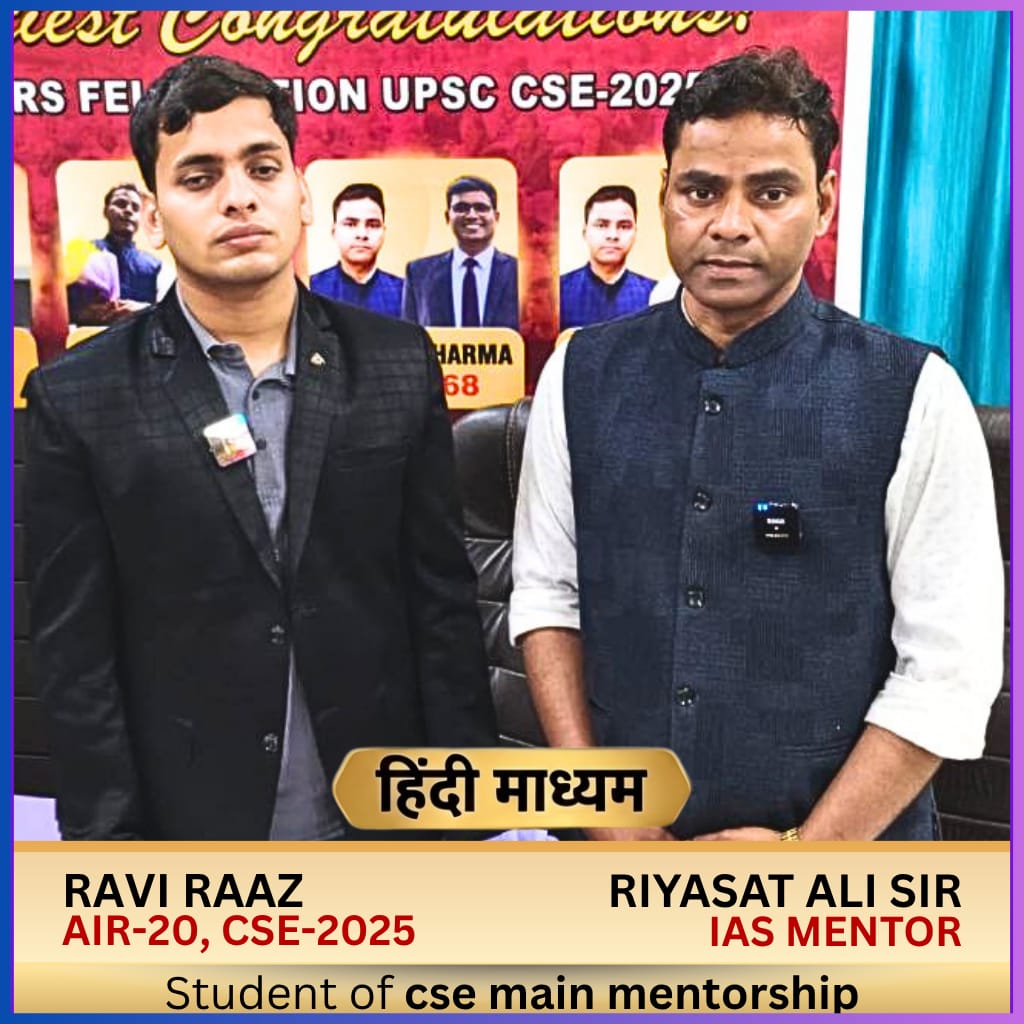 Ravi Raaz
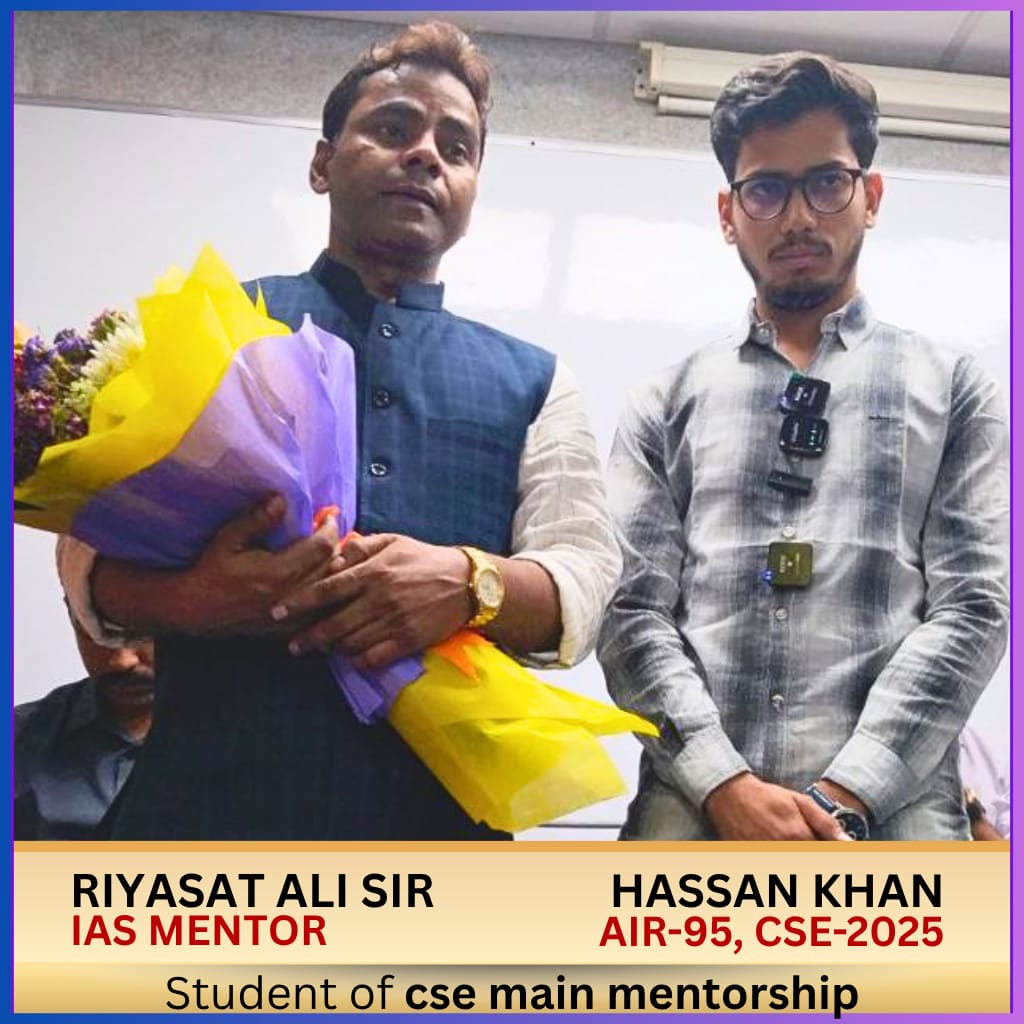 Hassan Khan
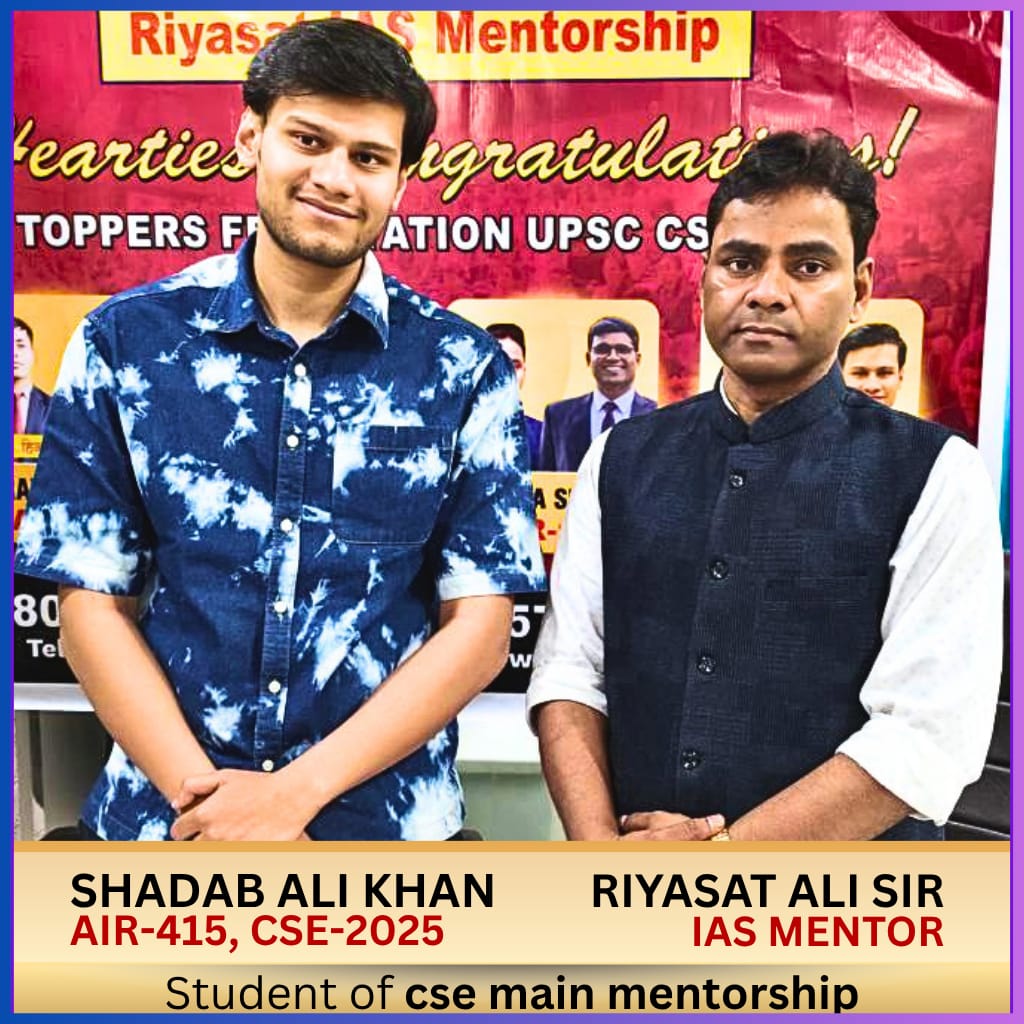 Shadab Ali