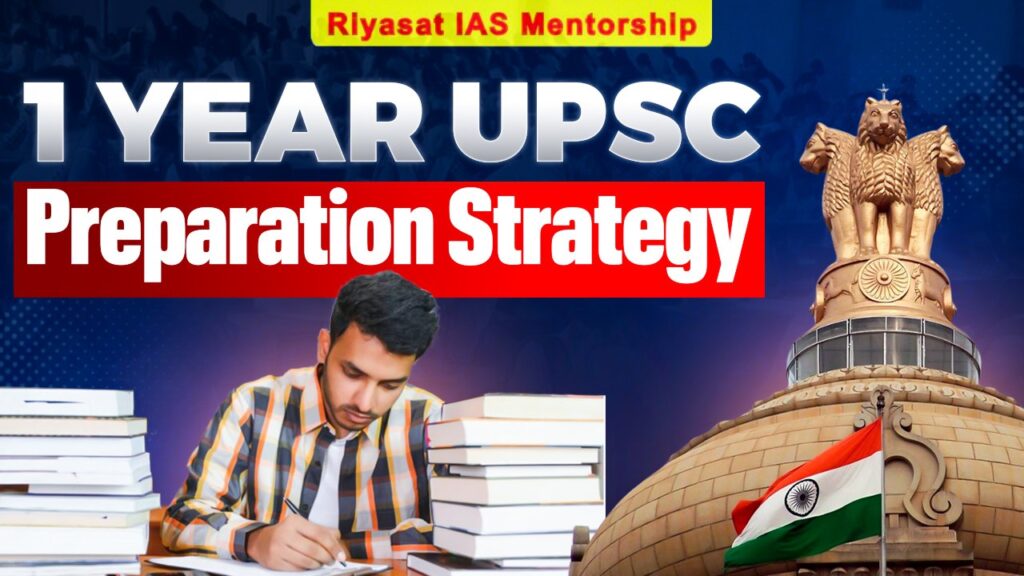
Preparing for the Civil Services Examination requires consistency, discipline, and a clear strategy. A structured UPSC Study Plan for 1 year helps aspirants complete the syllabus on time, revise effectively, and practice enough mock tests before the exam.
A well-designed UPSC preparation strategy divides the entire journey into phases such as foundation building, intensive preparation, and revision. This approach ensures that aspirants cover both Prelims and Mains syllabus in a systematic manner.
If you are planning to prepare for UPSC 2026, this one-year plan can help you organise your preparation and stay on track.
1 Year UPSC Study Plan 2026
The one-year plan can be divided into four major stages:
| Phase | Time Period | Focus |
| Foundation Phase | May – October | Build basic concepts |
| Integration Phase | November – February | Standard books + answer writing |
| Prelims Preparation | February – May | MCQs practice and revision |
| Mains Preparation | June – September | Answer writing + test series |
Phase 1: Foundation Stage (First 5–6 Months)
The first phase of your UPSC study plan should focus on building strong fundamentals.
What to Do in This Phase
- Understand the UPSC syllabus and exam pattern
- Read NCERT books (Class 6–12)
- Start basic books for major subjects
- Begin reading daily current affairs
- Analyse previous year questions (PYQs)
- Choose your optional subject
Subjects to Cover
- History
- Geography
- Polity
- Economy
- Environment
- General Science
During this stage, aspirants should focus on conceptual clarity rather than memorisation.
Phase 2: Integration Phase (Month 6–9)
Once the foundation is strong, the next step is to move towards advanced preparation.
Key Activities
- Read standard reference books
- Complete the optional subject syllabus
- Start Mains answer writing practice
- Continue current affairs preparation
- Practice CSAT questions weekly
This stage helps aspirants connect static subjects with current affairs, which is essential for both Prelims and Mains.
Check this:UPSC Book List
Phase 3: Prelims Focus (3 Months Before Exam)
The final months before the Prelims exam should focus mainly on revision and practice.
Important Tasks
- Revise NCERT and standard books
- Practice daily MCQs
- Solve UPSC previous year question papers
- Attempt full length Prelims mock tests
- Revise current affairs of the last 1 year
At this stage, avoid starting new books and focus on strengthening what you have already studied.
Phase 4: Mains Preparation (After Prelims)
After clearing the Prelims, aspirants should immediately start preparing for the UPSC Mains examination.
Key Focus Areas
- Daily answer writing practice
- Revision of GS subjects
- Practice essay writing
- Revise optional subject notes
- Attempt Mains test series
Use diagrams, flowcharts, and examples to improve answer presentation.
How to Make Your Own UPSC Study Plan
Every aspirant has different strengths and weaknesses. Therefore, your study plan should be flexible.
Tips to Create a Personal Study Plan
- Understand the UPSC syllabus thoroughly
- Divide subjects into weekly targets
- Read current affairs daily
- Revise regularly
- Practice mock tests and PYQs
Consistency is the most important factor in UPSC preparation.
Tips to Follow Your UPSC Study Plan Successfully
- Study 6–8 hours daily with focus
- Maintain short notes for revision
- Revise topics multiple times
- Practice answer writing regularly
- Stay physically and mentally healthy
A disciplined approach and proper UPSC mentorship guidance can significantly improve your chances of success.
Check this:UPSC Civil Services Examination official website
FAQs
1. Can I prepare for UPSC in one year?
Yes, many candidates clear the exam with a 1 year UPSC study plan if they study consistently and follow a structured strategy.
2. How many hours should I study daily for UPSC?
Aspirants should study 6–8 focused hours daily, along with regular revision and practice.
3. When should I start answer writing for UPSC?
Answer writing practice should start after completing basic subjects, usually within 4–5 months of preparation.
4. Is coaching necessary for UPSC preparation?
Coaching is not mandatory, but UPSC mentorship programs can help with guidance, strategy, and regular evaluation.
5. What is the most important part of UPSC preparation?
Regular revision, mock tests, and consistency are the most important factors for clearing the UPSC exam.